
A pool villa security deposit is one of the most common booking conditions guests may encounter when staying in a private villa. For many first-time guests, the deposit can feel unclear: Is it an extra fee? Will it be refunded? What can cause deductions? When will the money be returned?
Understanding how a security deposit works before booking helps guests avoid confusion, protect their money, and manage the villa responsibly during the stay. It also helps set realistic expectations between guests and hosts.
A pool villa is different from a standard hotel room. Guests often have access to a private pool, bedrooms, bathrooms, kitchen, living areas, outdoor space, parking, BBQ equipment, entertainment systems, furniture, appliances, and sometimes special facilities such as karaoke rooms or pool tables. Because guests use the entire property, hosts often collect a refundable deposit to protect against damage, missing items, excessive cleaning, or serious rule violations.
This guide explains what a pool villa security deposit is, why it is required, how it is collected, what may lead to deductions, and how guests can improve the chance of receiving the full amount back. For a broader overview of villa policies, start with the Pool Villa Rules and Policies Guide.
What Is a Pool Villa Security Deposit?
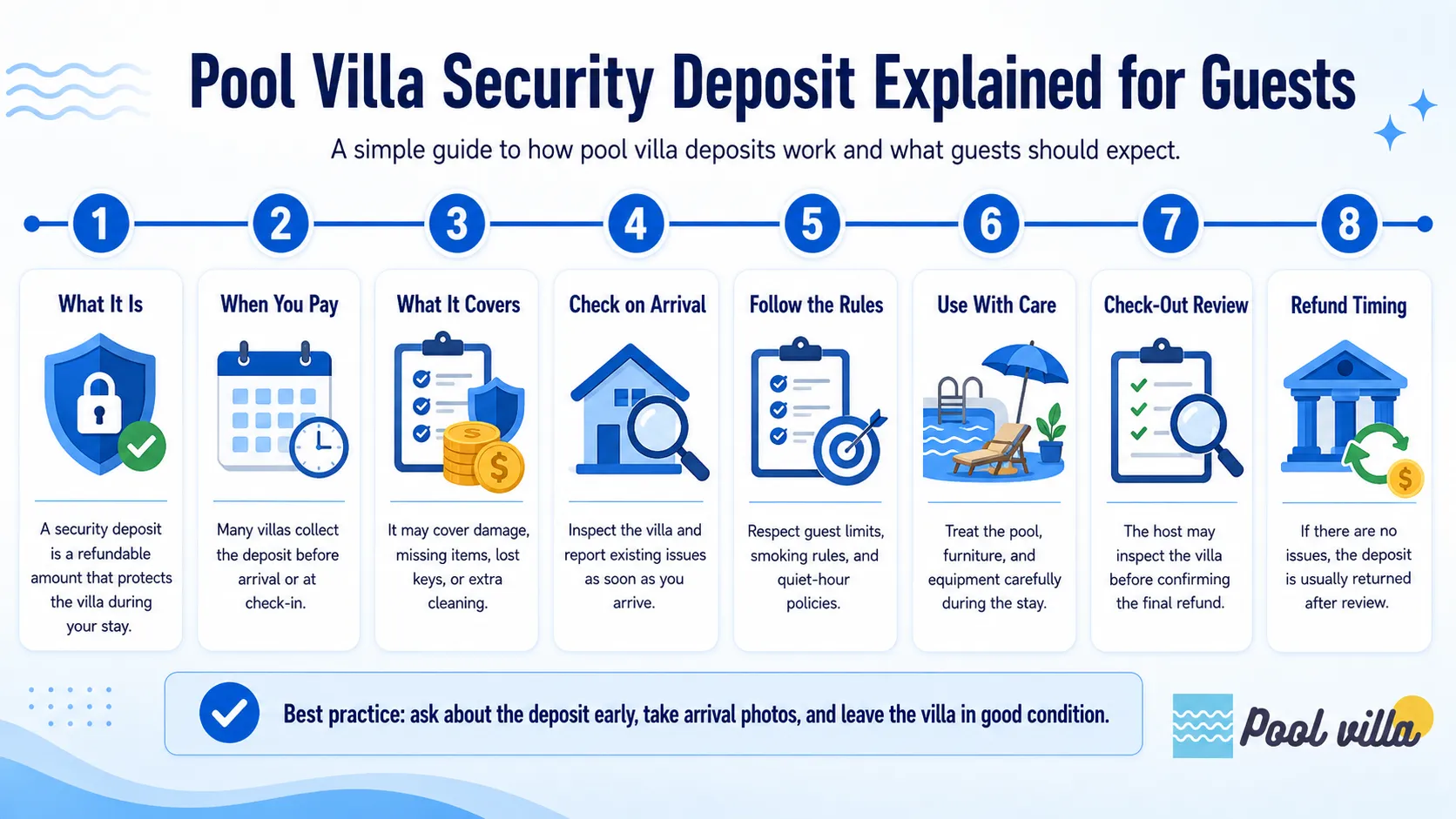
A pool villa security deposit is a refundable amount collected by the villa owner, host, or property manager before or during check-in. It is held as protection in case guests damage the property, lose items, break house rules, or leave the villa in a condition that requires extra cleaning or repair.
The deposit is not usually part of the rental price. It is separate from the nightly rate, cleaning fee, service fee, or booking fee. If guests follow the rules and return the villa in good condition, the deposit should normally be returned according to the property’s refund process.
A security deposit may be used to cover issues such as:
- Broken furniture or appliances
- Lost keys, key cards, or gate remotes
- Damaged pool equipment
- Stained towels, bedding, sofas, or curtains
- Missing kitchenware or decorative items
- Excessive cleaning needs
- Smoking in prohibited areas
- Unauthorized extra guests
- Serious noise complaints
- Damage caused by pets
- Misuse of BBQ, karaoke, or entertainment equipment
The exact terms depend on the villa. Some villas clearly explain the deposit amount and refund process in the listing. Others provide details after booking or before arrival. Guests should always confirm the policy before paying.
If you are new to villa stays, it is also useful to read about common pool villa rules so you understand how deposits connect with house rules, cleaning expectations, guest limits, and property care.
Why Pool Villas Require a Security Deposit
Pool villas require security deposits because guests are using a private property with many facilities and shared spaces. Compared with a hotel room, a villa usually includes more areas that need to be maintained, cleaned, and protected.
A hotel can often manage minor room issues through standard operations. A private villa, however, may have only one booking group at a time. If something is broken, missing, or left in poor condition, the host may need to repair or replace it before the next guests arrive.
A deposit helps protect the property and encourages responsible use. It also creates a clear financial process if damage occurs.
For guests, the deposit can also be useful because it makes responsibilities clearer. When the host explains what the deposit covers, guests know which rules matter most. This reduces misunderstanding during check-in, check-out, and final inspection.
A security deposit is closely connected to other villa policies, including check-in and check-out rules, cleaning and damage rules, and extra charges. Guests should review these policies together instead of treating the deposit as a separate issue.
Is a Security Deposit the Same as an Extra Fee?
A security deposit is not the same as an extra fee. This is an important distinction.
An extra fee is a cost you pay for something additional, such as extra guests, pet cleaning, early check-in, late check-out, BBQ equipment, electricity usage, or additional bedding. Once charged, an extra fee is usually not refunded.
A security deposit, on the other hand, is normally refundable. It is held temporarily and returned if there are no deductions.
However, confusion can happen when guests do not read the terms carefully. Some listings may show a low nightly price but require additional payments later. Others may combine deposits, cleaning fees, and extra charges in a way that is not immediately obvious.
Before booking, guests should ask:
- Is the deposit refundable?
- How much is required?
- When must it be paid?
- How will it be returned?
- When will it be returned?
- What can cause deductions?
- Are there separate extra fees in addition to the deposit?
To understand the difference more clearly, review the pool villa extra charges guide before confirming your stay.
How Pool Villa Security Deposits Are Usually Collected
The collection method depends on the host, booking platform, and property management process. There is no single standard that applies to every villa.
Some villas collect the deposit at check-in. Others require payment before arrival. Some use cash, while others accept bank transfer, card authorization, or platform-based payment.
Common collection methods include:
- Cash payment at check-in
- Bank transfer before arrival
- Bank transfer during check-in
- Card hold or authorization
- Payment through a booking platform
- Deposit included in the booking process
Guests should confirm the method in advance. This is especially important if the host requires cash, because arriving without the correct amount can delay check-in.
The deposit process should also be documented. Guests should keep proof of payment, such as a receipt, transfer slip, platform record, or written confirmation from the host.
If the deposit is collected at arrival, it should be handled alongside the normal check-in process. You can prepare more effectively by using a pool villa arrival checklist before travel day.
When Is the Security Deposit Returned?
Deposit return timing varies by villa. Some hosts return the deposit immediately after check-out inspection. Others return it later after the property has been cleaned and checked carefully.
A same-day refund may be possible if the host or villa manager inspects the property before guests leave. However, some villas need more time to check bedrooms, bathrooms, pool equipment, kitchenware, linens, appliances, and outdoor areas.
The refund timing may depend on:
- Whether the host inspects the villa in person
- Whether housekeeping needs to check the property
- Whether there are missing or damaged items
- Whether utility or cleaning charges need calculation
- Whether the deposit was paid by cash, transfer, card, or platform
- Whether guests leave outside normal check-out hours
Before booking, ask when the deposit is usually returned. Before check-out, confirm the process again.
If a refund is delayed, communication matters. Guests should stay polite, keep payment proof, and ask for a clear update. A reliable host should be able to explain the reason for the delay and the expected return timeline.
What Can Cause Deposit Deductions?
Deposit deductions usually happen when the property is damaged, rules are violated, or the villa requires additional work after guests leave.
Not every issue leads to a deduction. Normal use is expected. A used towel, light dishwashing, or ordinary trash from a normal stay should not be treated the same as serious damage or excessive mess. The key issue is whether the villa is returned in a reasonable condition and whether guests followed the agreed rules.
Property Damage
Damage may include broken furniture, damaged appliances, cracked glass, broken doors, damaged locks, stained sofas, damaged mattresses, broken lights, or misuse of equipment.
If something breaks during the stay, report it quickly. Honest reporting helps resolve the issue more fairly than waiting for the host to discover it after departure.
For more detail, see the pool villa damage guide.
Lost Keys or Access Devices
Keys, key cards, gate remotes, parking cards, and digital access devices are common sources of deductions. Replacing them can be costly, especially if security access needs to be changed.
Guests should keep all access items in a safe place and return them according to the host’s instructions.
Stains and Excessive Cleaning
Stained towels, bedding, curtains, sofas, carpets, or poolside cushions may lead to cleaning or replacement charges. Food spills, makeup stains, oil stains, and smoke odor can be difficult to remove.
Excessive cleaning may also be charged if guests leave large amounts of trash, dirty dishes, food waste, BBQ mess, or heavily soiled areas.
The pool villa cleaning and damage rules guide explains how cleaning responsibilities usually work.
Unauthorized Guests
Bringing more guests than allowed can affect safety, pricing, cleaning, utilities, parking, and villa capacity. Some hosts deduct from the deposit if guest limits are violated.
Before arrival, confirm the approved number of guests and whether visitors are allowed. If your group size changes, inform the host early.
Smoking, Pets, and Party Violations
Smoking inside prohibited areas, bringing pets without approval, or hosting parties against the rules can lead to deductions. These violations may create cleaning costs, odor removal, neighbor complaints, or property damage.
Guests should review the pool villa pet, smoking, and party policy guide before booking if any of these issues apply to the stay.
Pool and Outdoor Area Misuse
A private pool is one of the main benefits of a villa, but it must be used responsibly. Broken pool lights, damaged tiles, blocked filters, glass in the pool area, or misuse of pool equipment may result in deductions.
Guests should follow pool rules and review pool safety for villa guests before arrival.
How to Protect Your Security Deposit
The best way to protect your deposit is to understand the rules before arrival and treat the villa responsibly during the stay.
Start by reading the full listing, not only the photos and price. Pay attention to guest limits, check-in procedures, cleaning rules, quiet hours, smoking restrictions, pet rules, party policy, and damage responsibility.
When you arrive, inspect the villa briefly. If you notice existing damage, stains, missing items, broken equipment, or cleanliness issues, report them immediately. Photos or videos can help create a clear record.
During the stay, use the villa carefully. Avoid moving furniture without permission, keep food and drinks away from stain-sensitive areas, supervise children near the pool, avoid glassware around wet areas, and follow kitchen or BBQ instructions.
Before check-out, leave enough time to pack, tidy shared areas, collect belongings, return keys, and complete any inspection process.
A practical pre-departure check may include:
- Wash or gather used dishes
- Dispose of trash properly
- Check bedrooms and bathrooms for belongings
- Return keys, cards, and remotes
- Report breakage honestly
- Check for stains or spills
- Turn off lights and air conditioning
- Return furniture to its original place
- Confirm deposit return steps with the host
For a broader preparation process, use the pool villa stay checklist before and during your trip.
What Guests Should Ask Before Paying a Deposit
Guests should not be afraid to ask questions about the deposit. A clear deposit policy benefits both sides.
Before paying, ask the host:
- How much is the deposit?
- Is it fully refundable?
- When is it collected?
- What payment methods are accepted?
- When will it be returned?
- How will it be returned?
- What can cause deductions?
- Will deductions be explained with evidence?
- Is there a written receipt or confirmation?
- Are there any extra fees separate from the deposit?
If the host cannot explain the deposit clearly, consider comparing other properties. A professional listing should make key payment terms understandable before booking.
You can also use the questions before choosing a pool villa checklist to review deposit terms alongside location, guest limits, facilities, safety, and total cost.
Common Mistakes Guests Make With Security Deposits
One common mistake is assuming the deposit is an unfair extra charge. In most cases, the deposit is refundable and exists to protect the property.
Another mistake is not preparing the payment method. If the villa requires cash or transfer at check-in, guests who are unprepared may delay the arrival process.
Some guests also forget to report existing damage when they arrive. If an item was already broken or stained, the host needs to know immediately. Waiting until check-out can create disagreement.
Another mistake is treating the villa like a hotel room. A pool villa often includes more facilities and more responsibility. Guests should take care of kitchens, pool areas, entertainment equipment, outdoor furniture, and shared spaces.
Groups sometimes make the mistake of not assigning responsibility. One person books the villa, but many people use the property. If damage happens, the main booker may still be responsible. For group trips, it is wise to discuss rules and responsibility before arrival.
Guests also sometimes leave too quickly at check-out without allowing time for inspection. If the host needs to check the property later, the refund may take longer.
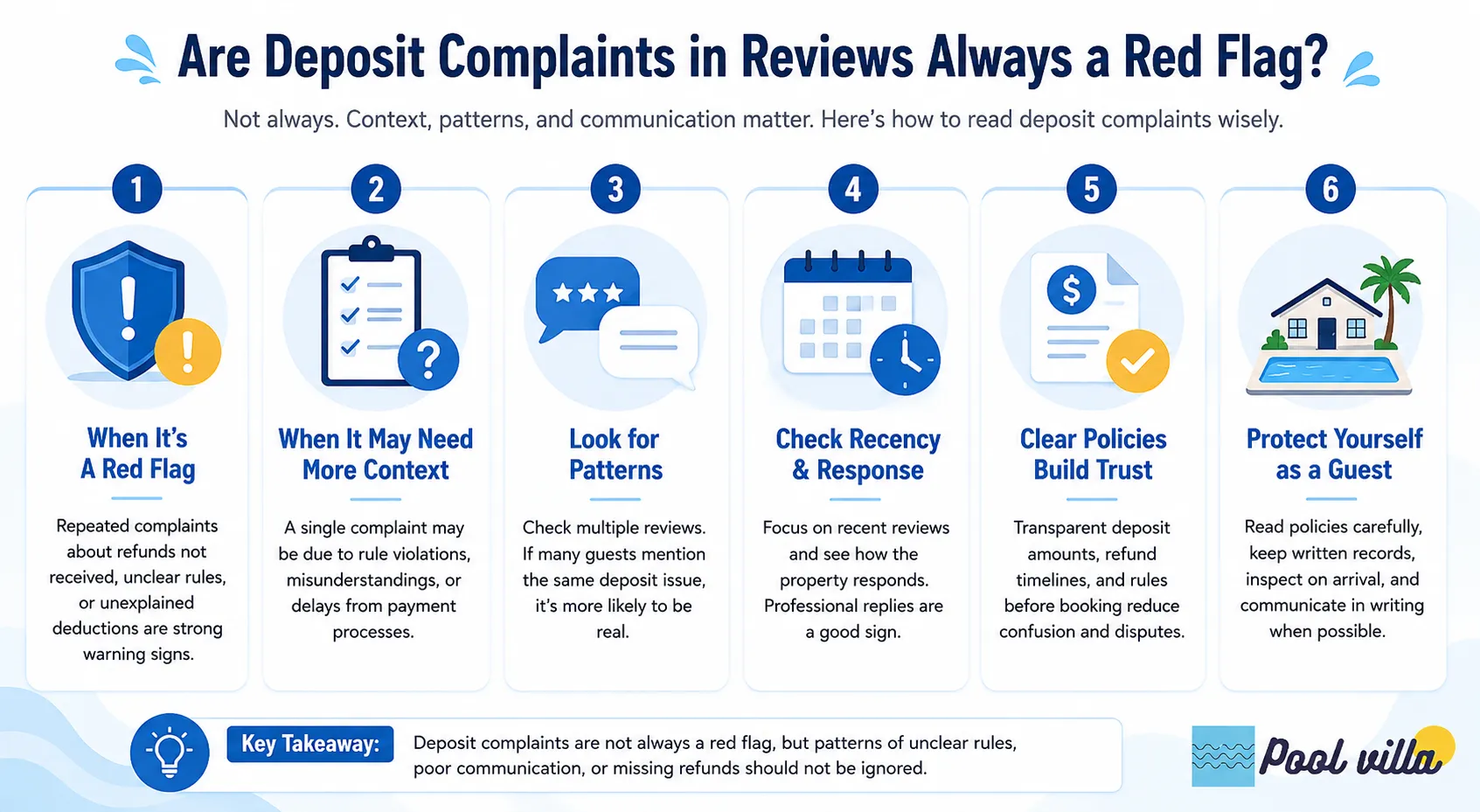
What to Do If There Is a Deposit Dispute
Deposit disputes can happen when guests and hosts disagree about damage, cleaning, missing items, or rule violations. The best approach is calm, documented communication.
Start by asking the host to explain the deduction clearly. Request details about what was damaged, missing, or charged. If possible, ask for photos, receipts, or a written breakdown.
Then review your own evidence. This may include arrival photos, messages sent to the host, payment proof, booking terms, and check-out records.
If the booking was made through a platform, follow the platform’s dispute process. If the booking was direct, rely on written communication and documented evidence.
The goal should be resolution, not conflict. Some deductions may be valid if damage happened. Others may be misunderstandings that can be solved with clear records.
Guests can reduce the risk of disputes by reporting issues early, keeping communication in writing, and confirming the deposit policy before arrival.
Timing and Expectations
Guests should expect the deposit process to be handled according to the villa’s own policy. Some refunds are immediate, while others take longer because the property must be inspected after departure.
Do not assume every villa returns deposits the same way. A small villa with in-person check-out may return the deposit quickly. A larger villa with many rooms, pool equipment, kitchen items, and outdoor areas may need more time.
Early check-out, self check-out, late-night departure, or remote management can also affect refund timing.
The best expectation is simple: confirm the refund process before booking, keep proof of payment, and leave the villa in good condition.
Conclusion
A pool villa security deposit is a standard way for hosts to protect their property while giving guests access to a private villa, pool, and shared facilities. It is usually refundable, but deductions may apply if there is damage, missing property, excessive cleaning, lost keys, unauthorized guests, or serious rule violations.
Guests can protect their deposit by reading the rules carefully, asking questions before booking, inspecting the villa on arrival, reporting existing issues early, using facilities responsibly, and completing check-out properly.
A security deposit should not be a source of stress when expectations are clear. With good communication and responsible use of the property, guests can enjoy a smoother pool villa stay and improve the chance of receiving the full deposit back.