Pool villas are designed to provide privacy, flexibility, and a more relaxed travel experience than traditional hotels. Private swimming pools, spacious living areas, outdoor dining spaces, and shared family environments are often the main reasons travelers choose this type of accommodation.
However, greater privacy also means greater responsibility.
Unlike hotels, most pool villas operate with limited on-site staff supervision. Guests are often responsible for monitoring children, managing shared spaces, organizing activities, and maintaining safe behavior throughout the stay. Because of this, safety becomes one of the most important factors in creating a smooth and enjoyable villa experience.
Many travelers focus mainly on location, pool design, luxury features, or social media appeal when booking a villa. In practice, the overall experience is often affected more by practical safety considerations such as pool visibility, slippery surfaces, lighting quality, child supervision, emergency preparation, and group coordination.
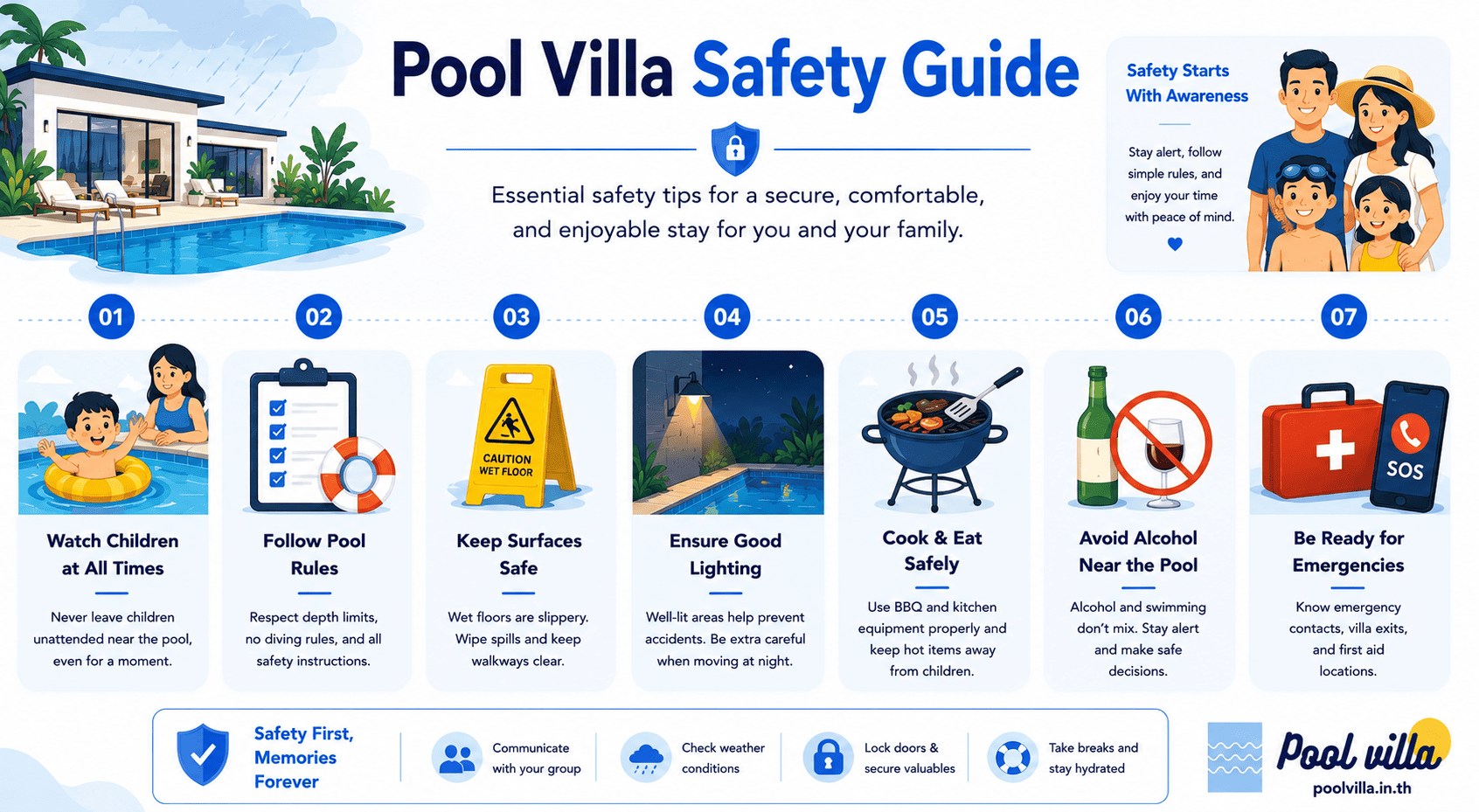
A proper pool villa safety guide helps guests reduce unnecessary risks while still enjoying the privacy and flexibility that villa accommodation offers.
This article explains the most important safety considerations for pool villa guests and families, including pool safety, child supervision, nighttime precautions, weather awareness, group travel risks, kitchen safety, emergency preparation, and common mistakes travelers should avoid. For a broader overview of villa accommodation, visit the Complete Guide to Pool Villas.
What Is a Pool Villa Safety Guide?
A pool villa safety guide is a practical framework that helps travelers identify and manage common risks during a villa stay.
Unlike general hotel safety advice, pool villa safety focuses heavily on private environments where guests are more independent and often spend extended time around pools, outdoor spaces, kitchens, rooftops, balconies, and shared living areas.
A villa environment may feel relaxed and comfortable, but it still contains many potential hazards if guests become careless or unprepared.
A complete safety approach usually includes:
- Pool supervision
- Child safety
- Outdoor movement awareness
- Nighttime precautions
- Kitchen and BBQ safety
- Emergency preparation
- Weather-related planning
- Group coordination
Travelers who are unfamiliar with villa accommodation should also read What Is a Pool Villa? and How Does a Pool Villa Work?.
Why Pool Villa Safety Matters
Safety matters because pool villas create a very different environment from hotels.
Hotels often provide centralized security, full-time staff presence, standardized safety systems, public surveillance, and managed facilities. Pool villas usually provide more privacy and independence instead.
This independence improves flexibility and comfort, but it also means guests must take more personal responsibility for safety decisions throughout the stay.
This becomes especially important during family vacations with children, group gatherings, night swimming, BBQ events, rainy weather, extended stays, and social events involving alcohol.
Many villa-related accidents are not caused by major emergencies. Instead, they often happen because of small mistakes such as poor supervision, slippery flooring, overcrowded pools, weak lighting, or lack of preparation.
Good safety planning reduces these risks significantly.
Pool Safety Should Be the Highest Priority
The swimming pool is usually the main feature of a villa stay, but it is also the area where the highest safety risks exist.
Not all pools are designed equally. Some prioritize luxury appearance over practical family safety.
Before booking a property, guests should carefully review the pool layout and surrounding environment.
Important Pool Features to Evaluate
Travelers should pay attention to:
- Pool depth
- Shallow zones
- Entry steps
- Pool lighting
- Tile grip and slip resistance
- Visibility from indoor spaces
- Safety gates or barriers
Families with children usually benefit from villas where the pool remains clearly visible from the living room or dining area.
Travelers should also review the Pool Depth Safety Guide and Night Swimming Safety.
Avoid Overcrowding the Pool
Large groups often underestimate how quickly overcrowding increases risk around a private pool.
Overcrowded pools reduce visibility, create distractions, and increase the likelihood of slipping, collisions, or unsafe behavior.
This becomes even more dangerous during parties or social gatherings involving alcohol.
Groups planning shared trips should also read the Pool Villa Group Stay Planning Guide.
Child Safety Requires Constant Attention
Children naturally spend more time near the pool during villa stays than they typically would in hotels.
This creates a more enjoyable experience for families, but it also increases the need for active supervision.
Private pools often create a false sense of safety because the environment feels controlled and familiar.
In reality, accidents can happen very quickly when supervision becomes inconsistent.
Important Child Safety Practices
Parents should:
- Never leave children unsupervised near water
- Establish clear pool rules early
- Prevent running near wet surfaces
- Use flotation devices appropriately
- Monitor nighttime pool access
- Keep pool toys organized after use
Parents should also pay attention to outdoor stairs, rooftop areas, balcony railings, slippery walkways, and sharp furniture edges.
Families traveling with children should also review How to Plan a Pool Villa Stay With Children and the Pool Villa Child Safety Guide.
Nighttime Safety Often Gets Ignored
Many pool villas are designed for nighttime relaxation, outdoor dining, and evening swimming.
However, nighttime conditions significantly change the safety environment.
Reduced visibility combined with wet flooring, fatigue, distractions, or alcohol use can increase accident risks quickly.
Important Nighttime Safety Habits
Guests should:
- Check outdoor lighting before sunset
- Avoid swimming alone at night
- Keep walkways dry and organized
- Monitor children carefully
- Avoid excessive distractions near the pool
- Use caution around rooftop areas
Some travelers treat nighttime swimming casually because the environment feels private and relaxing. In practice, nighttime conditions require more caution than daytime use.
Travelers planning evening activities should also review Night Swimming Safety.
Slippery Surfaces Are a Major Risk
Many non-pool injuries during villa stays involve slips and falls rather than swimming accidents.
Outdoor areas often become dangerous because guests are barefoot, distracted, or moving quickly between the pool and indoor spaces.
Common High-Risk Areas
Guests should pay close attention around:
- Pool decks
- Outdoor showers
- Wet stairs
- Balcony entrances
- Garden pathways
- Rooftop terraces
Simple habits make a major difference. Guests should avoid running near the pool, carrying glass near wet areas, leaving towels on walkways, or walking barefoot at night in poorly lit spaces.
Kitchen and BBQ Safety Matter More Than Guests Expect
Many travelers focus heavily on pool-related risks while overlooking kitchen and BBQ safety.
During group stays, shared kitchens can quickly become crowded and disorganized. This becomes especially important for families and larger groups preparing multiple meals together.
Important Kitchen Safety Habits
Guests should:
- Store knives safely
- Clean spills immediately
- Keep electrical devices dry
- Avoid overcrowding cooking areas
- Supervise children near hot surfaces
Groups planning shared meals should also read the Pool Villa Meal Planning Guide and review Pool Villa Kitchen Facilities.
BBQ Safety Considerations
BBQ activities are one of the most popular parts of a villa stay, but they also create fire and injury risks if handled carelessly.
Before using BBQ facilities, guests should confirm:
- Ventilation conditions
- Fuel requirements
- Cleaning expectations
- Fire safety rules
- Nearby seating safety
Guests should also review Pool Villa BBQ Facilities.
Group Stays Create Additional Safety Challenges
Large groups can create more distractions, noise, and movement around the villa. This often increases safety risks if expectations are not discussed early.
Shared responsibility becomes especially important during larger gatherings.
Important Group Safety Considerations
Groups should:
- Assign child supervision responsibilities
- Avoid overcrowding the pool
- Monitor alcohol consumption
- Respect quiet hours
- Keep emergency contacts accessible
Groups organizing shared trips should also read the Pool Villa Group Stay Planning Guide and Pool Villa Group Etiquette.
Weather Conditions Can Affect Villa Safety
Weather conditions often change the safety level of outdoor villa spaces more than guests expect.
Rain, strong wind, and thunderstorms can affect pool visibility, outdoor flooring grip, electricity stability, road access, and nighttime movement.
When Guests Should Avoid Pool Use
Guests should avoid using the pool:
- During lightning conditions
- During heavy storms
- When visibility becomes poor
- When surfaces become dangerously slippery
Guests traveling during unstable weather seasons should also review Pool Villa Rainy Day Plan.
Prepare for Emergency Situations
Most villa stays are safe, but emergency preparation still matters.
Guests should understand the property layout early after arrival instead of waiting until a problem occurs.
Important Emergency Preparation Steps
Guests should:
- Save emergency phone numbers
- Identify exits and entrances
- Locate first aid supplies
- Check nearby hospitals or clinics
- Store important documents safely
Travelers should also review the Pool Villa Arrival Checklist before check-in.
Safety Starts With Choosing the Right Villa
Good safety planning begins before the booking is confirmed.
Some villas are naturally more suitable for families, elderly travelers, or larger groups than others. A villa may look impressive in photos but still be difficult to manage safely if it has poor lighting, steep stairs, exposed balconies, or limited pool visibility.
Features That Often Improve Safety
Guests should look for:
- Visible pool areas
- Non-slip surfaces
- Good lighting systems
- Child-friendly layouts
- Secure balcony railings
- Easy emergency access
Travelers comparing properties should also read the guide on how to compare pool villas.
Common Pool Villa Safety Mistakes
Assuming Private Means Safe
Privacy improves comfort, but it does not eliminate safety risks. Guests still need active supervision and realistic awareness throughout the stay.
Ignoring Pool Rules During Social Activities
Music, alcohol, and larger gatherings can create distractions that increase accident risks around water.
Overlooking Small Hazards
Minor issues such as wet floors, misplaced toys, poor lighting, or cluttered walkways can quickly become dangerous.
Choosing Appearance Over Practical Safety
Some guests prioritize luxury aesthetics while ignoring practical safety considerations such as pool visibility, stair placement, or surface materials.
Practical Safety Tips for a Better Villa Stay
A safe villa experience usually comes from preparation and awareness rather than strict control.
Before arrival:
- Review the villa layout carefully
- Check pool safety features
- Prepare emergency information
- Discuss group responsibilities
- Pack appropriate safety supplies
- Monitor weather forecasts
Guests should also stay realistic about their surroundings instead of assuming the environment is automatically risk-free because it feels private or luxurious.
Conclusion
A practical pool villa safety guide helps guests and families create a safer, more comfortable, and more enjoyable travel experience.
Most villa-related risks can be reduced significantly through preparation, supervision, realistic planning, and awareness of the property layout.
The best pool villa stays combine relaxation and privacy with responsible behavior around pools, outdoor spaces, kitchens, shared activities, and nighttime conditions.
To continue learning, explore the guides on pool villa planning, pool villa safety, pool villa rules, and pool villa facilities.