
Accidents can happen during any pool villa stay. A glass may break, a chair may become damaged, a remote control may stop working, a door handle may come loose, or kitchen equipment may fail during use. In most cases, the problem itself is not the biggest issue. The real issue is how guests respond.
A pool villa is different from a hotel room because guests often use more private facilities, including a swimming pool, kitchen, BBQ area, outdoor furniture, appliances, entertainment equipment, bedrooms, bathrooms, and shared living spaces. With more space and more amenities, there is also more responsibility.
This pool villa damage guide explains what guests should do if something breaks, stops working, or becomes damaged during a stay. It covers when to report damage, how to communicate with the host, what not to do, how security deposits may be affected, and how to avoid unnecessary disputes.
For a broader understanding of respectful guest behavior, read the pool villa guest etiquette guide. If you are staying with a larger group, the pool villa group etiquette guide is also useful.
What Is a Pool Villa Damage Guide?
A pool villa damage guide helps guests understand what to do when something in the villa is broken, damaged, missing, stained, or no longer working properly. It gives practical steps for handling the situation responsibly without creating unnecessary conflict with the host or property manager.
Damage can include obvious physical breakage, such as broken glass, damaged furniture, cracked tiles, stained bedding, or broken appliances. It can also include functional issues, such as air conditioning not working, a leaking pipe, a faulty door lock, a blocked drain, pool equipment problems, or damaged BBQ tools.
Not all problems are caused by guests. Some issues may already exist before arrival or happen because of normal wear and tear. This is why documentation and early communication are important.
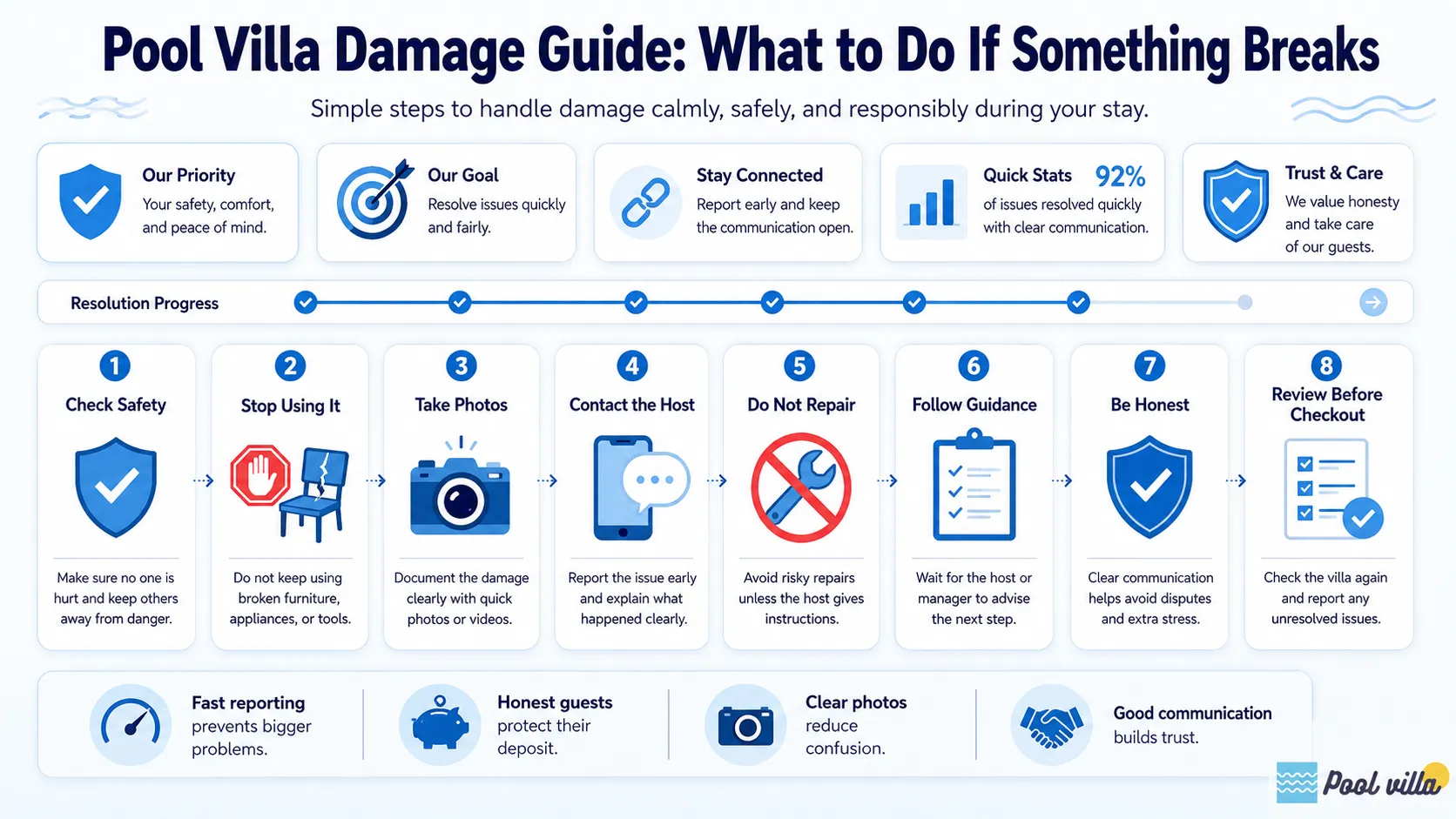
A good damage response usually includes:
- checking whether anyone is safe
- stopping the problem from getting worse
- taking photos or videos if useful
- informing the host or villa manager quickly
- following instructions
- avoiding unsafe repairs
- being honest about what happened
- keeping communication polite and clear
Handled properly, damage does not always become a major dispute. Ignored or hidden damage is usually what creates bigger problems.
Why Damage Reporting Matters
Damage reporting matters because a pool villa is a private property that must be maintained for current guests, future guests, the host, and cleaning or maintenance teams. When damage is reported early, it can often be repaired, documented, or managed before it becomes more serious.
Poor handling can create confusion. If the host discovers damage after check-out with no explanation, they may assume the guests caused it and failed to report it. This can lead to deposit deductions, extra charges, or a dispute that could have been avoided.
It Protects Guests From Misunderstandings
Early reporting creates a clear timeline. If something was already damaged when you arrived, report it immediately. If something breaks during your stay, explain what happened honestly.
This protects responsible guests from being blamed for damage they did not cause or from being accused of hiding a problem.
Guests should also inspect the property at arrival. The pool villa check-in and check-out rules guide explains why arrival checks and departure procedures are important.
It Helps the Host Fix Problems Quickly
Some issues need immediate attention. A leaking pipe, faulty electrical socket, broken lock, damaged pool ladder, or gas appliance issue should not wait until check-out.
Reporting problems early gives the host time to arrange repairs, provide instructions, or offer a safe alternative.
It Can Reduce Extra Costs
Damage that is reported early may be easier and cheaper to fix. Damage that is ignored may become worse.
For example, a small water leak can become a larger maintenance issue if guests do not report it. A broken appliance may become more expensive to repair if guests keep trying to use it incorrectly.
For related cost expectations, read the pool villa extra charges guide.
What to Do First If Something Breaks
When something breaks in a pool villa, stay calm and handle the situation in a practical order. The goal is to keep everyone safe, prevent the issue from getting worse, and communicate clearly.
Check Safety First
If the damage creates a safety risk, stop using the area or item immediately. This applies to broken glass, electrical issues, sharp edges, unstable furniture, faulty stairs, pool equipment, gas appliances, or slippery surfaces.
Keep children away from the area until the problem is handled.
If the issue involves the pool, read the pool safety guide for villa guests for broader safety awareness.
Stop Using the Damaged Item
Do not continue using something that is broken or unsafe. A damaged chair, cracked glass table, loose pool ladder, malfunctioning stove, or faulty appliance could cause injury or additional damage.
If the item is essential, contact the host and ask what to do next.
Take Photos or Videos
Photos and videos can help clarify what happened. They are especially useful for existing damage, stains, cracks, missing items, broken appliances, or property condition concerns.
Keep documentation factual. You do not need to take excessive photos, but clear evidence can prevent confusion later.
Contact the Host or Villa Manager
Report the problem as soon as reasonably possible. A short, clear message is usually best.
Explain what happened, when you noticed it, whether anyone is safe, and whether the item or area needs attention. Attach photos if relevant.
Avoid blaming language or emotional messages. Focus on facts.
How to Communicate Damage Clearly
Good communication can make the difference between a smooth resolution and a stressful dispute. Hosts and property managers usually want accurate information so they can decide what needs to happen next.
A helpful message might include:
- what broke or stopped working
- where it happened
- when it happened or when you noticed it
- whether it was already like that on arrival
- whether anyone was injured
- whether you stopped using it
- photos or videos
- a request for instructions
For example:
“Hi, we noticed that the bathroom door handle in the upstairs bedroom is loose and difficult to close. We stopped using the door forcefully to avoid making it worse. I’m sending a photo here. Please let us know what you would like us to do.”
This kind of message is calm, specific, and useful.
Do Not Hide Damage
Hiding damage is one of the worst mistakes guests can make. Even small damage can create bigger problems when it is ignored.
Hosts usually inspect the villa after check-out. Cleaning teams may also notice broken items, stains, missing equipment, or damaged furniture. If the guest did not report the issue, the host may assume the guest was trying to avoid responsibility.
Honest reporting builds trust. It also gives the host a chance to assess whether the issue was guest-caused damage, normal wear and tear, or a pre-existing problem.
The pool villa guest etiquette guide covers this principle as part of respectful guest behavior.
Do Not Attempt Unsafe Repairs
Guests should not attempt repairs unless the host gives clear and safe instructions. This is especially important for electrical systems, gas appliances, pool equipment, plumbing, air conditioning, locks, glass, heavy furniture, or structural issues.
Trying to fix something without permission can make the damage worse. It may also create safety risks or make it harder for the host to identify the original issue.
Simple actions may be fine, such as switching off a leaking tap, unplugging a faulty device, or moving away from broken glass. But technical repairs should be left to the host, manager, or qualified maintenance staff.
For property maintenance expectations, read the pool villa maintenance expectations guide.
Common Types of Pool Villa Damage
Damage can happen in different areas of the property. Understanding common examples helps guests stay alert and respond properly.
Furniture Damage
Furniture damage may include broken chairs, stained sofas, scratched tables, cracked outdoor furniture, or damaged bed frames.
Outdoor furniture needs special care because it may be exposed to pool water, sunlight, food, and frequent movement. Do not drag heavy furniture across tiles or leave cushions wet if the villa gives instructions to store them.
Kitchen and BBQ Damage
Kitchen and BBQ areas are common places for accidental damage. Guests may break dishes, burn pans, damage utensils, stain counters, or misuse appliances.
BBQ equipment can also be damaged through improper cleaning, unsafe fuel use, or moving the grill to the wrong area.
The pool villa BBQ and kitchen etiquette guide explains how to use cooking areas responsibly.
Pool Area Damage
Pool damage may include broken tiles, damaged ladders, stained decking, broken pool lights, damaged pool toys, or problems caused by food, glass, or debris near the water.
Guests should never touch pool pumps, filters, control panels, or chemical systems unless instructed by the host.
For responsible pool use, read the private pool etiquette guide and the pool villa pool hygiene guide.
Appliance and Equipment Problems
Air conditioning, TVs, speakers, karaoke systems, Wi-Fi routers, refrigerators, washing machines, microwaves, and water heaters may sometimes stop working.
Not every technical issue is guest-caused damage. Report the problem clearly and avoid repeated forced use if something is not functioning properly.
If entertainment equipment is involved, the pool villa karaoke facilities guide may help guests understand basic expectations.
Stains and Cleaning Issues
Stains on bedding, towels, sofas, rugs, curtains, or cushions can lead to cleaning or replacement charges if serious.
Food, sunscreen, makeup, hair dye, wine, coffee, oil, and pool water can all cause problems if not handled quickly.
If something spills, clean it safely if possible and report it if the stain remains.
Damage, Security Deposits, and Extra Charges
Many pool villas require a security deposit. This deposit may be used to cover damage, missing items, excessive cleaning, rule violations, or unpaid charges.
A deposit does not mean every issue will result in a deduction. It means the host has a way to cover costs if the property is damaged or rules are broken.
For more detail, read the pool villa security deposit guide.
What May Lead to Deductions
Deposit deductions may happen when guests damage furniture, break appliances, lose keys, stain linens, leave excessive mess, bring unauthorized guests, violate house rules, or fail to report problems.
The exact policy depends on the villa’s rules.
How to Reduce Deposit Disputes
Guests can reduce disputes by documenting existing damage on arrival, reporting new issues promptly, following house rules, keeping shared spaces clean, and checking out properly.
The goal is not to avoid responsibility. It is to make sure responsibility is fair and based on clear information.
What If the Damage Was Already There?
If you notice damage when you arrive, report it immediately. Do not wait until check-out.
Send a polite message with photos and a short explanation. For example:
“Hi, we just checked in and noticed a crack on the outdoor table near the pool. It was already there when we arrived, so we wanted to document it. I’m sending a photo for your reference.”
This protects both guests and hosts. It also gives the host a chance to confirm whether they already knew about the issue.
Arrival documentation is especially useful for furniture, stains, broken fixtures, damaged walls, missing items, or appliances that do not work.
What If a Child or Group Member Causes Damage?
In group stays, the person who made the booking is often responsible for the group’s behavior. If a child, friend, family member, or visitor causes damage, the group should still report it honestly.
Do not blame, argue, or hide the issue. Discuss it calmly within the group and contact the host.
For shared responsibility, read the pool villa group etiquette guide. Families should also review the pool villa child safety guide if children are staying in the villa.
What If Something Stops Working but No One Caused It?
Sometimes equipment fails through normal use. An air conditioner may stop cooling, a remote may run out of battery, a light may fail, or Wi-Fi may disconnect.
Report the issue without assuming blame. Explain what happened and ask for instructions.
For example:
“Hi, the air conditioner in the second bedroom is not cooling properly. We have not changed any settings except the normal temperature control. Could you please advise?”
This allows the host to assess the issue properly.
Common Mistakes Guests Make With Damage
Many damage-related disputes happen because guests respond poorly, not because the original issue was severe.
Waiting Until Check-Out
Waiting until check-out to mention damage makes it harder to understand what happened. It can also delay repairs for the next guest.
Report problems as soon as you notice them.
Trying to Fix Technical Problems
Guests may accidentally make damage worse by trying to repair appliances, pool equipment, locks, wiring, or plumbing. Unless the host gives safe instructions, do not attempt technical repairs.
Blaming Without Evidence
If damage was already there, document it calmly. Do not accuse the host or cleaning team without evidence. A clear photo and polite message are usually enough.
Ignoring Small Issues
Small issues can become bigger problems. A loose handle, minor leak, unstable chair, or strange appliance noise should be reported before it worsens.
Letting the Group Avoid Responsibility
In group stays, someone may break something and assume it does not matter. The person who booked the villa may still be held responsible. This is why group communication is important.
Practical Pool Villa Damage Checklist
On arrival:
- inspect key areas of the villa
- check bedrooms, bathrooms, kitchen, pool area, and shared spaces
- test essential appliances if needed
- photograph existing damage
- report concerns early
If something breaks:
- check safety first
- stop using the damaged item
- keep children away from unsafe areas
- take clear photos or videos
- contact the host or manager
- follow instructions
- avoid unsafe repairs
Before check-out:
- check every room
- report any unresolved problems
- return keys and access items
- clean obvious mess
- confirm whether the host needs photos or inspection
- leave on time
For general departure preparation, use the pool villa stay checklist and the pool villa arrival checklist.
When Should Guests Think About Damage Responsibility?
Guests should think about damage responsibility before booking and again before arrival. This is especially important for large groups, families with children, guests planning BBQ, guests using pool facilities heavily, or anyone staying in a villa with premium furniture and equipment.
Before booking, read the rules about deposits, damage, cleaning, and extra charges. Before arrival, remind the group to treat the villa carefully and report problems early.
During the stay, the best approach is simple: use facilities responsibly, avoid risky behavior, and communicate quickly if something goes wrong.
Conclusion
This pool villa damage guide helps guests understand what to do if something breaks, stops working, or becomes damaged during a villa stay. The most important principles are safety, honesty, documentation, and early communication.
Accidents can happen, but hiding damage or delaying reports usually makes the situation worse. Responsible guests check the villa on arrival, report existing issues, stop using damaged items, avoid unsafe repairs, and contact the host quickly when problems occur.
A pool villa stay works best when guests respect the property and handle issues professionally. Clear communication protects the guest, helps the host, and keeps the villa ready for future stays.
For more related guidance, continue with the pool villa rules and policies guide, the pool villa security deposit guide, and the pool villa guest etiquette guide.