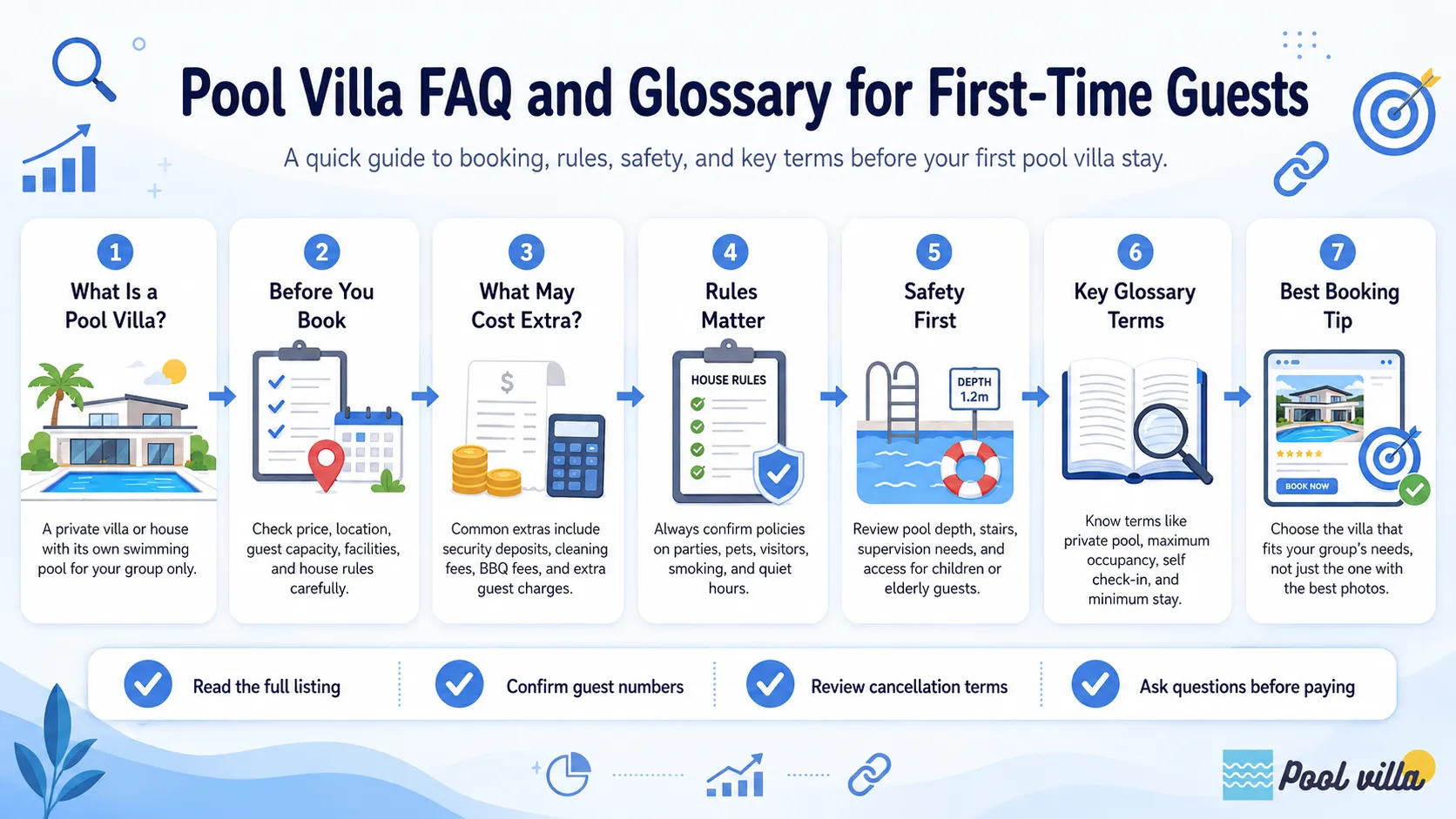

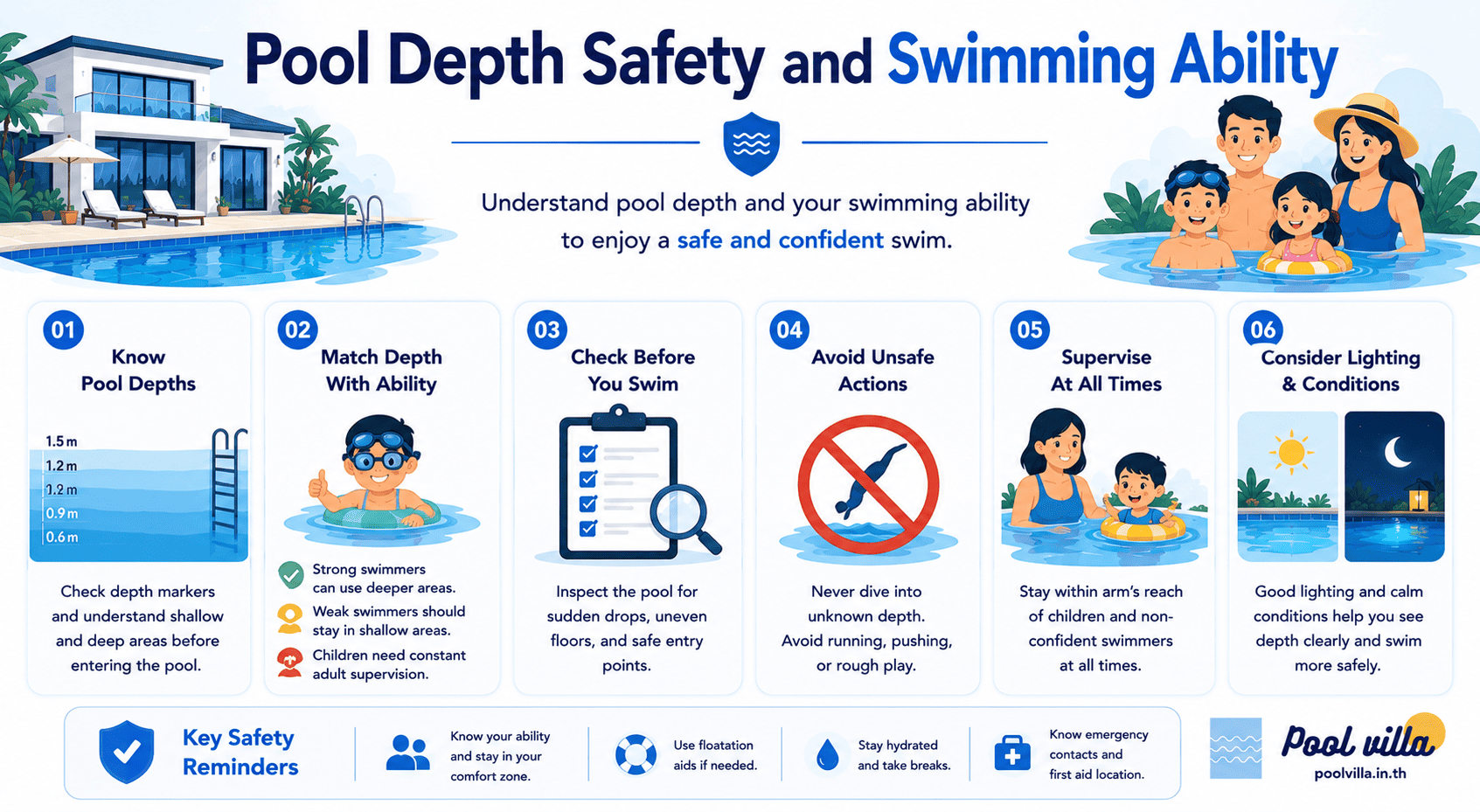
Swimming pools are one of the main attractions of a private villa stay, but pool depth safety is often overlooked by travelers who focus more on design, appearance, or entertainment features. In reality, understanding pool depth is one of the most important parts of creating a safer swimming environment for families, children, elderly guests, and inexperienced swimmers.
Not all pools are designed the same way. Some villas include shallow lounging pools, while others feature deep swimming zones, infinity-edge layouts, plunge pools, or mixed-depth designs that may be difficult to judge visually.
Many pool-related accidents happen because guests underestimate water depth or assume all pools are similar. Poor lighting, unclear depth transitions, slippery surfaces, and unfamiliar layouts can quickly create dangerous situations during an otherwise relaxing trip.
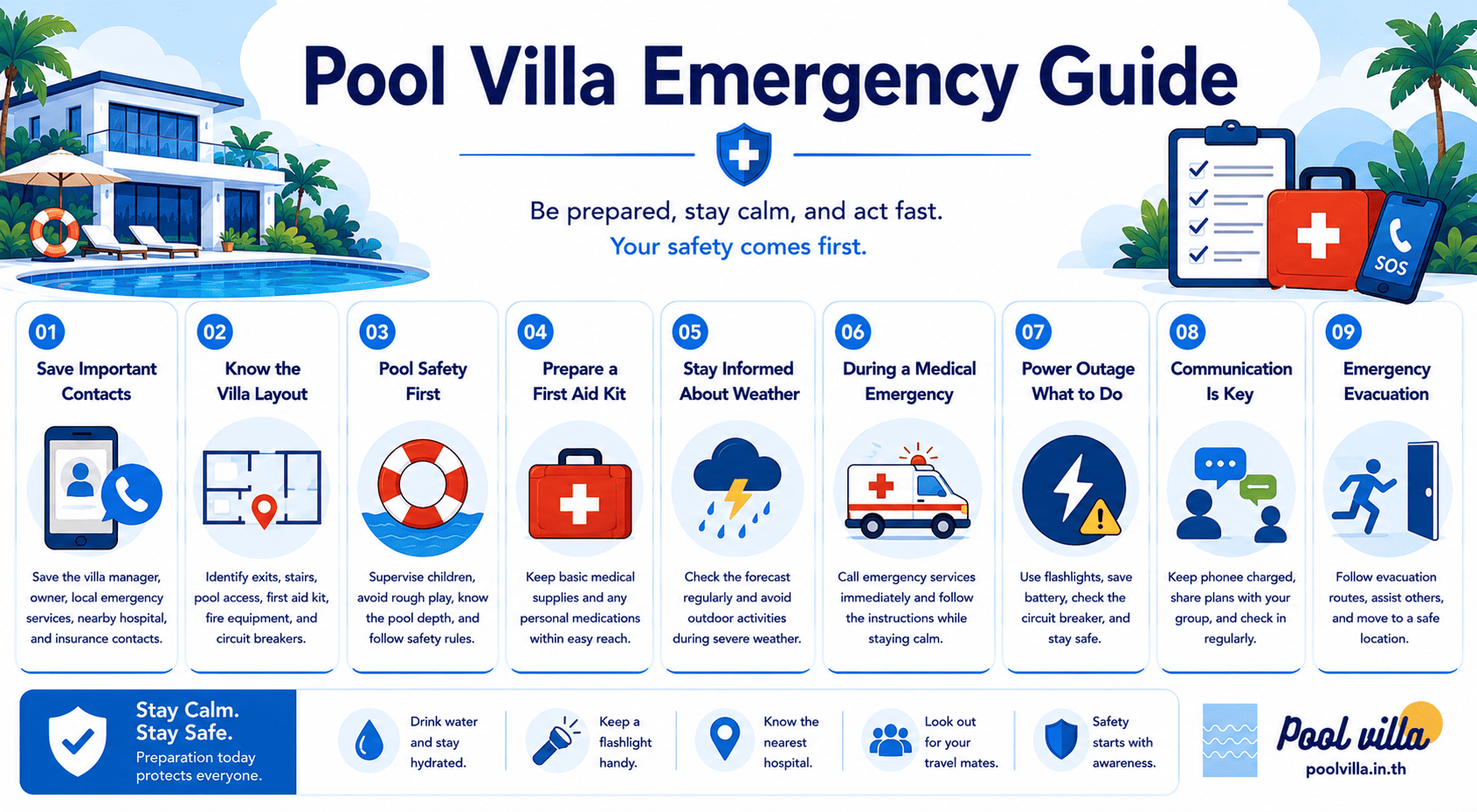
This guide explains how pool depth safety works, how swimming ability affects pool risk levels, and what travelers should check before using a private villa pool. For broader guidance about swimming safely during a villa stay, visit the Pool Safety for Villa Guests.
What Is Pool Depth Safety?
Pool depth safety refers to understanding how deep different areas of a swimming pool are and how those depth changes affect swimming conditions, supervision requirements, and overall guest safety.
In private villas, pools are often designed for aesthetics as much as functionality. Some pools may include:
- Shallow lounging sections
- Deep swimming areas
- Infinity-edge designs
- Sunken seating zones
- Uneven floor transitions
Without understanding these features, guests may enter the water without realizing depth changes or potential risks.
Pool depth safety becomes especially important for:
- Children
- Non-swimmers
- Weak swimmers
- Elderly travelers
- Large family groups
Travelers who are unfamiliar with villa accommodation should also read What Is a Pool Villa? and Pool Villa Safety Guide.
Why Pool Depth Safety Matters
Depth directly affects how safe a swimming environment feels and functions.
A pool that appears calm and attractive may still contain sudden depth transitions, slippery steps, or areas unsuitable for inexperienced swimmers.
Private villa pools are often less standardized than hotel pools. Some are designed mainly for visual appeal rather than family practicality.
This becomes especially important during:
- Family vacations
- Night swimming
- Group stays
- Children’s pool activities
- Alcohol-related social events
Many guests assume they can immediately judge pool depth visually. However, water color, lighting, reflections, and infinity-edge designs can make depth difficult to estimate accurately.
Understanding the pool layout before swimming significantly reduces unnecessary risk.
Different Pool Depth Types in Villas
Private villa pools vary widely depending on property design and intended use.
Shallow Pools
Shallow pools are often designed for relaxation, lounging, or child-friendly use.
These pools usually provide:
- Easier standing access
- Lower risk for inexperienced swimmers
- Better visibility for supervision
However, shallow pools can still become dangerous if surfaces are slippery or overcrowded.
Mixed-Depth Pools
Many villas use mixed-depth pool layouts that combine shallow and deeper swimming areas.
This design is popular because it supports both relaxation and recreational swimming.
Guests should identify where depth changes occur before entering the pool.
Deep Pools
Deep pools are often designed for swimming, diving aesthetics, or luxury visual appeal.
These pools may not be suitable for:
- Young children
- Weak swimmers
- Elderly guests
Families should carefully review depth details before booking a property.
Swimming Ability Changes Safety Requirements
Pool depth safety depends heavily on the swimming ability of the guests using the pool.
A depth that feels comfortable for a strong swimmer may create serious risks for children or inexperienced swimmers.
Strong Swimmers
Experienced swimmers usually adapt more easily to deeper pools and mixed-depth layouts.
However, strong swimmers can still face risks during:
- Night swimming
- Poor lighting conditions
- Alcohol consumption
- Slippery pool access
Weak Swimmers
Weak swimmers should stay in clearly identified shallow areas and avoid sudden depth transitions.
Guests should also avoid swimming alone in unfamiliar pools.
Children
Children require continuous supervision regardless of pool depth.
Even shallow water can become dangerous without active adult attention.
Families traveling with children should also read Pool Villa Child Safety Guide.
How to Check Pool Depth Safely
Guests should inspect the pool carefully before swimming instead of assuming the layout is obvious.
Important Things to Check
Before entering the pool, guests should identify:
- Depth markers
- Pool entry steps
- Shallow zones
- Sudden drop-offs
- Infinity edges
- Slippery surfaces
If depth markings are unclear, guests should ask the property owner or test the pool carefully before full use.
Night Swimming Increases Depth Risks
Pool depth becomes harder to judge during nighttime swimming.
Lighting reflections, dark flooring, and reduced visibility can make even familiar pools more dangerous after sunset.
Important Night Swimming Safety Tips
Guests should:
- Check pool lighting before swimming
- Avoid diving at night
- Use caution around pool edges
- Supervise children carefully
- Avoid swimming alone
Travelers planning nighttime swimming should also review Night Swimming Safety.
Pool Depth Safety During Group Stays
Large group stays often increase pool-related risks because guests become distracted during social activities.
Music, games, alcohol, and overcrowding can reduce awareness around pool depth and swimming conditions.
Important Group Safety Practices
Groups should:
- Avoid overcrowding the pool
- Monitor weaker swimmers carefully
- Prevent rough play near depth transitions
- Keep children supervised continuously
Groups organizing shared trips should also review the Pool Villa Group Stay Planning Guide.
Weather Conditions Can Affect Pool Depth Awareness
Rain, poor lighting, and water reflections can make pool depth harder to judge accurately.
During heavy rain or storms, visibility may decrease significantly.
Guests should avoid swimming when:
- Visibility becomes poor
- Lightning conditions develop
- Outdoor surfaces become slippery
Travelers staying during unstable weather periods should also review Pool Villa Rainy Day Plan.
Common Pool Depth Safety Mistakes
Assuming All Pools Have Similar Depths
Villa pools vary significantly in design. Guests should never assume one pool is similar to another.
Diving Without Checking Depth
Some guests dive into pools without inspecting the layout first. This creates unnecessary injury risk.
Ignoring Children’s Swimming Ability
Children may feel confident in shallow areas but panic quickly in deeper water.
Underestimating Night Swimming Risks
Pool depth becomes harder to judge accurately at night, especially in pools with dark flooring or weak lighting.
Practical Pool Depth Safety Tips
A safer swimming experience usually comes from preparation and awareness rather than strict rules.
Before using the pool:
- Inspect the full pool layout
- Identify shallow and deep areas
- Check lighting quality
- Supervise children continuously
- Avoid rough play near depth changes
- Communicate pool rules clearly
Guests should also remain realistic about their own swimming ability instead of assuming all pools are easy to manage.
Conclusion
Pool depth safety is one of the most important parts of creating a safer and more enjoyable villa swimming experience.
Understanding depth transitions, swimming ability, nighttime visibility, and pool design helps guests reduce unnecessary risks during family vacations, group trips, and private villa stays.
The best villa swimming experiences combine relaxation with realistic awareness, proper supervision, and practical safety habits around the pool.
To continue learning, explore the guides on pool villa safety, pool villa planning, pool villa rules, and pool villa facilities.