
Swimming pools are one of the main reasons travelers choose private villas over traditional hotels. A clean and well-maintained pool improves comfort, supports guest safety, and creates a better overall villa experience. However, many guests focus only on appearance without understanding the importance of proper pool hygiene.
Clear water alone does not always mean a pool is hygienic.
Private villa pools require regular cleaning, balanced water treatment, filtration management, and responsible guest behavior to remain safe and comfortable throughout a stay. In poorly maintained pools, bacteria growth, cloudy water, skin irritation, and unpleasant odors can quickly affect the guest experience.
Because of this, understanding pool villa pool hygiene is important for both travelers and property owners.
This guide explains how pool hygiene works in private villas, why cleanliness standards matter, what guests should check before swimming, and the most common hygiene mistakes that affect villa pools. For broader guidance about safe swimming during a villa stay, visit the Pool Safety for Villa Guests.
What Is Pool Villa Pool Hygiene?
Pool villa pool hygiene refers to the cleanliness standards, water treatment practices, and maintenance routines used to keep private villa pools safe and comfortable for guests.
Unlike large hotel pools that often have dedicated maintenance teams, many villa pools operate with smaller cleaning schedules and more independent management systems.
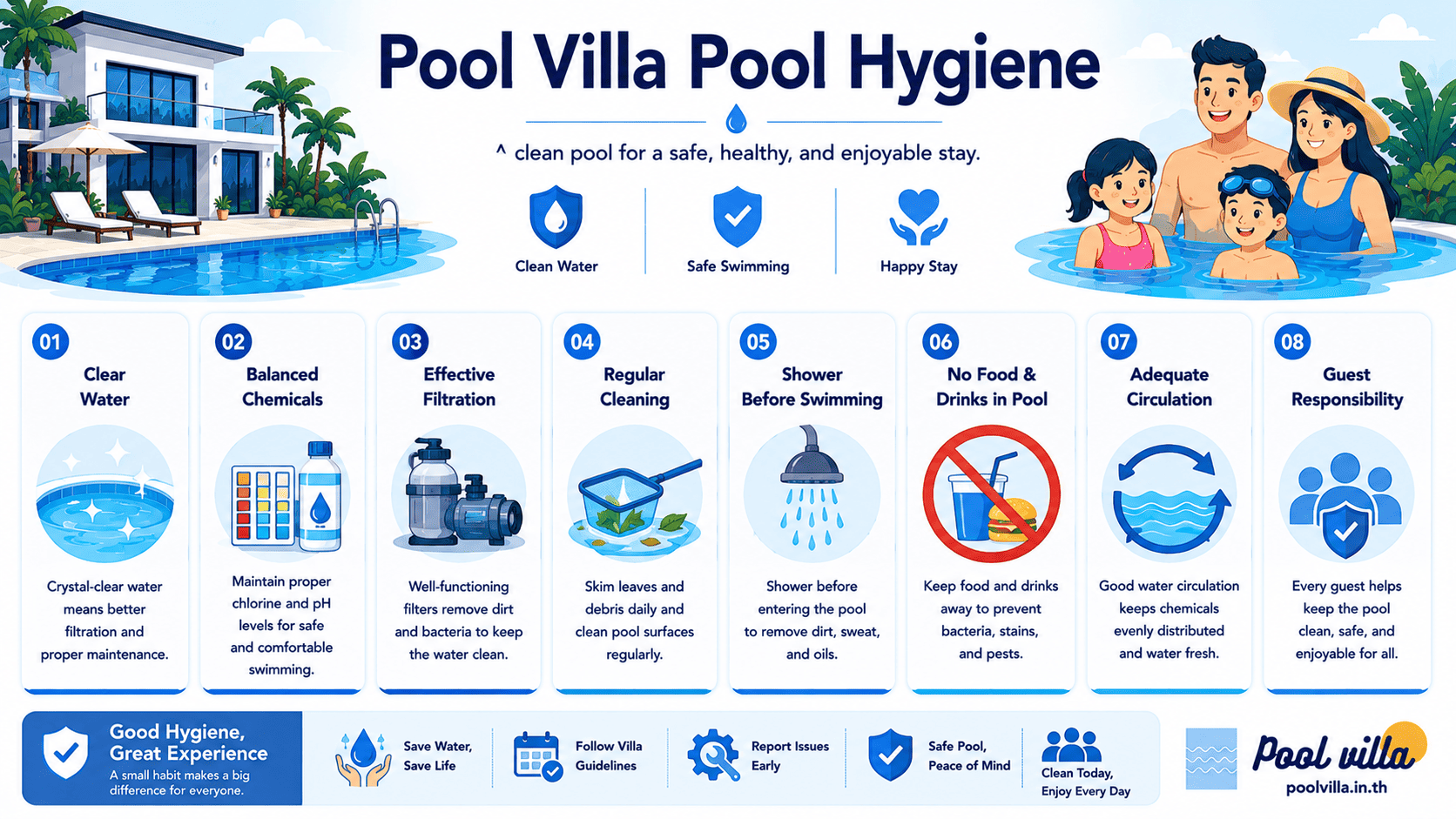
Good pool hygiene includes:
- Proper water filtration
- Balanced chlorine levels
- Surface cleaning
- Debris removal
- Safe water circulation
- Responsible guest behavior
Pool hygiene also affects more than just appearance.
Poor pool maintenance can lead to cloudy water, strong chemical smells, algae growth, skin irritation, eye discomfort, and unsafe swimming conditions.
Travelers unfamiliar with private villa accommodation should also read What Is a Pool Villa? and How Does a Pool Villa Work?.
Why Pool Hygiene Matters
Pool hygiene directly affects guest safety, comfort, and the overall quality of the villa experience.
A visually attractive pool may still have poor water balance or filtration issues that are not immediately obvious.
In private villas, pools are often used more intensively because guests have unrestricted access throughout the day and evening. This increases the importance of consistent maintenance.
Good hygiene matters because it helps reduce bacteria buildup, water contamination, slippery surfaces, skin irritation, and pool equipment problems.
Pool cleanliness becomes even more important during family vacations, large group stays, extended stays, night swimming, and hot weather conditions.
Families traveling with children should also review the Pool Villa Child Safety Guide.
How Pool Hygiene Works in Private Villas
Pool hygiene depends on a combination of filtration systems, water treatment, cleaning routines, and responsible usage.
Even luxury villas require regular maintenance to keep the pool clean and balanced.
Water Filtration Systems
Pool filters remove dirt, oils, debris, and small contaminants from the water.
Most private villa pools use one of several common filtration systems, such as sand filters, cartridge filters, or glass media filters.
Filtration helps maintain water clarity, but filtration alone is not enough to keep the pool hygienic.
Chemical Water Balance
Pool chemicals help control bacteria and maintain water safety.
The most common treatments include chlorine, saltwater systems, pH balancing agents, and alkalinity stabilizers.
Poor chemical balance can create problems even when the water appears visually clean.
For example, too little chlorine may allow bacteria growth, while too much chlorine may cause skin and eye irritation. Incorrect pH levels can also reduce water comfort.
Surface Cleaning
Leaves, insects, sunscreen residue, and dirt naturally collect in outdoor villa pools.
Regular cleaning helps prevent water contamination, algae growth, slippery surfaces, and blocked filtration systems.
Well-maintained villas usually clean pool surfaces and remove debris regularly throughout the week.
Signs of a Clean and Hygienic Pool
Guests should inspect the pool carefully before swimming instead of assuming the property is automatically well-maintained.
Several visual and environmental signs help indicate whether a pool is properly maintained.
Clear Water Visibility
Guests should be able to see pool floor details, drain covers, depth transitions, and entry steps clearly.
Cloudy or murky water may indicate filtration or chemical balance problems.
Neutral Water Smell
A strong chemical smell is not always a sign of cleanliness.
In many cases, an overpowering chlorine odor may suggest poor water balance or contamination buildup.
A clean pool usually has minimal noticeable odor.
Clean Pool Surroundings
Guests should also inspect pool edges, outdoor showers, walkways, seating areas, and drainage systems.
Dirty pool surroundings often indicate inconsistent maintenance overall.
Travelers should also review Pool Depth Safety and Swimming Ability Guide.
Why Guest Behavior Affects Pool Hygiene
Pool cleanliness is not controlled only by property staff. Guest behavior also affects hygiene significantly during a villa stay.
Private pools usually experience more direct guest usage than public hotel pools because access is unrestricted.
Common Guest Habits That Affect Pool Cleanliness
Pool hygiene problems often increase when guests enter the pool without showering, bring food into the pool, use excessive sunscreen or oils, swim while sick, or leave floating debris in the water.
Large group stays can increase these issues further because pools are used more frequently throughout the day.
Groups organizing shared villa trips should also review the Pool Villa Group Stay Planning Guide.
Pool Hygiene During Family Stays
Families often use villa pools more heavily than other traveler groups.
Children may enter and leave the water repeatedly, bring toys into the pool, or accidentally increase water contamination during play.
Important Family Hygiene Practices
Families should:
- Encourage pre-swim showers
- Remove toys after use
- Keep food away from the pool
- Monitor younger children carefully
- Avoid overcrowding the pool
Parents should also monitor water quality closely during extended stays.
Families traveling with children should also read How to Plan a Pool Villa Stay With Children.
Night Swimming and Pool Cleanliness
Night swimming can affect pool hygiene differently from daytime swimming.
Lower visibility sometimes makes guests less aware of water quality issues or debris accumulation.
In addition, nighttime social activities often involve drinks near the pool, larger gatherings, longer swimming sessions, and increased contamination risk.
Guests should avoid leaving food, cups, or floating items in the pool overnight.
Travelers planning evening swimming should also review Night Swimming Safety Tips.
Weather Conditions Affect Pool Hygiene
Weather has a major impact on outdoor villa pool cleanliness.
Rain, wind, and heat can quickly affect water quality and maintenance requirements.
Rainy Conditions
Heavy rain may introduce dirt, leaves, debris, and water imbalance into the pool.
Storm conditions may also overwhelm drainage systems around the pool area.
Hot Weather
Hot weather increases bacteria growth potential, chemical evaporation, sunscreen contamination, and pool usage frequency.
Travelers visiting during unstable weather seasons should also review Pool Villa Rainy Day Plan.
Common Pool Hygiene Mistakes
Assuming Clear Water Means Clean Water
Water clarity alone does not guarantee hygiene quality.
Chemical balance and filtration performance matter just as much as appearance.
Overusing Chlorine
Some property owners attempt to solve hygiene problems by adding excessive chlorine.
This may create skin irritation, eye discomfort, and strong chemical odors.
Ignoring Filtration Problems
A clean-looking pool may still have poor circulation or blocked filters.
Filtration issues often become more noticeable during larger group stays.
Allowing Food and Drinks Near the Pool
Food particles and spilled drinks can affect water cleanliness quickly, especially in smaller private pools.
Practical Pool Hygiene Tips for Guests
Guests can help maintain a cleaner and safer pool environment through simple habits during the stay.
Before Swimming
Guests should shower before entering the pool, check water clarity, inspect pool surroundings, and avoid swimming if feeling unwell.
During the Stay
Guests should remove debris after use, keep glass away from the pool, monitor children carefully, and report maintenance concerns early.
During Longer Stays
For extended villa stays, guests should monitor water clarity changes, chemical smells, filtration noise, and surface cleanliness.
Travelers should also review the Pool Villa Arrival Checklist before check-in.
Pool Hygiene Expectations for Luxury Villas
Luxury pool villas are generally expected to maintain higher cleanliness standards than standard rental properties.
However, guests should remain realistic.
Even premium villas still require regular maintenance schedules, water balancing, debris removal, and responsible guest usage.
A luxury appearance alone does not guarantee proper hygiene management.
This is why inspecting the pool after arrival remains important regardless of property category.
Conclusion
Pool villa pool hygiene is an essential part of creating a safer, cleaner, and more enjoyable swimming environment during a private villa stay.
Good pool hygiene depends on proper filtration, balanced water treatment, regular maintenance, and responsible guest behavior throughout the trip.
Most cleanliness problems can be reduced significantly through practical maintenance routines, realistic guest expectations, and early attention to water quality concerns.
A clean pool should support relaxation and comfort, not create unnecessary health or safety risks.
To continue learning, explore the guides on pool villa safety, pool villa planning, pool villa rules, and pool villa facilities.