
Travel accommodation should support comfort, independence, and safety for every guest. For travelers with limited mobility, however, choosing the right accommodation often requires more detailed planning than simply comparing prices or locations. Features such as stairs, bathroom layouts, uneven surfaces, and walking distances can significantly affect the overall travel experience.
A pool villa can work very well for guests with mobility limitations when the property is carefully selected. Some villas offer spacious layouts, private environments, step-free access, and flexible living arrangements that are more comfortable than crowded hotels. Others may create unnecessary challenges due to poor accessibility planning.
This pool villa accessibility guide explains what guests should evaluate before booking, how accessibility varies between properties, and which features matter most for comfort and safe movement during a villa stay.
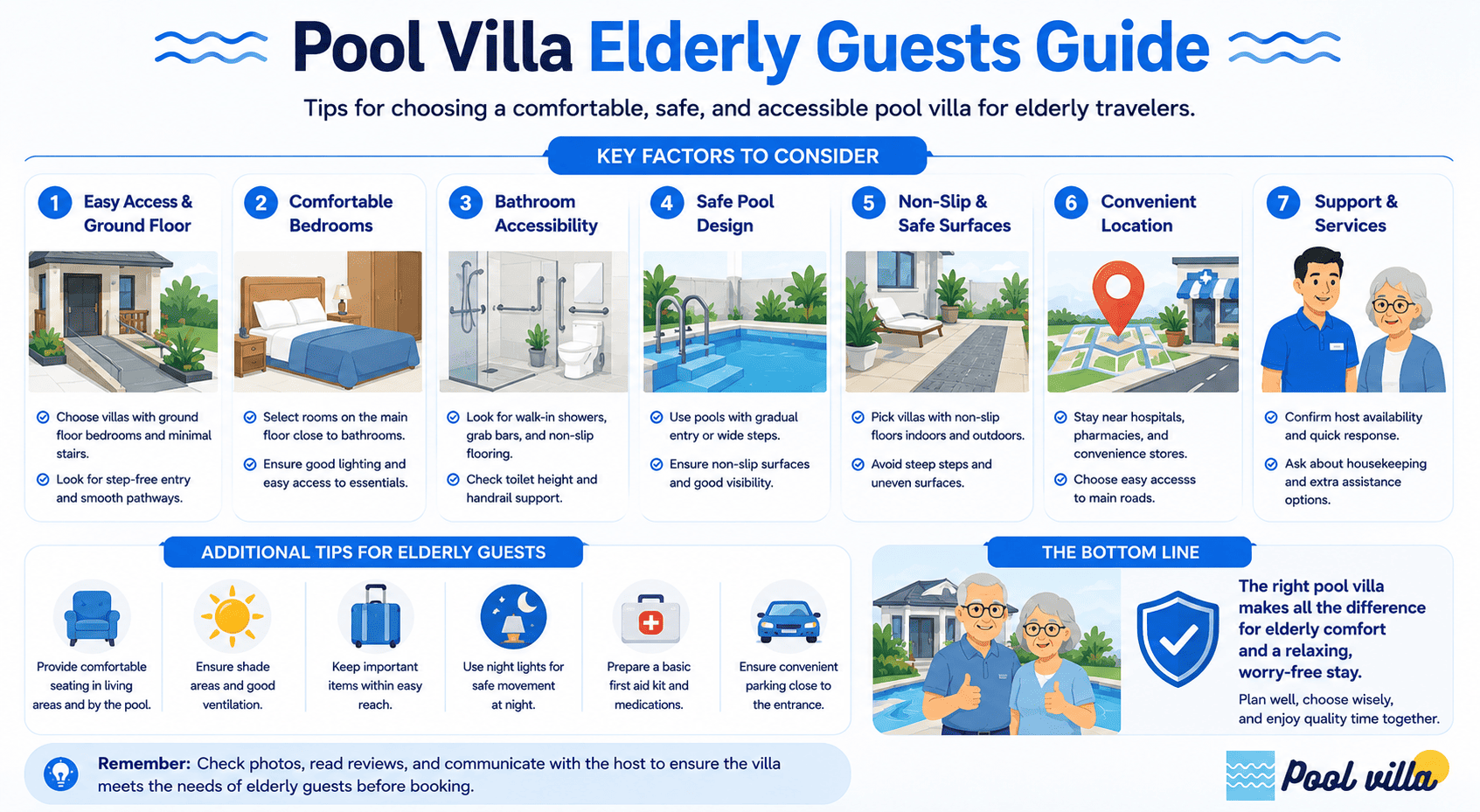
Families planning trips with elderly relatives may also want to review the Pool Villa Elderly Guests Guide and the broader Pool Villa Suitability Guide.
What Is Pool Villa Accessibility?
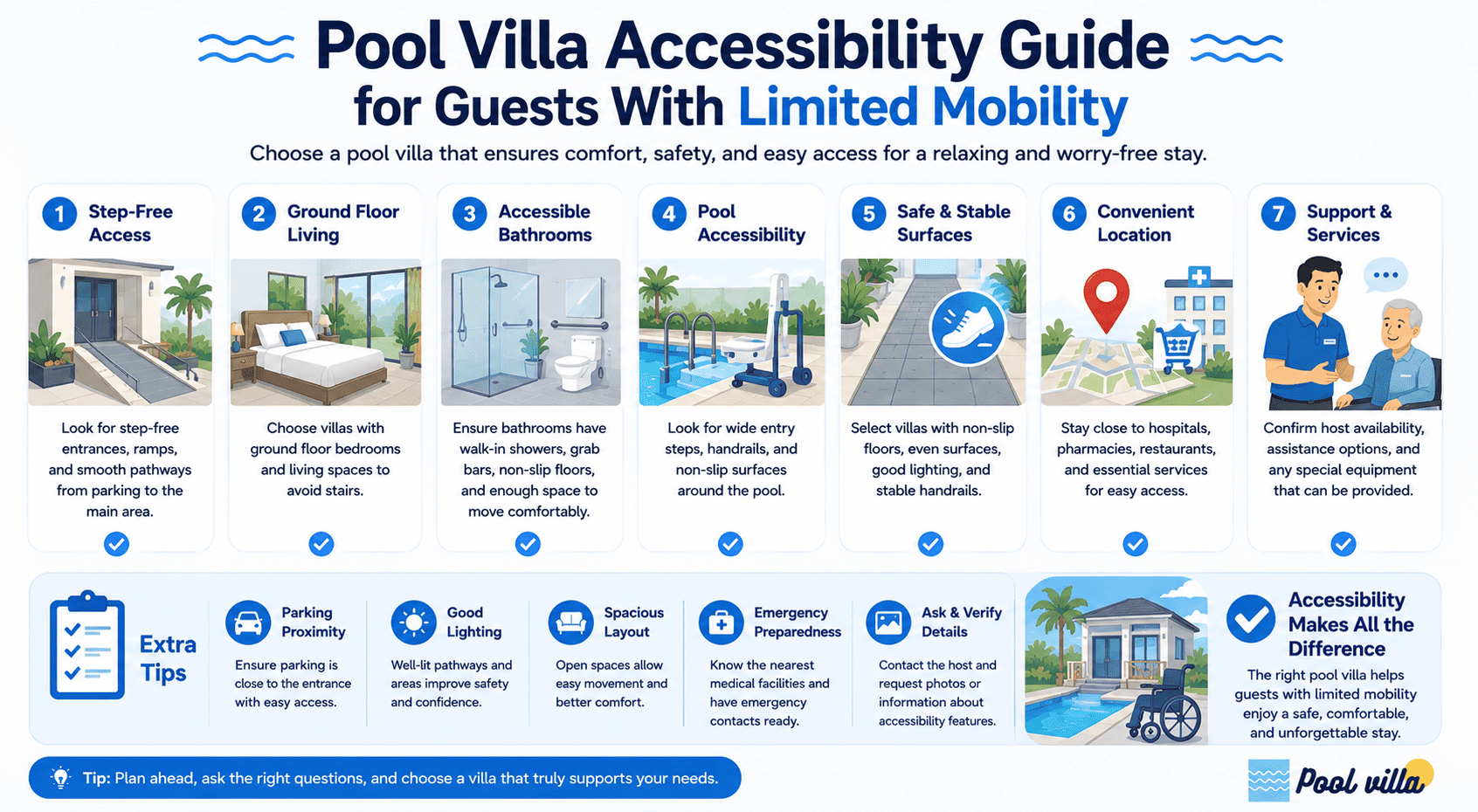
Pool villa accessibility refers to how easily guests with limited mobility can move safely and comfortably throughout the property.
Accessibility needs vary significantly between travelers. Some guests may use wheelchairs or walking aids, while others may simply require fewer stairs, easier bathroom access, or shorter walking distances due to joint pain, injury recovery, or age-related mobility limitations.
A villa does not need to be medically specialized to improve accessibility. Often, practical design choices make the biggest difference.
These may include:
- Ground-floor bedrooms
- Wide doorways
- Minimal stairs
- Step-free entry
- Walk-in showers
- Non-slip flooring
- Easy pool access
- Nearby parking
The Pool Villa Basics Guide explains the general structure of villa accommodation for travelers unfamiliar with this type of stay.
Why Accessibility Matters in Pool Villas
Many villas are designed primarily for visual appeal rather than movement practicality. Features such as split-level layouts, floating staircases, elevated pool decks, and outdoor stone pathways may look attractive but become difficult for guests with mobility limitations.
Accessibility directly affects:
- Daily comfort
- Safety
- Energy levels
- Independence
- Stress during the trip
- Family coordination
A poorly designed property can create avoidable physical strain, while an accessible villa allows guests to relax and participate more comfortably in the overall travel experience.
The Pool Villa Layout Guide is especially useful for understanding how villa design affects movement and usability.
Ground Floor Accessibility Checklist
Ground-floor access is often one of the most important considerations for mobility-focused travel.
Bedroom Accessibility
Guests should confirm whether essential bedrooms are located on the main floor rather than upstairs.
Important questions include:
- Are bedrooms accessible without stairs?
- Are bathrooms located nearby?
- Is nighttime movement easy?
- Are pathways wide enough for walking aids?
The Pool Villa Bedroom and Bathroom Count Guide can help travelers understand practical room arrangements before booking.
Entrance and Walkway Design
Villa entrances sometimes include steps, steep driveways, uneven pathways, or narrow gates that create unnecessary difficulty.
Guests should review:
- Step-free entry availability
- Ramp access
- Smooth flooring
- Distance from parking to entrance
- Outdoor lighting
- Handrails where necessary
Photos alone may not fully reveal these details, which is why direct communication with the host is often important.
Bathroom Accessibility Considerations
Bathrooms are one of the most important accessibility areas in any accommodation.
Walk-In Shower Access
Bathtubs and elevated shower edges can become difficult or unsafe for guests with limited mobility.
Accessible bathroom features may include:
- Walk-in showers
- Grab bars
- Non-slip flooring
- Stable shower seating
- Easy drainage
- Wide movement space
Families traveling with elderly relatives should also review the Pool Villa Elderly Guests Guide because many accessibility concerns overlap.
Toilet and Sink Accessibility
Guests should also consider:
- Toilet height
- Sink accessibility
- Mirror placement
- Floor stability
- Emergency support access
A modern bathroom design does not always mean practical accessibility.
Pool Accessibility Features
The swimming pool itself is another important area to evaluate.
Safe Pool Entry
Many pools use ladders that may be difficult for guests with mobility limitations. Safer options often include:
- Wide pool steps
- Gradual entry design
- Handrails
- Shallow relaxation areas
- Stable pool edges
The Pool Depth Safety Guide explains how different pool designs affect usability and comfort.
Non-Slip Pool Areas
Wet outdoor flooring increases fall risk for all travelers, especially guests with limited balance or mobility.
Guests should check:
- Surface texture
- Drainage quality
- Pool edge stability
- Outdoor lighting
- Walking distance between facilities
The broader Pool Safety Guide for Villa Guests provides additional swimming-related safety advice.
Why Space Can Be an Advantage in Villas
One reason some travelers prefer villas over hotels is the additional personal space.
Compared to standard hotel rooms, villas often provide:
- Larger living areas
- Wider movement paths
- Flexible seating arrangements
- More private environments
- Easier family interaction
Guests using mobility aids may especially benefit from having larger open areas rather than navigating crowded hotel corridors or elevators.
However, larger villas can also create long walking distances internally, so layout still matters.
Accessibility and Multi-Generational Travel
Pool villas are often popular for multi-generational trips because they allow family members to stay together while maintaining privacy.
When mobility limitations are involved, however, families should evaluate whether the property realistically supports all age groups equally.
For example:
- Are elderly guests separated from common areas?
- Is the kitchen easily accessible?
- Are outdoor spaces practical?
- Is supervision possible without excessive walking?
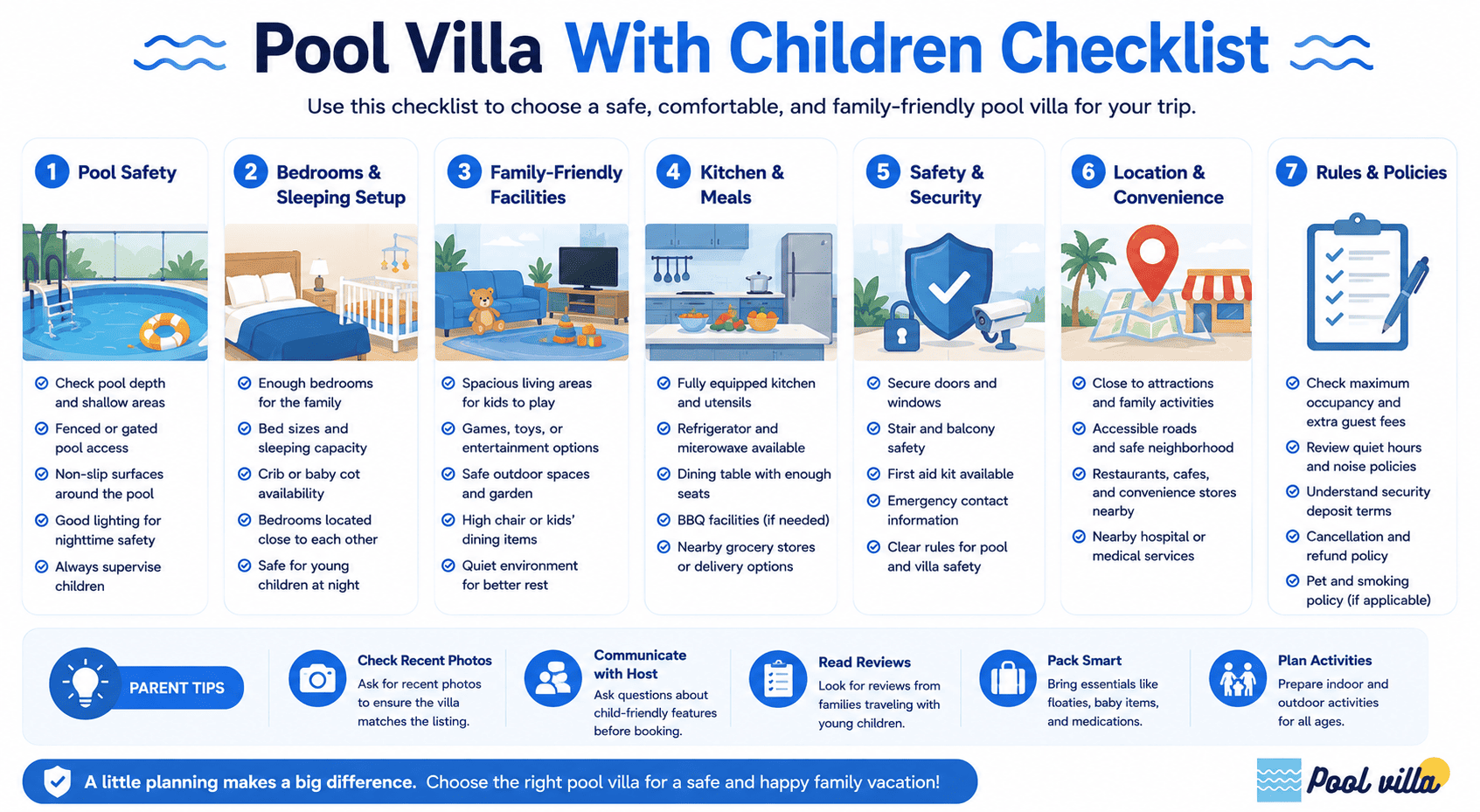
Families traveling with both children and elderly relatives may also benefit from reviewing the Pool Villa With Children Checklist.
Location and Transportation Considerations
Accessibility extends beyond the villa itself.
Nearby Services
Guests with mobility limitations may benefit from staying close to:
- Hospitals or clinics
- Pharmacies
- Restaurants
- Convenience stores
- Main transportation routes
Remote villas may create unnecessary logistical challenges if guests require frequent transportation support.
The Pool Villa Planning Guide offers broader trip-planning guidance for practical villa stays.
Parking Accessibility
Parking is another overlooked factor.
Guests should confirm:
- Distance from parking area to entrance
- Stair usage between parking and villa
- Covered walkways if needed
- Lighting quality at night
Easy access between transportation and the villa can significantly improve comfort throughout the trip.
Common Accessibility Mistakes Guests Make
One of the most common mistakes is assuming luxury automatically means accessibility.
Modern villas may prioritize architecture and aesthetics over movement practicality. Floating staircases, elevated terraces, and open water features can create unexpected obstacles.
Another mistake is relying entirely on listing photos. Photos often focus on appearance rather than functional details such as stair height, bathroom layout, or floor texture.
Some travelers also underestimate walking distances inside large villas. A spacious property may require frequent movement between bedrooms, kitchens, pools, and outdoor areas.
The Pool Villa Photos vs Reality Guide explains why guests should evaluate listings carefully before booking.
Practical Questions to Ask Before Booking
Before reserving a villa, guests should contact the host directly and ask detailed accessibility questions.
Useful questions include:
- Are there step-free entrances?
- How many stairs are used daily?
- Are bedrooms available on the main floor?
- Are bathrooms accessible?
- Is the pool easy to enter?
- Are outdoor paths smooth?
- Is parking nearby?
- Are mobility aids practical inside the villa?
Recent guest reviews can also provide valuable insight into real-world accessibility conditions.
Service Expectations and Support
Some travelers with mobility limitations may expect hotel-style support, daily staff assistance, or on-demand accessibility services.
However, villas often operate more independently than hotels or resorts.
Guests should understand:
- Cleaning schedules
- Emergency support access
- Host availability
- Transportation arrangements
- Food delivery options
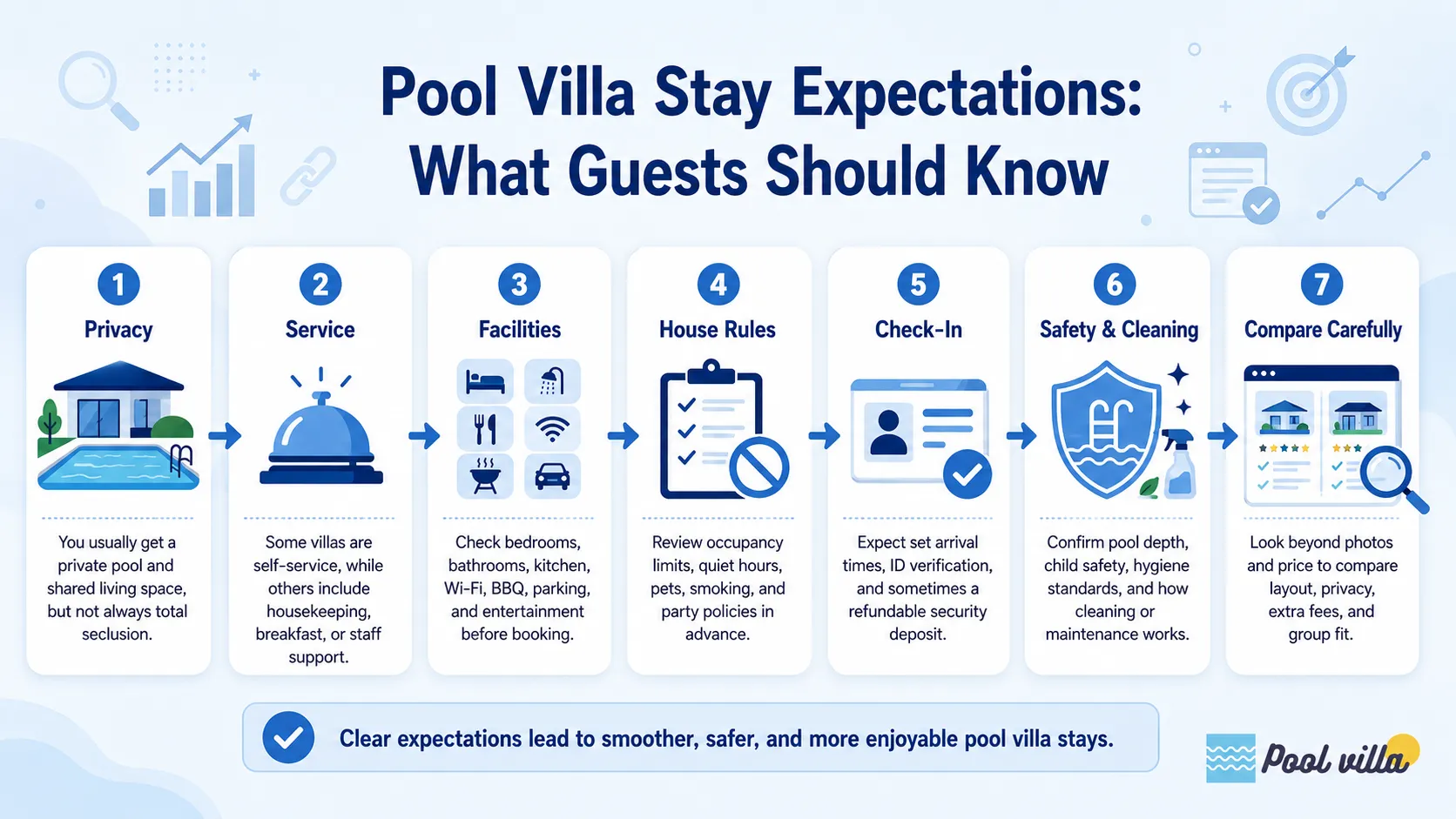
The Pool Villa Service Expectations Guide explains how villa operations differ from traditional hospitality environments.
Conclusion
A pool villa can be an excellent accommodation choice for guests with limited mobility when accessibility is carefully evaluated before booking. Spacious layouts, private environments, and flexible living arrangements often provide more comfort than standard hotel stays.
However, accessibility varies significantly between properties. Guests should carefully assess stairs, bathroom usability, pool access, parking convenience, outdoor surfaces, and bedroom placement before making a reservation.
The best accessible villa is not necessarily the most luxurious one. It is the property that allows guests to move comfortably, maintain independence, and enjoy the trip with minimal physical strain.
For broader travel planning guidance, continue exploring the Pool Villa Suitability Guide, the Pool Villa Safety Guide, and the complete Pool Villa Planning Guide.