
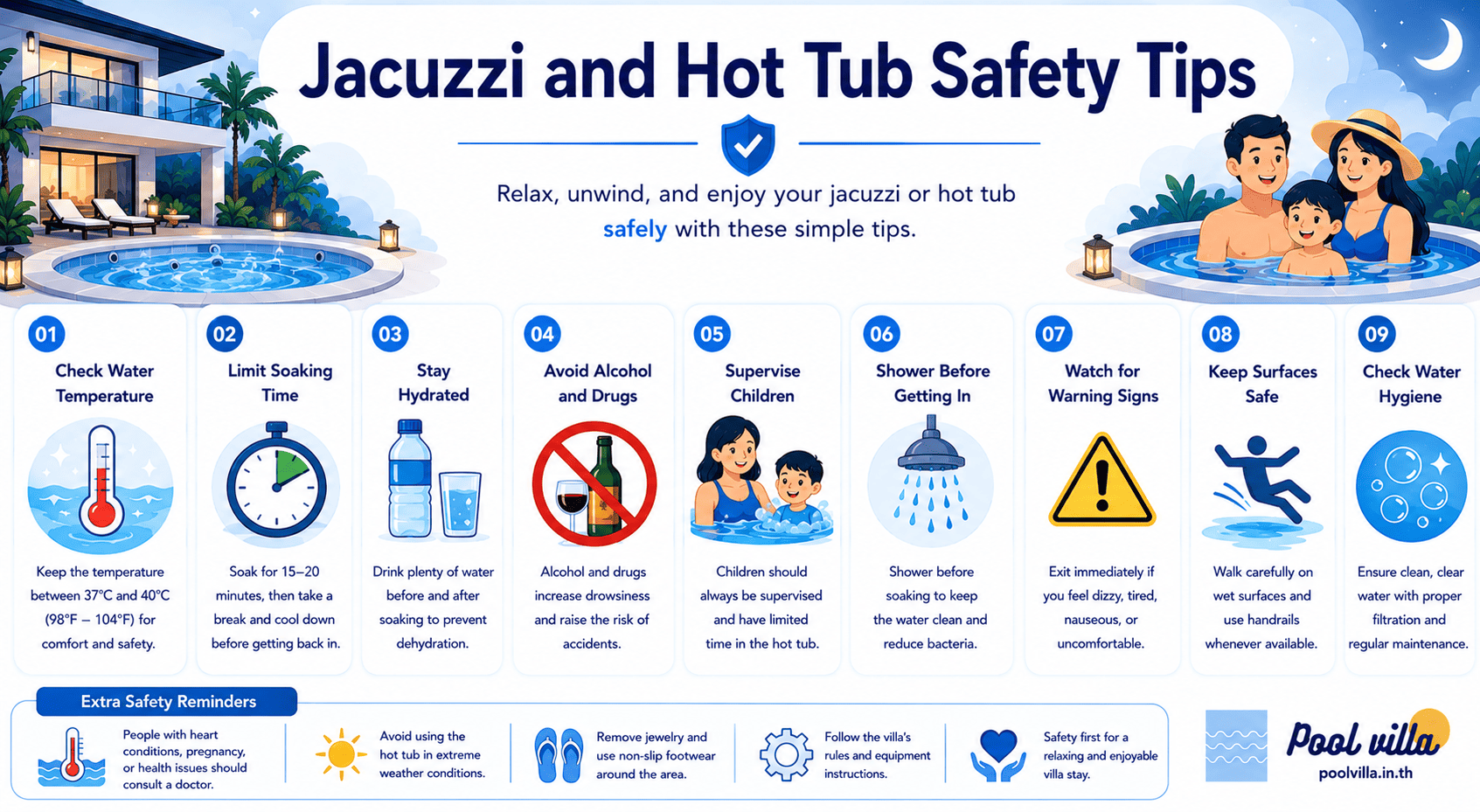
Jacuzzis and hot tubs are now standard features in many luxury pool villas, private resorts, and premium vacation rentals. For many travelers, they represent relaxation, privacy, and comfort after a long day of swimming, sightseeing, or social activities. However, while hot tubs may appear low-risk compared to swimming pools, they introduce a different set of safety considerations that guests often underestimate.
Heat exposure, dehydration, slippery surfaces, poor hygiene management, and alcohol consumption can quickly turn a relaxing experience into a medical or safety issue if guests are careless. This becomes even more important in private villas, where there may be no on-site staff monitoring water conditions or guest behavior throughout the stay.
Understanding proper jacuzzi and hot tub safety is not about avoiding the experience. It is about using these facilities responsibly so guests can enjoy them safely and comfortably.
This guide explains how jacuzzi and hot tub safety works in practical terms, why it matters during villa stays, common mistakes guests make, and how to approach hot tub use responsibly in both family and group travel situations.
If you are unfamiliar with private villa accommodations, it is also helpful to read What Is a Pool Villa? and How Does a Pool Villa Work?.
What Is Jacuzzi and Hot Tub Safety?
Jacuzzi and hot tub safety refers to the practical habits, environmental awareness, and usage guidelines that help guests use heated water facilities safely during a stay.
Unlike standard swimming pools, hot tubs expose the body to prolonged heat while limiting natural cooling mechanisms. Even though the water is shallow and usually calm, the body reacts differently to heated water than many guests realize.
Hot tub safety involves several factors working together, including:
- Water temperature management
- Hydration awareness
- Time limits
- Hygiene standards
- Surface safety
- Supervision practices
- Responsible guest behavior
In private villas, these responsibilities often fall directly on guests because there may not be full-time staff monitoring usage conditions throughout the day or evening.
Travelers planning villa stays should also review the broader Pool Villa Safety Guide for additional swimming and property safety considerations.
Why Jacuzzi and Hot Tub Safety Matters
Many guests assume hot tubs are automatically safer than swimming pools because the environment feels more controlled and relaxing. In reality, heated water environments create different risks that develop gradually rather than suddenly.
The most common problems linked to unsafe hot tub use include:
- Overheating
- Dehydration
- Dizziness
- Fatigue
- Slipping accidents
- Skin irritation
- Bacterial exposure
These issues become more likely during longer soaking sessions, nighttime gatherings, or group stays where alcohol consumption and reduced supervision are common.
Private villas increase the importance of personal responsibility because guests are often using the jacuzzi independently without external monitoring.
Safety matters not because hot tubs are inherently dangerous, but because guests often become less cautious in private luxury environments.
How Jacuzzi and Hot Tub Safety Works
Safe hot tub use depends on balancing relaxation with practical awareness.
The body naturally reacts to heated water by increasing circulation and encouraging perspiration. This creates a relaxing effect, but prolonged exposure also places additional stress on hydration and body temperature regulation.
Temperature Awareness
Temperature is one of the most important aspects of jacuzzi and hot tub safety.
Water that feels pleasant initially may still become physically exhausting after extended exposure. Guests should avoid treating hot tubs like regular pools where long periods of use feel harmless.
If the water feels excessively hot after only a few minutes, it is usually a sign that exposure time should remain short.
Children, elderly travelers, and guests with health concerns may be more sensitive to heated water and should be especially cautious.
Hydration and Breaks
Hot water can increase sweating even when guests do not notice it immediately.
This makes hydration important before, during, and after hot tub use. Guests should take regular breaks, drink water, and avoid staying in the jacuzzi until they feel tired, dizzy, or uncomfortable.
Good hydration habits are especially important during hot weather or after swimming in the pool.
Check Water Temperature Before Use
Guests should always check the water temperature before entering a jacuzzi or hot tub.
In private villas, temperature settings may vary depending on the property, previous guests, or maintenance schedule.
The water should feel comfortably warm, not painfully hot or overwhelming. If the temperature feels uncomfortable on entry, guests should not force themselves to stay in the water.
Signs the Water May Be Too Hot
- Feeling lightheaded quickly
- Skin becoming uncomfortably flushed
- Difficulty staying in the water comfortably
- Feeling unusually tired after only a few minutes
- Strong discomfort when entering the jacuzzi
Guests should exit immediately if they feel dizzy, weak, nauseous, or overheated.
Limit Soaking Time
Long soaking sessions are one of the most common hot tub safety mistakes.
Because hot tubs feel relaxing, guests often stay in longer than they should. The problem is that heat-related discomfort can build gradually and may not be obvious until the guest stands up or leaves the water.
Shorter sessions with breaks are usually safer and more comfortable than one long soak.
Practical Hot Tub Use Habits
- Take regular breaks outside the water
- Drink water before and after use
- Avoid falling asleep in the jacuzzi
- Exit immediately if feeling dizzy or uncomfortable
- Use extra caution during hot weather
Guests who plan to use both the pool and jacuzzi should allow the body time to adjust between different water temperatures.
Children Need Close Supervision
Jacuzzis and hot tubs require careful supervision when children are present.
Children may not recognize signs of overheating or discomfort as quickly as adults. They may also treat the jacuzzi like a small swimming pool, which can lead to rough play, slipping, or unsafe movement around wet surfaces.
Child Safety Practices Around Hot Tubs
- Supervise children continuously
- Limit their time in heated water
- Check water temperature carefully
- Prevent jumping or rough play
- Keep children hydrated
Families should also review the Pool Villa Child Safety Guide before using any pool, jacuzzi, or outdoor water feature during the stay.
Avoid Alcohol Before and During Hot Tub Use
Alcohol and hot tubs are a risky combination.
Alcohol can affect balance, hydration, reaction time, and judgment. Heated water can increase those effects by making guests feel more relaxed, tired, or lightheaded.
This becomes especially risky during nighttime villa gatherings, BBQ events, or group celebrations where guests may move between the pool, jacuzzi, and outdoor dining areas.
Why Alcohol Increases Risk
- It can increase dehydration
- It may reduce awareness of overheating
- It affects balance on wet surfaces
- It can reduce judgment around water
- It increases the chance of staying in too long
Groups planning social activities should also review the Pool Villa Group Stay Planning Guide to set clear expectations before arrival.
Hot Tub Hygiene Matters
Cleanliness is a major part of jacuzzi and hot tub safety.
Warm water environments require careful hygiene management because water quality can change quickly if filtration, chemical balance, or guest behavior is poor.
Clear water is a good sign, but it does not automatically guarantee that the hot tub is hygienic.
Signs of Better Hot Tub Hygiene
- Clear water visibility
- Clean seating surfaces
- No strong unpleasant odor
- Working jets and filtration
- Regular maintenance from the property
Guests should avoid using the jacuzzi if the water looks cloudy, smells unusually strong, or appears poorly maintained.
For more detailed guidance, read the Pool Villa Pool Hygiene and Cleanliness Guide.
Use Caution Around Wet Surfaces
Many jacuzzi-related injuries happen outside the water rather than inside it.
Wet tiles, steam, splashing water, and low lighting can make the surrounding area slippery. Guests should move slowly when entering or leaving the jacuzzi and use handrails where available.
High-Risk Areas Around Hot Tubs
- Pool decks
- Outdoor stairs
- Wet tiles
- Balcony entrances
- Garden paths
- Outdoor shower areas
Guests should avoid running, carrying glass items, or walking barefoot through poorly lit areas after using the jacuzzi.
Nighttime Jacuzzi Use Requires Extra Care
Many guests prefer using jacuzzis and hot tubs at night because the atmosphere feels quieter and more relaxing.
However, nighttime use increases risks related to visibility, fatigue, alcohol consumption, and slippery surfaces.
Before using the hot tub at night, guests should check lighting around the jacuzzi, walkways, steps, and nearby seating areas.
Travelers who plan evening water activities should also review Night Swimming Safety Tips.
Weather Conditions Affect Hot Tub Safety
Outdoor jacuzzis and hot tubs are affected by weather conditions more than guests often expect.
Rain, wind, lightning, and poor visibility can quickly make outdoor areas less safe.
When to Avoid Outdoor Hot Tub Use
- During thunderstorms
- During lightning conditions
- During severe rain or strong wind
- When visibility around the deck is poor
- When surfaces become dangerously slippery
Travelers visiting during unstable weather periods should also prepare a backup plan by reading Pool Villa Rainy Day Plan.
Health Conditions and Hot Tub Use
Some guests should be more cautious with hot tub use because heat exposure can affect the body more strongly.
Guests with heart concerns, blood pressure issues, pregnancy-related considerations, dizziness, or heat sensitivity should use extra care and consider professional medical advice before prolonged hot tub use.
This is especially important during longer stays, hot weather, or repeated daily jacuzzi sessions.
Common Jacuzzi and Hot Tub Safety Mistakes
Staying in Too Long
Guests often remain in heated water longer than their body can comfortably handle. This can lead to fatigue, dehydration, or dizziness.
Ignoring Hydration
Because hot tub use feels relaxing, guests may forget that heated water can increase fluid loss.
Combining Alcohol and Heat
Alcohol increases the risk of poor judgment, dehydration, and slipping around wet areas.
Assuming Clear Water Means Clean Water
Water clarity matters, but hygiene also depends on filtration, sanitation, and proper maintenance.
Letting Children Use the Jacuzzi Without Supervision
Children should never use hot tubs without close adult supervision and clear limits.
Practical Jacuzzi and Hot Tub Safety Tips
Guests can usually enjoy hot tubs safely by keeping habits simple and realistic.
Before using the jacuzzi:
- Check the water temperature
- Inspect cleanliness conditions
- Drink water before entering
- Limit soaking time
- Keep children supervised
- Avoid alcohol around the hot tub
- Move carefully on wet surfaces
Guests should also listen to their body. If they feel dizzy, weak, overheated, nauseous, or uncomfortable, they should exit the hot tub immediately and rest.
Conclusion
Jacuzzi and hot tub safety is an important part of enjoying a pool villa stay responsibly.
Hot tubs can add comfort, relaxation, and a premium feel to the trip, but they require awareness around temperature, hydration, hygiene, supervision, and wet surfaces.
Most hot tub-related risks can be reduced with simple habits: limit soaking time, avoid alcohol, supervise children, check cleanliness, and stay alert to weather and nighttime conditions.
A jacuzzi should improve the villa experience, not create unnecessary health or safety concerns.
To continue learning, explore the guides on pool villa safety, pool villa planning, pool villa rules, and pool villa facilities.