
Planning sleeping arrangements for 15 people pool villa can quickly become complicated, especially when the group includes couples, families, children, teenagers, and friends with different comfort expectations. A villa may officially accommodate 15 guests, but that does not always mean every guest will have the same level of privacy, sleeping space, or comfort.
For large-group stays, proper room planning affects much more than sleep quality. It also influences privacy, bathroom usage, noise levels, convenience, and the overall atmosphere of the trip. Without a practical sleeping plan, even a spacious villa can start to feel crowded and stressful.
This guide explains how to organize sleeping arrangements for 15 people realistically, including bedroom planning, extra bed management, room-sharing strategies, and common mistakes that large groups should avoid.
What Does Sleeping Arrangements for 15 People Mean?
Sleeping arrangements for 15 people refer to how bedrooms, beds, and shared sleeping areas are organized so that every guest has a practical and comfortable place to sleep.
Many pool villas advertise maximum occupancy based on:
- King-size beds
- Shared beds
- Sofa beds
- Bunk beds
- Foldable mattresses
- Portable extra beds
Because of this, a villa listed for 15 guests may not always provide 15 equal sleeping spaces. Some guests may receive private bedrooms, while others may need to share rooms or use temporary sleeping setups.
A proper sleeping arrangement plan should consider:
- Bedroom distribution
- Privacy expectations
- Shared vs private sleeping spaces
- Bathroom access
- Noise levels
- Extra bed placement
- Guest comfort for multi-night stays
The goal is not simply fitting 15 people inside the villa, but ensuring the group can stay comfortably throughout the trip.
Why Does This Matter?
Poor sleeping arrangements are one of the most common reasons large-group villa stays become uncomfortable. Even luxury villas can feel stressful if guests lack privacy, proper beds, or quiet sleeping areas.
Sleep Quality Affects the Entire Trip
Guests who sleep poorly often become tired and frustrated during the stay. This becomes especially noticeable during multi-night vacations.
Common problems include:
- Overcrowded bedrooms
- Thin extra mattresses
- Loud common areas
- Poor air circulation
- Insufficient air conditioning
- Lack of privacy
Good sleep quality helps maintain a more relaxed and enjoyable group atmosphere.
Different Guests Have Different Expectations
Not every guest is comfortable sharing sleeping spaces in the same way.
For example:
- Couples usually prefer private rooms
- Families may need larger sleeping areas
- Teenagers are often more flexible
- Older guests usually need quieter rooms
- Children may need nearby supervision
Ignoring these differences can create tension within the group.
Bathroom Access Matters
Sleeping arrangements should also consider bathroom convenience.
A villa that accommodates 15 guests but only provides two bathrooms can create long waiting times during mornings and evenings. Larger groups generally function better when bathrooms are distributed across multiple floors or bedroom zones.
Comfort Capacity vs Maximum Capacity
One of the biggest misunderstandings with large pool villas is the difference between maximum occupancy and realistic comfort capacity.
Many villas can technically sleep 15 guests, but not all layouts provide enough privacy or space for a comfortable multi-night stay.
For example:
- A 4-bedroom villa may technically sleep 15 people using sofa beds and floor mattresses
- A 5-bedroom villa often provides a much more balanced setup
- A 6-bedroom villa usually offers the best privacy and flexibility for mixed groups
The larger the group diversity, the more important room separation becomes.
Families, couples, and older guests usually require more privacy than groups of close friends.
How Should You Approach It?
The best way to organize sleeping arrangements is to plan before booking the villa rather than deciding after arrival.
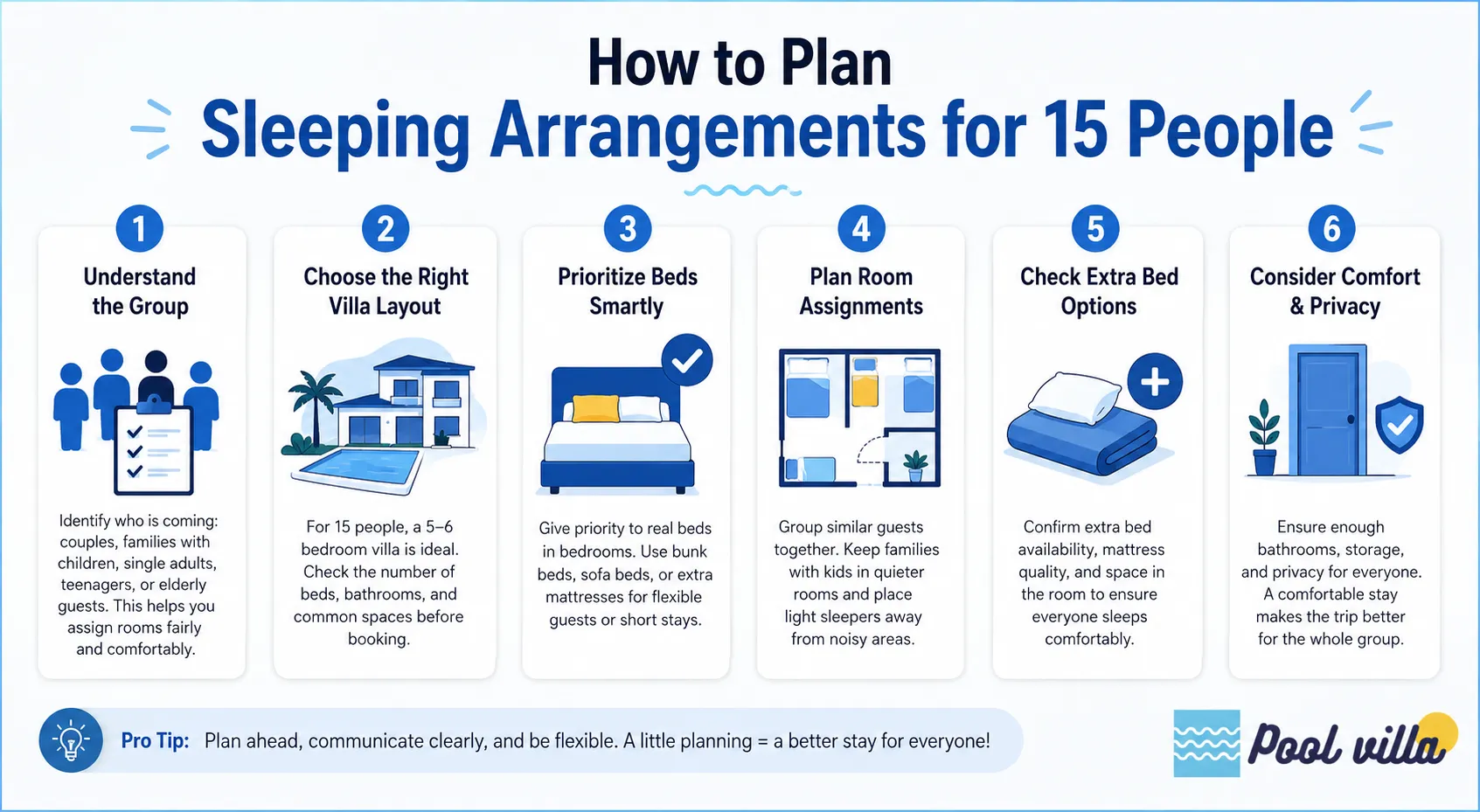
Step 1: Separate Guests Into Categories
Start by identifying the type of guests in the group.
Typical categories include:
- Couples
- Families with children
- Single adults
- Teenagers
- Elderly guests
- Friends willing to share rooms
This makes room allocation much easier.
Step 2: Prioritize Proper Beds
Not all sleeping spaces offer equal comfort.
Prioritize sleeping arrangements in this order:
- Standard beds
- Twin beds
- Bunk beds
- Sofa beds
- Foldable floor mattresses
For longer stays, adults should ideally sleep on proper beds instead of temporary floor mattresses.
Step 3: Match Rooms to Guest Needs
Avoid assigning rooms based only on occupancy numbers.
A more balanced approach might include:
- Master bedroom for parents or older guests
- Family room for guests with children
- Shared twin room for teenagers
- Shared room for close friends
- Extra mattress area for flexible sleepers
This creates a more comfortable experience for everyone.
Step 4: Consider Noise and Privacy
Pool villas often use open layouts connected to pools, kitchens, and entertainment spaces.
Avoid placing light sleepers near:
- Karaoke rooms
- Pool access doors
- Living rooms
- BBQ areas
- Main walkways
Guests sleeping in common areas may also restrict late-night activities for the rest of the group.
Step 5: Confirm Extra Bed Policies
Before booking, confirm:
- Extra bed availability
- Additional guest fees
- Mattress quality
- Space inside bedrooms
- Bedding inclusions
Some villas allow extra beds, while others have strict occupancy rules.
What Bedroom Setup Works Best for 15 Guests?
In most cases, a 5-bedroom pool villa provides the best balance for 15 guests. It allows couples, families, and groups of friends to separate sleeping areas more comfortably without relying too heavily on extra mattresses.
A 4-bedroom villa may still accommodate 15 people, but the group will likely need to share rooms more aggressively or use living-room sleeping setups.
A 6-bedroom villa generally provides the best comfort level for:
- Mixed-age groups
- Multiple families
- Guests staying several nights
- Groups with elderly travelers
- Guests who value privacy
Bedroom count alone is not enough. The actual bed configuration matters just as much.
For example:
- Two king beds may not suit single adults
- Bunk beds may not work for older guests
- Sofa beds may become uncomfortable during longer stays
Bathroom count also becomes increasingly important as group size increases.
For 15 guests, three to four bathrooms usually create a smoother experience.
Sample Sleeping Arrangement Plans
Different group types require different sleeping strategies.
Example 1: Families With Children
A family-oriented setup may look like this:
- Master bedroom: Parents with toddler
- Bedroom 2: Grandparents
- Bedroom 3: Teenagers
- Bedroom 4: Children using bunk beds
- Bedroom 5: Single adults
- Sofa bed: Flexible guest or short-stay visitor
This setup prioritizes family convenience and quieter sleeping areas.
Example 2: Group of Friends
For a friend-group trip, sleeping arrangements are often more flexible:
- Two shared twin rooms
- One triple-sharing room
- One couple bedroom
- One bunk-bed room
- Two extra mattresses for flexible sleepers
Friend groups typically tolerate shared spaces better, but privacy and personal storage space still matter.
Example 3: Mixed-Age Group
Mixed-age groups usually require more balanced planning:
- Older guests receive quieter rooms
- Couples receive private beds first
- Teenagers share larger rooms
- Flexible sleepers use temporary beds if necessary
The goal should be fairness and comfort rather than strict equality.
What Options Are Available for Extra Sleeping Space?
For 15-person stays, extra sleeping solutions are often necessary.
Sofa Beds
Sofa beds can work for:
- Teenagers
- Short stays
- Flexible sleepers
However, many villa sofa beds are less supportive than standard mattresses.
Foldable Floor Mattresses
Floor mattresses work best for:
- Children
- Casual group trips
- One- or two-night stays
Avoid placing them near doors or walkways.
Bunk Beds
Bunk beds are useful for:
- Teenagers
- Children
- Friend groups
However, they may not suit elderly guests or people with mobility concerns.
Portable Extra Beds
Some villas provide hotel-style rollaway beds.
These are generally more comfortable than floor mattresses but require additional floor space.
The Reality of Extra Beds
Many villas advertise extra beds without clearly explaining how the room looks after installation.
In some cases:
- Two floor mattresses may leave very little walking space
- Air conditioning may not reach all sleeping areas equally
- Luggage storage becomes difficult
- Walkways may become blocked
- Room ventilation may feel uncomfortable
This is especially important for longer stays.
A room that technically fits four people may only feel comfortable for two or three guests once luggage and personal belongings are added.
How to Avoid Sleeping Arrangement Conflicts
One of the biggest sources of tension during group trips is unequal room distribution.
Guests who pay the same amount may feel frustrated if others receive larger or more private rooms.
Assign Rooms Before Arrival
Avoid allowing guests to choose rooms after check-in.
Pre-planning helps reduce:
- Arguments
- Awkward discussions
- Last-minute rearrangements
- Unfair room distribution
Set Expectations Early
Clarify:
- Who shares rooms
- Who uses extra beds
- Which rooms have private bathrooms
- Whether living-room sleeping setups are necessary
Clear expectations prevent misunderstandings later.
Consider Fairness
If some guests receive premium rooms, consider balancing the arrangement through:
- Different payment contributions
- Room rotation during longer stays
- Prioritizing elderly guests or families
Fairness matters more than identical room sizes.
Common Mistakes
Many large-group villa trips experience the same avoidable problems.
Trusting Maximum Occupancy Numbers
A villa advertised for 15 guests may only include:
- 4 bedrooms
- Limited standard beds
- Several floor mattresses
Always verify the actual bed layout before booking.
Ignoring Bathroom Ratios
Too many guests sharing too few bathrooms creates stress very quickly.
For 15 guests, at least three bathrooms usually provide a much more comfortable experience.
Overcrowding Bedrooms
Adding too many mattresses into one room reduces:
- Walking space
- Privacy
- Air circulation
- Comfort
A room may technically fit several people while still feeling overcrowded.
Using the Living Room as a Permanent Bedroom
Living-room sleeping setups can create problems with:
- Noise
- Lighting
- Early morning movement
- Lack of privacy
This arrangement usually works better for short stays rather than long vacations.
Assuming Everyone Is Comfortable Sharing
Some guests may initially agree to shared rooms but become uncomfortable later.
Clarifying expectations early helps avoid awkward situations.
Practical Tips for Better Results
Several simple adjustments can improve comfort significantly.
Review the Villa Layout Carefully
Before booking, check:
- Bedroom photos
- Bathroom locations
- Bed sizes
- Floor plans
- Air conditioning placement
This helps the group understand what to expect.
Bring Backup Comfort Items
Useful items for large-group stays include:
- Earplugs
- Sleep masks
- Portable fans
- Phone chargers
- Small nightlights
Small comfort items can improve sleep quality significantly.
Consider the Length of Stay
A sleeping arrangement that works for one night may feel uncomfortable during longer stays.
For multi-night trips:
- Prioritize proper beds
- Reduce overcrowding
- Avoid long-term sofa-bed use
Separate Different Sleep Schedules
Try to separate:
- Early sleepers
- Night owls
- Families with children
- Light sleepers
This reduces noise-related problems.
Checklist Before Booking a Pool Villa for 15 People
Before confirming the booking, check the following carefully:
- Confirm the number of real beds
- Verify whether extra beds are included
- Check the bathroom count
- Review bedroom photos
- Confirm air conditioning coverage
- Ask about mattress quality
- Check whether living-room beds are necessary
- Confirm quiet sleeping areas
- Verify bedroom privacy
- Check if bunk beds are suitable for your group
- Confirm whether extra guest fees apply
This helps avoid unpleasant surprises after arrival.
When Should You Be Extra Careful?
Some situations require additional planning.
Elderly Guests
Older guests may require:
- Ground-floor rooms
- Firmer mattresses
- Easy bathroom access
- Minimal stair usage
Avoid assigning elderly guests to bunk beds or floor mattresses.
Small Children
Children require extra safety considerations near:
- Pools
- Staircases
- Balconies
- Sliding glass doors
Enclosed bedrooms are usually safer than open loft spaces.
Open-Concept Villas
Modern pool villas often use open layouts with fewer enclosed rooms.
While visually attractive, these layouts may reduce:
- Privacy
- Sound insulation
- Light control
Always confirm whether sleeping areas are fully enclosed.
Longer Group Stays
For stays longer than two or three nights, comfort becomes increasingly important.
Overcrowded sleeping arrangements may feel manageable initially but become exhausting over time.
FAQ
How many bedrooms are ideal for 15 people?
For comfortable sleeping arrangements, 5 to 6 bedrooms are usually ideal for a group of 15 people.
Can 15 people stay in a 4-bedroom pool villa?
Yes, but comfort depends heavily on the bed configuration and use of extra beds or shared sleeping spaces.
How many bathrooms should a 15-person villa have?
Three to four bathrooms are generally recommended for smoother daily use and reduced waiting times.
Are extra mattresses suitable for adults?
They may work for short stays, but proper beds are usually more comfortable for multi-night trips.
Are bunk beds suitable for adults?
Some adults may use bunk beds comfortably, but they are generally better suited for teenagers or children.
Is a sofa bed comfortable for multiple nights?
Most sofa beds are acceptable for short stays, but they may become uncomfortable during longer vacations.
What is the best villa layout for mixed-age groups?
A villa with multiple enclosed bedrooms, several bathrooms, and separate quiet zones usually works best for mixed-age groups.
Conclusion
Planning sleeping arrangements for 15 people requires much more than simply counting beds. Privacy, comfort, bathroom access, room layout, and group dynamics all influence whether a villa stay feels relaxing or stressful.
The most successful group trips usually involve realistic planning before arrival. Prioritizing proper beds, organizing rooms carefully, confirming extra bed details, and understanding guest expectations can significantly improve the overall experience.
A pool villa can comfortably accommodate 15 guests when the sleeping setup is planned around real comfort rather than relying only on maximum occupancy numbers alone.