Mountain pool villa privacy is one of the main reasons travelers choose hillside, forest, or valley locations instead of beach resorts, city hotels, or busy tourist areas. A mountain setting often creates a stronger sense of calm because the villa may be surrounded by trees, slopes, open views, and fewer public walkways.
However, mountain pool villas do not automatically guarantee complete privacy. A villa can feel secluded in photos but still be visible from a higher road, neighboring balcony, shared driveway, or nearby viewpoint. A private pool may belong only to your group, but the outdoor area may still be overlooked if the villa layout, elevation, or surrounding development is not well planned.
This guide explains whether mountain pool villas feel more private, why they often do, and what can reduce that privacy. It focuses on spacing, elevation, surroundings, and access so travelers can judge the real privacy level before booking.
What Does This Topic Mean?
Mountain pool villa privacy refers to how private a pool villa feels in a mountain, hillside, forest, valley, or nature-based location. It includes the privacy of the pool, terrace, bedrooms, garden, entrance, parking area, and outdoor seating spaces.
A mountain villa may feel private because it is away from busy beaches, city streets, nightlife zones, and large hotel areas. Natural surroundings can create distance between guests and outside activity. Trees, hills, slopes, gardens, and winding roads can all make a villa feel more secluded.
Still, privacy depends on the actual layout. A mountain villa may sit on a large private plot, or it may be part of a hillside villa community where several properties face the same view. One villa may have a fully screened pool, while another may be visible from neighboring terraces above it.
The most important question is not simply, “Is this a private villa?” A better question is, “Can guests use the pool and outdoor spaces comfortably without feeling overlooked, interrupted, or exposed?”
Why Does This Matter?
Privacy affects how relaxed the stay feels. Many travelers book mountain pool villas because they want a quiet place to swim, rest, eat outside, enjoy the view, and spend time with family, friends, or a partner without public activity nearby.
For couples, privacy may be connected to comfort, romance, and atmosphere. For families, it can mean children can play around the pool without being visible from roads or neighboring properties. For groups, privacy can make shared meals, conversations, and pool time feel more comfortable.
Poor privacy can change how guests use the villa. They may avoid the pool during the day, keep curtains closed, limit outdoor conversations, or feel uncomfortable using terraces and balconies. Even if the villa is beautiful, weak privacy can reduce the value of the stay.
Mountain pool villa privacy also matters because many mountain locations require more planning than city or beach areas. Roads may be steeper, shops may be farther away, and travel may take longer. If guests choose a mountain villa mainly for seclusion, the privacy level should justify the extra effort.
How Should You Approach It?
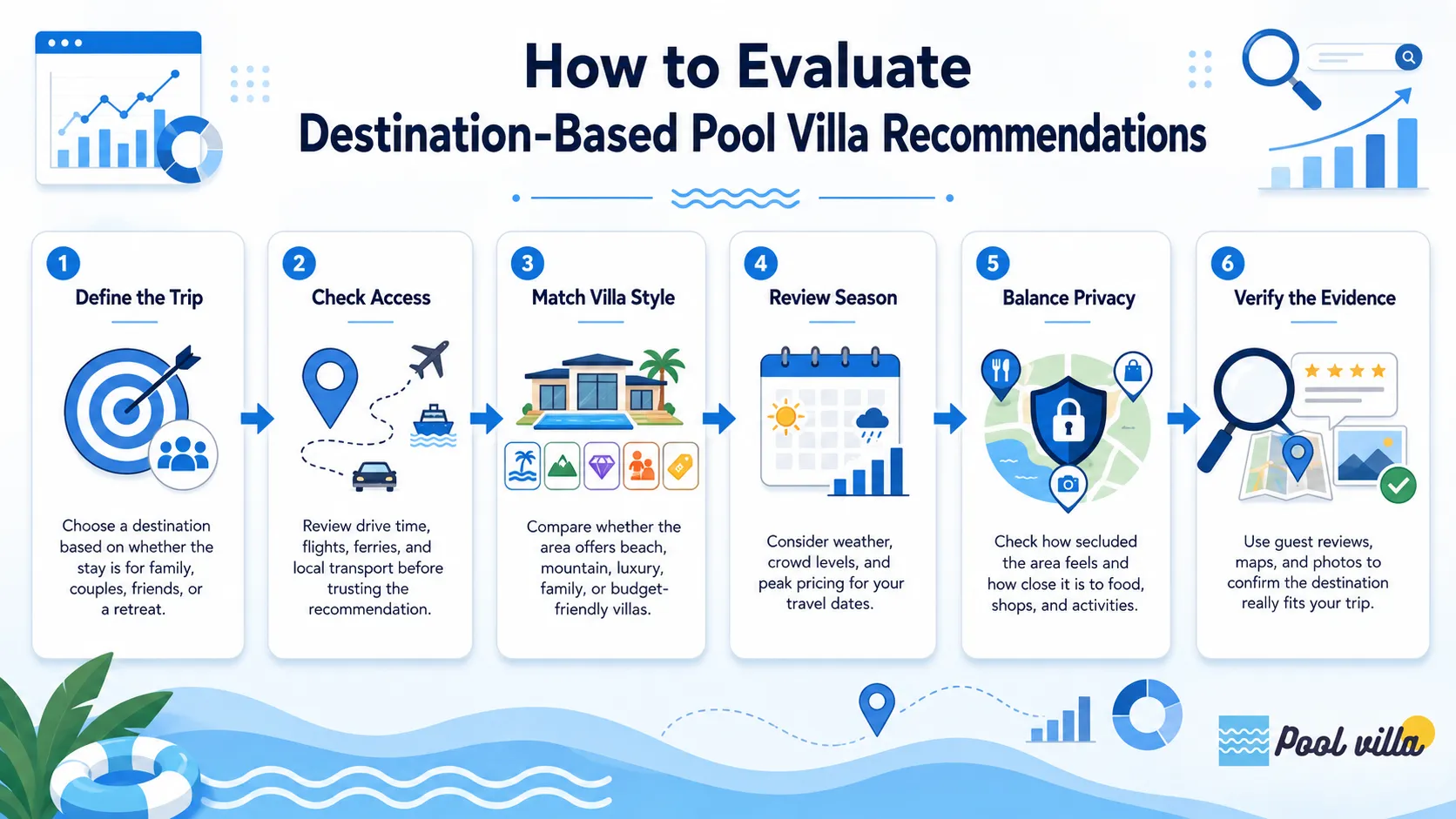
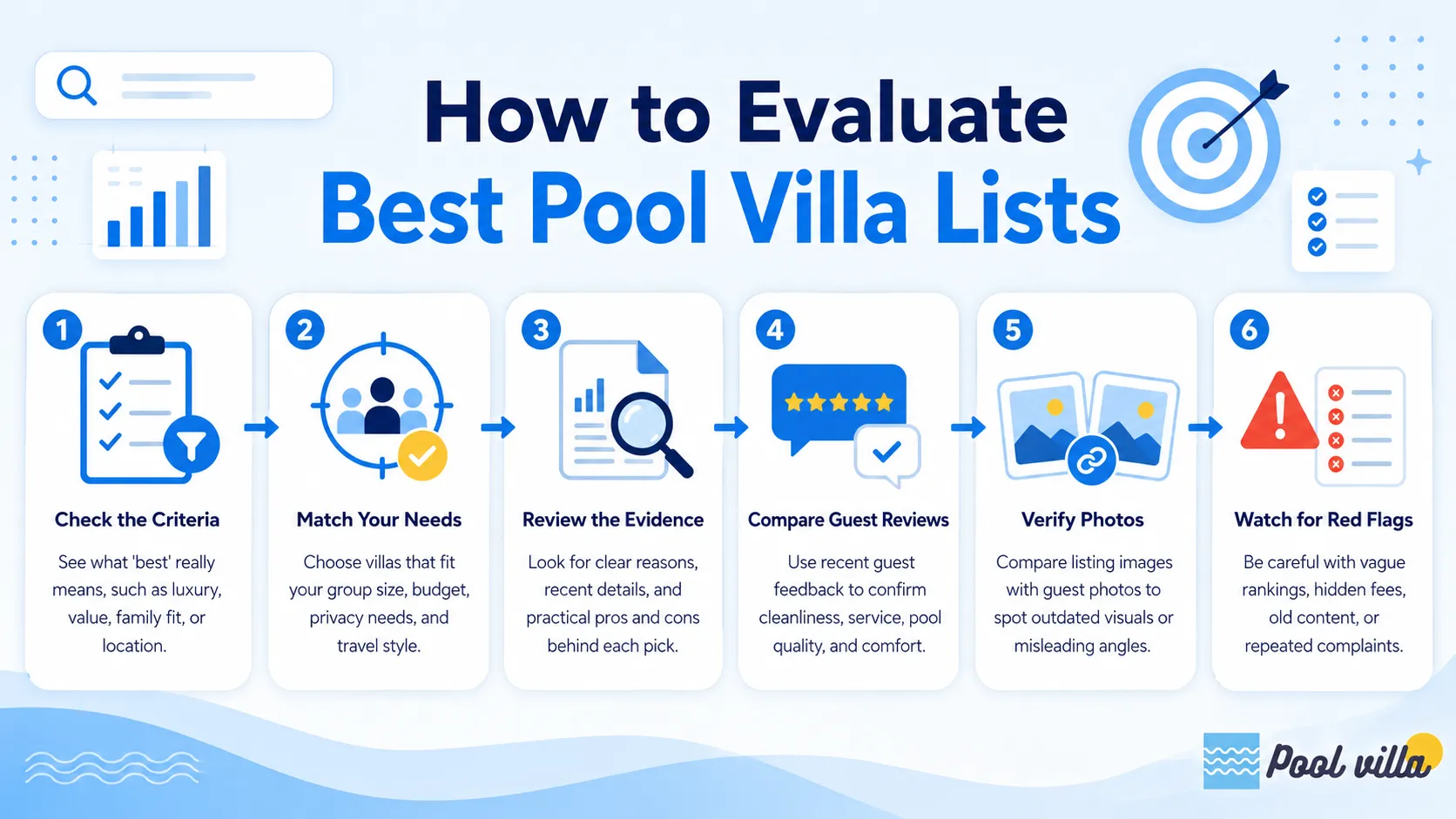
The best way to assess mountain pool villa privacy is to look beyond the words in the listing. Marketing phrases such as “secluded,” “hidden,” “private escape,” or “surrounded by nature” can be useful, but they do not always describe the real setting.
Start by checking the villa’s position. Is it on a standalone plot, inside a villa estate, beside a road, or part of a hillside row? Then look at the pool area. Is it protected by trees, walls, fences, elevation, or natural slopes? Finally, check what is above and around the property.
A practical privacy review should focus on four main factors:
- spacing between properties;
- elevation and sightlines;
- surrounding roads, paths, and viewpoints;
- access, entrance, and parking arrangements.
These details help you understand whether the villa will feel private in daily use, not only in carefully selected photos.
Spacing Between Villas
Spacing is one of the strongest indicators of real privacy. A mountain villa with generous distance from nearby properties usually feels more peaceful than one built tightly beside other villas.
In mountain areas, villas are often built along slopes because many guests want views. This can create beautiful scenery, but it can also place several properties close together. If villas are stacked along the same hillside, one pool area may be visible from another balcony or terrace.
Good spacing reduces visual exposure and noise. It also creates a stronger sense of retreat. Even when neighboring villas exist, enough distance can make outdoor areas feel comfortable.
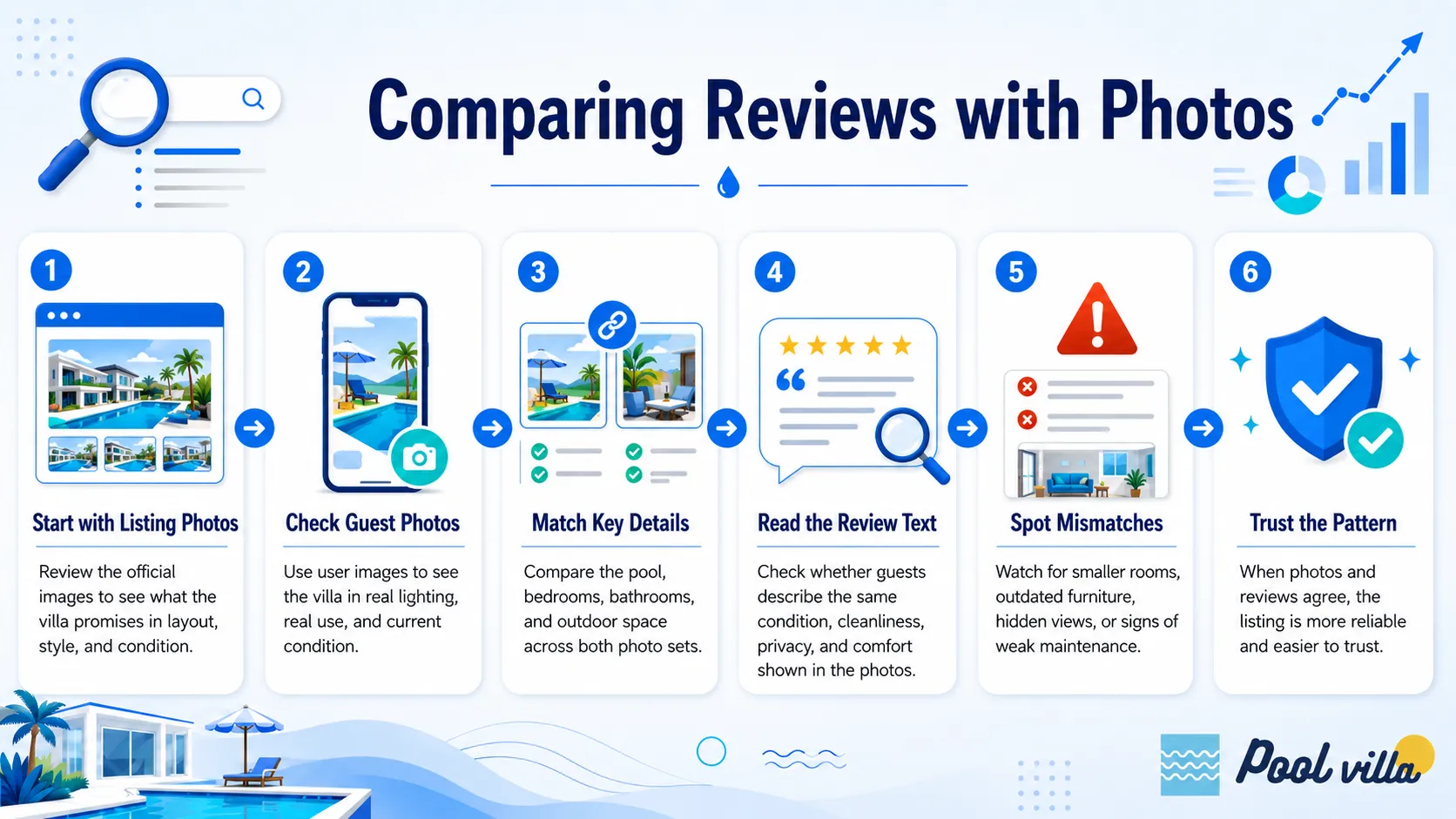
Before booking, check wide photos, satellite-style map views if available, and guest reviews. Look for signs of nearby roofs, balconies, windows, roads, or terraces. Close-up pool photos can make a villa look private while hiding nearby buildings just outside the frame.
Elevation and Sightlines
Elevation can improve privacy, but it can also create privacy problems.
A villa placed above surrounding land may feel private because it looks out over trees, valleys, or distant hills instead of directly facing neighbors. Elevated pool decks and terraces can create open views without much public movement nearby.
However, elevation works both ways. If another property, road, or viewpoint sits above the villa, people may be able to look down into the pool or outdoor spaces. This is one of the most common privacy issues in mountain pool villas.
When reviewing a villa, think about sightlines:
- What can guests see from the pool?
- What can others see from nearby roads or villas?
- Are there properties above the villa?
- Does the terrace face another building?
- Are bedrooms or bathrooms exposed from outside?
A mountain view does not automatically mean privacy. The best villas use elevation carefully, placing pools, terraces, and bedrooms where guests enjoy the view without being visible from higher points.
Surroundings and Natural Screening
Mountain surroundings can strongly improve privacy when they are used well. Trees, shrubs, rocks, slopes, garden walls, and natural landforms can all create screening around the villa.
Natural screening often feels softer and more comfortable than high walls alone. A pool surrounded by trees and plants can feel private while still open and scenic. A terrace bordered by landscaping may allow views outward while blocking views inward.
However, greenery should not be assumed from photos alone. Some villas may have young plants that do not fully screen the pool. Others may have seasonal vegetation that changes throughout the year. In dry periods, some areas may look more open than expected.
Useful screening features include:
- tall trees around the pool;
- dense landscaping near outdoor seating;
- garden walls or privacy fences;
- raised pool edges;
- covered terraces;
- bedroom windows facing private garden areas;
- natural slopes blocking outside views.
The strongest privacy usually comes from a combination of spacing, landscape design, and smart building orientation.
Access, Roads, and Entrances
Access affects privacy more than many travelers realize. A villa can have a private pool but still feel less secluded if cars, staff, neighbors, or other guests regularly pass near the entrance or pool area.
Mountain villas may have shared roads, shared driveways, or shared parking areas. In a villa estate, several properties may use the same access road. This can be practical, but it may reduce the feeling of isolation.
A private entrance usually improves privacy. So does parking that is close to the villa but not directly visible from the pool. If guests must pass other villas to reach the property, or if other guests pass directly by your terrace, the stay may feel less private.
Before booking, check:
- whether the entrance is private or shared;
- whether parking is private or shared;
- whether staff or neighbors pass near the pool;
- whether the driveway is close to outdoor spaces;
- whether the villa is near a public road or viewpoint;
- whether access is secure at night.
Privacy is not only about what people can see. It is also about how often people move near the property.
Noise and Activity Around the Villa
A mountain setting may look quiet, but noise can still affect privacy. Nearby villas, local roads, construction, cafes, farms, event spaces, or tourist viewpoints can all create sound.
Visual privacy and sound privacy are different. A pool may be hidden by trees, but guests may still hear cars, music, conversations, or activity from nearby properties. For travelers seeking deep quiet, this matters.
Groups should also think about noise in the opposite direction. If neighboring villas are close, outdoor music, late-night swimming, or group meals may disturb others and lead to complaints. Mountain areas often carry sound farther than expected because of open slopes and valleys.
A villa that is suitable for a quiet family stay may not be suitable for a loud group event. Always check house rules and guest reviews before booking.
Common Mistakes
Assuming Mountain Means Fully Private
A mountain location often feels more private than a city or busy beach area, but it does not guarantee full seclusion. Nearby villas, roads, and viewpoints can still affect privacy.
Trusting Pool Photos Too Quickly
Pool photos often show the best angle. They may not show what is behind, above, or beside the pool. Look for wider property photos and review comments.
Ignoring What Is Above the Villa
In hillside locations, properties above the villa can overlook lower outdoor areas. Always consider elevation and sightlines.
Confusing Private Pool With Private Setting
A private pool means the pool is not shared. It does not always mean the pool area is hidden from neighbors, staff, roads, or other guests.
Choosing Extreme Remoteness Without Planning
A very remote villa may offer privacy, but it may also be far from food, transport, medical support, and emergency services. Privacy should be balanced with practical access.
Practical Tips for Better Results
Choose a mountain pool villa with strong natural screening around the pool and terrace. Trees, walls, plants, fences, and elevation can make a major difference.
Look for wide-angle photos that show the surrounding area, not only close-up images of the pool or bedrooms. If the listing does not show the surroundings, ask for more details before booking.
Read recent reviews carefully. Search for comments about privacy, neighbors, road noise, staff access, shared driveways, and whether the villa felt secluded.
Ask direct questions if privacy is a priority. Useful questions include:
- Can the pool be seen from nearby villas or roads?
- Are there properties above the villa?
- Is the entrance shared?
- How close are the nearest neighbors?
- Do staff enter the property during the stay?
- Are there public viewpoints nearby?
Match the villa to your travel style. Couples may prioritize visual privacy and a quiet pool area. Families may need secure outdoor space. Groups should check both privacy and noise rules.
When Should You Be Extra Careful?
Be extra careful with hillside villas in popular mountain destinations. Scenic slopes often attract multiple villas, which can create overlapping views between properties.
Take extra care if the villa is near a viewpoint, cafe, road, or tourist attraction. These locations may be convenient, but they can bring more outside movement.
Be cautious when booking villas that show many interior photos but few exterior or surrounding-area photos. This can make it difficult to judge real privacy.
Also be careful with villas in managed estates or villa clusters. These can be comfortable and secure, but shared roads, staff access, and nearby guests may affect the privacy experience.
If traveling with elderly guests or children, do not choose privacy at the expense of safety. A remote, steep, or difficult-access villa may not be suitable even if it feels secluded.
FAQ
Do mountain pool villas usually feel more private?
They often do because mountain settings may have fewer public paths, more natural screening, and more distance from busy areas. However, privacy depends on spacing, elevation, layout, and nearby activity.
Does a private pool mean full privacy?
No. A private pool means the pool is for your villa, but it may still be visible from roads, neighboring villas, balconies, or higher viewpoints.
What is the biggest privacy issue in mountain pool villas?
The biggest issue is often sightlines from higher properties or roads. In hillside areas, another villa above yours may overlook the pool or terrace.
Are remote mountain villas always better for privacy?
Remote villas can offer stronger privacy, but they require more planning for transport, food, safety, and emergency support. The best choice balances privacy with practical access.
How can I check privacy before booking?
Review photos, check the surrounding layout, read recent reviews, and ask whether the pool, terrace, bedrooms, and entrance are visible from outside areas.
Conclusion
Mountain pool villas often feel more private than city, beach, or resort-style stays because they benefit from natural surroundings, fewer public walkways, wider spacing, and a quieter atmosphere. However, mountain pool villa privacy is not automatic.
Real privacy depends on spacing, elevation, surroundings, access, screening, and nearby activity. A villa with good design and thoughtful placement can feel calm and secluded. A villa built close to roads or higher neighboring properties may feel less private than expected.
Before booking, look beyond the word “private.” Check the pool position, sightlines, nearby villas, access routes, reviews, and house rules. When the privacy level matches your expectations, a mountain pool villa can provide a peaceful, comfortable, and genuinely restful stay.