Seasonal pool villa Thailand planning is about choosing the right time, location, and expectations for a private villa stay. Thailand is a year-round destination, but the experience can change significantly depending on weather, holidays, peak travel periods, school breaks, and local demand.
A pool villa that feels peaceful in one month may be expensive or fully booked during a holiday period. A beach villa that looks perfect in sunny photos may feel different during rainy season. A city-adjacent villa may be convenient most weekends, but traffic can become heavy during long holidays. A mountain villa may feel cool and private in certain months, but fog or rain may affect views and road access.
Understanding seasonal patterns helps travelers choose more realistically. The goal is not to find one “perfect” season for every pool villa stay. The better approach is to match the season with the purpose of the trip, the group type, the location, and the level of flexibility guests are comfortable with.
What Does This Topic Mean?
Seasonal pool villa travel in Thailand refers to how different times of year affect private pool villa stays. This includes weather, pricing, availability, travel time, destination atmosphere, and what guests can comfortably do during the trip.
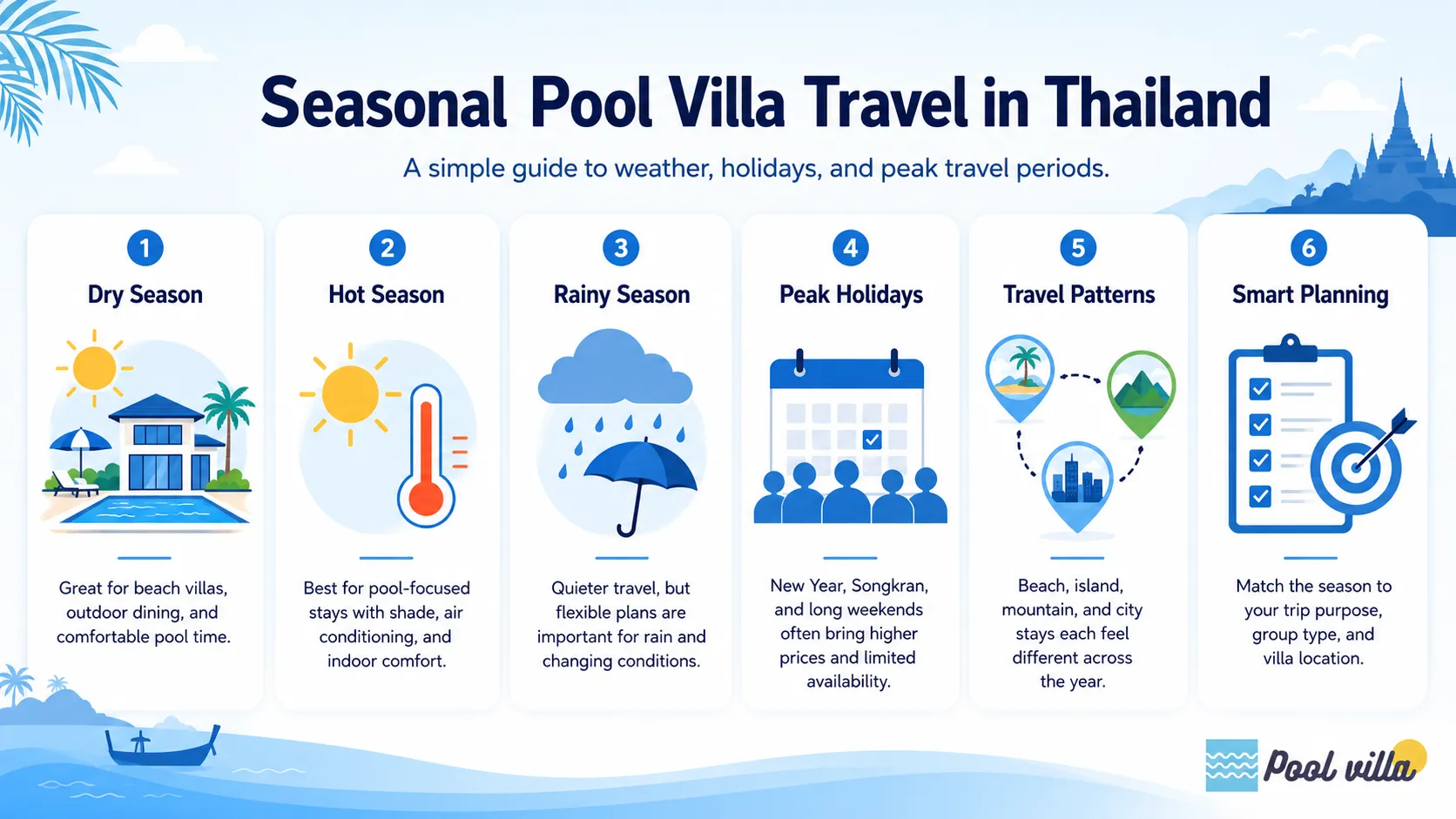
Thailand’s travel seasons are often discussed in broad terms: dry season, hot season, and rainy season. These patterns can vary by region, especially between beach, island, mountain, and city-adjacent destinations. For example, one coastal area may experience rougher sea conditions while another remains more manageable. Mountain areas may feel cooler and mistier, while city-adjacent villas may be more affected by holiday traffic than weather.
Seasonality also includes demand. New Year, Songkran, long weekends, school holidays, and year-end travel periods can affect villa prices, booking availability, road traffic, and check-in flexibility.
For pool villa travelers, seasonality matters because the villa experience depends heavily on outdoor comfort. Guests often expect to swim, use terraces, eat outside, enjoy views, and spend time together around the pool. Weather and peak periods can shape all of those experiences.
Why Does This Matter?
Seasonal planning matters because pool villas are usually chosen for comfort, privacy, and shared time. If the timing is wrong for the type of trip, the stay may feel less convenient than expected.
During peak periods, popular villas may be booked early. Prices may rise, cancellation terms may be stricter, and guests may have fewer choices. Roads to beach towns, island piers, or popular nearby destinations may become crowded. A short trip can feel rushed if much of the time is spent in traffic.
During rainy season, travelers may find better availability and quieter surroundings, but they need flexible plans. Rain can affect outdoor meals, pool use, beach access, boat transfers, and road safety. For some guests, this is acceptable. For others, especially families with young children or large groups, it requires more preparation.
During hot months, the private pool may become the main feature of the stay. Shade, air conditioning, indoor comfort, and covered areas become more important. A villa with a beautiful pool but little shade may be less comfortable in strong afternoon heat.
The best seasonal pool villa Thailand plan considers both comfort and practicality. It helps travelers avoid disappointment and choose the right villa for the right time.
How Should You Approach It?
Start with the purpose of the trip. A family holiday, couple retreat, group celebration, weekend escape, and wellness stay all need different seasonal planning.
If the trip is short, prioritize easy access and predictable travel time. A one-night or weekend stay during a busy holiday period should not involve complicated transfers or long drives unless the group is prepared for delays.
If the trip is focused on beach time, check the season carefully. Calm sea conditions, swimmable beaches, and boat trips are more important for beach and island villas than for city-adjacent villas. If the stay is mostly about relaxing at the property, a rainy or quieter period may still work well if the villa has good indoor and covered spaces.
If the trip is for a group, plan earlier. Larger villas are more limited, and seasonal demand can reduce availability quickly. Groups also need more parking, bedrooms, bathrooms, dining space, and clear house rules.
A practical approach is to compare three things before booking:
- the season and expected weather;
- the demand level around holidays or weekends;
- the villa’s ability to stay comfortable if plans change.
A good seasonal choice balances all three.
Main Seasonal Patterns for Pool Villas in Thailand
Dry and Cooler Season
The dry and cooler period is often the most comfortable time for many travelers. Weather is generally more suitable for outdoor living, pool use, beach visits, sightseeing, and group activities. Terraces, gardens, and open-air dining areas tend to be easier to enjoy.
This season is popular for beach villas, island villas, mountain retreats, and family trips. Because demand can be high, travelers should expect stronger competition for well-located villas.
The main advantage is comfort. The main drawback is availability and price pressure during popular dates.
This season is often suitable for:
- family holidays;
- beach pool villas;
- island stays;
- longer vacations;
- outdoor gatherings;
- first-time travelers who want easier weather.
Hot Season
Hot season can work very well for pool villa stays if the property is designed for heat. The private pool becomes especially valuable, but guests should pay attention to shade, air conditioning, ventilation, and indoor comfort.
A villa with covered seating, shaded poolside areas, ceiling fans, cool bedrooms, and good common spaces can feel comfortable even during hot afternoons. A villa with little shade or poor cooling may feel tiring.
Hot season can also overlap with important holiday travel periods, which may increase demand and traffic. Travelers should plan early if booking around major holiday dates.
This season is often suitable for:
- pool-focused stays;
- groups that plan to spend most time at the villa;
- short city-adjacent escapes;
- villas with strong cooling and shaded areas;
- guests who prefer swimming over sightseeing.
Rainy Season
Rainy season does not always mean constant rain every day. Many trips still include dry periods, cloudy skies, and usable pool time. However, planning should be more flexible.
Rain can affect road access, beach conditions, boat transfers, outdoor dining, and poolside safety. For mountain villas, fog and slippery roads may be important. For island villas, wind and sea conditions may affect ferries or speedboats. For beach villas, swimming conditions may vary.
Rainy season can be attractive for travelers who want quieter stays, more flexible availability, and a slower atmosphere. It works best when the villa has indoor living space, covered terraces, safe walkways, and reliable communication with the host.
This season is often suitable for:
- relaxed villa stays;
- couples who do not need fixed outdoor plans;
- longer stays with flexible schedules;
- travelers who value privacy and quiet;
- villas with covered outdoor areas and good indoor comfort.
Holidays and Peak Periods
Weather is only one part of seasonal planning. Holidays and peak periods can affect the stay just as much.
Major travel periods often bring higher demand, heavier traffic, less availability, and stricter booking terms. Villas near Bangkok, beach destinations, island piers, and popular mountain towns can become busy during long weekends and year-end travel.
Important peak patterns include:
- New Year and year-end travel;
- Songkran holiday period;
- long weekends;
- public holidays;
- school holiday periods;
- local festival periods;
- Friday-to-Sunday weekend demand near major cities.
For peak periods, booking early is usually the safest approach. Large villas, beachfront villas, sea-view villas, and family-friendly properties may be reserved quickly.
Travelers should also think about check-in and check-out timing. During peak periods, early check-in or late check-out may be harder to arrange. Traffic may also make arrival and departure slower than expected.
Choosing the Right Villa by Season
The best villa type depends on when you travel.
For dry season, focus on location quality, privacy, and booking early. Since demand may be higher, compare options carefully and avoid choosing only by photos.
For hot season, prioritize comfort. Look for shaded pool areas, air conditioning, indoor dining space, and bedrooms that stay cool. Pool safety also matters because guests may swim more often.
For rainy season, prioritize flexibility. Choose villas with covered terraces, safe access, indoor common areas, good drainage, and clear host support. Avoid properties that depend entirely on open-air spaces.
For holiday periods, prioritize logistics. Check road access, parking, house rules, food planning, and arrival timing. A beautiful villa can still feel stressful if the group arrives late, parking is limited, or rules are unclear.
What Tools, Materials, or Options Do You Need?
Seasonal planning does not require complex tools, but a few practical checks can improve the trip.
Use a calendar to identify public holidays, long weekends, and school break periods. Check likely travel times based on the day and time you plan to leave. Review recent guest feedback for comments about weather, road access, pool condition, insects, noise, and host support.
For rainy or island stays, keep a flexible schedule and prepare essential items such as rain protection, insect repellent, waterproof bags, chargers, basic medicine, and indoor activities.
For group trips, use a simple shared checklist. Include arrival time, food, payments, transport, parking, bedroom arrangements, house rules, and emergency contacts.
Common Mistakes
Choosing Only by Price
A lower price may be attractive, but seasonal conditions can explain the difference. A cheaper rainy-season villa may still be good value, but only if it remains comfortable in wet weather.
Ignoring Holiday Demand
Some travelers plan around weather but forget public holidays. Peak demand can affect price, availability, traffic, and check-in flexibility.
Expecting the Same Experience Every Season
A beach villa in dry season and the same villa in rainy season may feel different. Beach access, sea conditions, outdoor dining, and travel time can change.
Booking Too Late for Large Groups
Large pool villas are harder to secure during peak periods. Groups should plan earlier than couples or small families.
Overplanning Outdoor Activities
Seasonal weather can change quickly. A good villa trip should include time for rest, flexible meals, and indoor or covered options.
Practical Tips for Better Results
Match the season to your main activity. If beach swimming and boat trips are important, choose timing more carefully. If the private pool and villa atmosphere are the main focus, you may have more seasonal flexibility.
Check the villa layout, not just the destination. Covered terraces, shaded seating, safe walkways, and indoor space often matter more than broad seasonal labels.
Plan travel time around demand. Leaving Bangkok or other major cities during peak hours can reduce the value of a short trip. For weekend stays, departure timing matters.
Read recent reviews from the same season when possible. They can reveal practical details about rain, insects, pool cleanliness, traffic, noise, and host communication.
For holidays, confirm all rules before paying. Group limits, quiet hours, pool hours, deposits, and extra guest policies can matter more during busy periods.
When Should You Be Extra Careful?
Be extra careful when booking island villas during rainy or windy periods. Boat transfers and sea conditions can affect arrival, departure, and activities.
Take extra care with mountain villas during rainy season. Fog, slippery roads, and wet outdoor areas may affect safety and comfort.
Be cautious with short stays during peak holidays. If travel time becomes too long, guests may have less time to enjoy the villa.
Families with children or elderly guests should prioritize easy access, nearby services, safe pool areas, and comfortable indoor space.
Groups should pay special attention to parking, house rules, bedrooms, bathrooms, and noise restrictions.
FAQ
What is the best season for pool villa travel in Thailand?
There is no single best season for every traveler. Dry and cooler periods are often easier for outdoor plans, while rainy season can work well for flexible villa-focused stays.
Is rainy season bad for pool villas?
Not necessarily. Rainy season can still be enjoyable if the villa has covered spaces, indoor comfort, safe walkways, and flexible planning.
Are pool villas more expensive during holidays?
They can be more expensive during high-demand periods, especially for popular destinations, larger villas, beachfront locations, and long weekends.
Which season is best for short pool villa trips?
For short trips, predictable travel time and easy access matter most. Avoid complicated transfers during peak traffic or uncertain weather.
What should I check before booking seasonally?
Check weather patterns, holiday demand, travel time, villa layout, pool safety, cancellation terms, house rules, and recent reviews.
Conclusion
Seasonal pool villa travel in Thailand requires more than choosing a beautiful property. Weather, holidays, peak periods, travel time, and villa design all shape the real experience.
Dry and cooler periods often provide easier outdoor comfort, but demand can be high. Hot season makes pool quality, shade, and cooling more important. Rainy season can still be peaceful and enjoyable, but it requires flexibility and better backup planning.
The best seasonal choice depends on your trip purpose, group type, destination, and comfort expectations. When the season matches the villa and the travel plan, a pool villa stay in Thailand can feel smoother, more practical, and more enjoyable.