Organizing transportation and parking for a large group can quickly become one of the most difficult parts of a pool villa trip. A 30-person group often arrives in multiple vehicles, carries large amounts of luggage, and reaches the property at different times. Without proper planning, the arrival process can create delays, parking problems, neighbor complaints, and unnecessary stress before the stay even begins.
This is why 30 person pool villa parking planning should be treated as part of the overall trip organization, not as a last-minute detail. Many large villas have limited parking spaces, narrow access roads, or restrictions on oversized vehicles. Some locations also have strict rules regarding noise, roadside parking, or check-in timing.
Good arrival coordination helps the group settle in faster, reduces confusion, and prevents operational problems during the stay. It also improves safety, especially when children, elderly guests, or late-night arrivals are involved.
This guide explains how to manage parking, arrival schedules, luggage handling, vans, and group transportation for a 30-person pool villa stay in a practical and organized way.
What Does This Topic Mean?
Parking and arrival planning for a large pool villa stay refers to the process of organizing how guests travel to the property, where vehicles will park, how luggage will be handled, and how check-in logistics will work for the entire group.
For smaller groups, transportation usually happens naturally. A few cars arrive, luggage is unloaded, and guests settle in without major coordination. With 30 people, the situation changes significantly.
A large group may involve:
- Multiple private cars
- Passenger vans
- Rental vehicles
- Different arrival times
- Shared luggage transportation
- Food and supply deliveries
- Drivers unfamiliar with the area
In many cases, parking becomes one of the most overlooked issues during villa booking. Some properties advertise space for large groups but only provide limited vehicle access. Others may technically fit several cars, but access roads are too narrow for vans or minibuses.
Proper 30 person pool villa parking preparation means understanding the property’s limitations before arrival and organizing transportation around those conditions.
Why Does This Matter?
Parking Problems Affect the Entire Stay
When parking is poorly planned, problems start immediately after arrival. Guests may block entrances, park illegally, or struggle to unload luggage. In some villa areas, roadside parking creates complaints from neighbors or security staff.
Large groups also increase vehicle traffic around the property. Constant movement in and out of a small parking area creates congestion and confusion, especially during meal runs, excursions, or late-night returns.
Arrival Coordination Reduces Stress
Thirty people rarely arrive at the same time. Some guests may travel from the airport, while others drive from nearby cities. Without coordination, check-in becomes disorganized.
Common issues include:
- Guests arriving before check-in time
- Drivers getting lost
- Multiple calls asking for directions
- Delayed access codes or keys
- Traffic jams near the villa entrance
- Long unloading times
A structured arrival plan keeps the process smooth and prevents unnecessary delays.
Large Vehicles Require Special Attention
Many pool villas are located in residential areas, hillside roads, or beachside communities with limited road width. Passenger vans and minibuses may struggle with:
- Tight corners
- Steep driveways
- Low overhead clearance
- Small gates
- Shared access roads
Ignoring these limitations can damage vehicles or create safety issues.
Luggage Volume Increases Dramatically
A 30-person group can easily bring dozens of bags, coolers, food containers, and recreational equipment. Carrying everything from distant parking spots becomes tiring and time-consuming.
This becomes even more important for:
- Multi-floor villas
- Villas without elevators
- Long walking paths
- Rainy weather arrivals
- Families with children
Good luggage coordination improves comfort immediately.
How Should You Approach It?
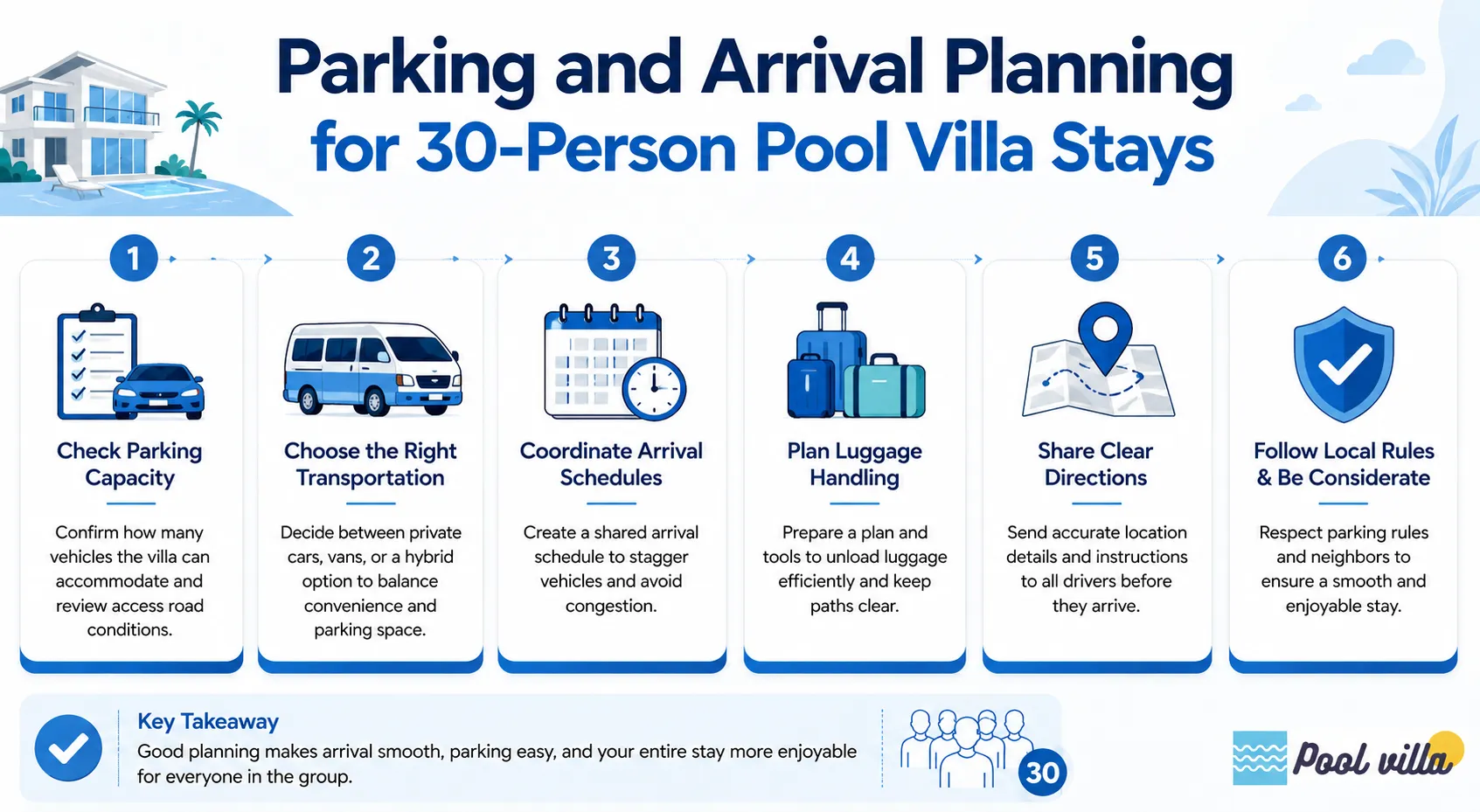
Confirm Parking Capacity Before Booking
Never assume a villa can comfortably handle the number of vehicles your group plans to bring.
Ask the property owner or manager:
- How many cars fit inside the property?
- Are oversized vans allowed?
- Is roadside parking permitted?
- Are there parking restrictions after certain hours?
- Is parking shared with neighboring properties?
- Can drivers easily turn around?
- Are there steep or narrow access roads?
Request real parking photos if possible. Listing descriptions sometimes overestimate actual usable parking space.
Estimate Vehicle Numbers Early
Calculate transportation needs before finalizing the trip.
For a 30-person group, transportation often includes:
- 5 to 8 private cars
- 2 to 4 passenger vans
- Airport transfer vehicles
- Food delivery vehicles
- Ride-sharing services
Understanding the total number of vehicles helps avoid overcrowding.
Choose a Transportation Strategy
Large groups usually use one of three main approaches.
Mostly Private Cars
This approach gives guests flexibility but increases parking pressure.
Advantages:
- Flexible departure times
- Easier local travel
- Lower coordination requirements
Disadvantages:
- Parking overload
- Traffic congestion
- Higher fuel costs
- More difficult arrival coordination
Shared Passenger Vans
Using vans reduces the number of parked vehicles and simplifies arrivals.
Advantages:
- Easier parking management
- Better group coordination
- Reduced road congestion
- Simplified airport transfers
Disadvantages:
- Fixed schedules
- Less personal flexibility
- Requires organized pickup planning
Hybrid Transportation
Many groups combine private cars with shared vans. This often works best for mixed-age groups or guests arriving from different locations.
Assign an Arrival Coordinator
One person should manage transportation communication for the entire group.
Their responsibilities may include:
- Sharing directions
- Monitoring arrival times
- Managing parking assignments
- Coordinating with the villa host
- Organizing luggage unloading
- Handling gate access or check-in codes
Without a designated coordinator, communication becomes fragmented very quickly.
Create a Shared Arrival Schedule
A simple schedule helps organize arrivals more efficiently.
Include:
- Driver names
- Vehicle types
- Estimated arrival times
- Passenger counts
- Contact numbers
This prevents multiple vehicles from arriving simultaneously in small parking areas.
What Tools, Materials, or Options Do You Need?
Navigation and Communication Tools
Large group arrivals work better when everyone uses the same navigation reference.
Useful tools include:
- Shared map pins
- GPS screenshots
- Messaging group chats
- Live location sharing
- Arrival checklists
In remote villa locations, map applications sometimes lead drivers to incorrect entrances. Visual references help reduce confusion.
Luggage Equipment
Heavy luggage handling becomes more difficult with large groups.
Helpful items include:
- Foldable luggage carts
- Waterproof storage bins
- Luggage labels
- Portable lights for night arrivals
- Umbrellas during rainy seasons
These small preparations make unloading faster and safer.
Vehicle Type Selection
Vehicle choice matters more than many groups expect.
Passenger Vans
Passenger vans work well when parking space is limited because they reduce total vehicle numbers.
However, confirm:
- Height clearance
- Turning radius
- Driveway steepness
- Access road width
Some villas cannot accommodate long-wheelbase vans.
SUVs and Pickup Trucks
These provide better road flexibility but occupy more parking space.
Minibuses
Minibuses may require off-site parking if villa access roads are narrow.
Always verify access before booking large transport vehicles.
Common Mistakes
Assuming Parking Will “Figure Itself Out”
This is one of the most common large-group mistakes. Parking limitations become serious once multiple vehicles arrive simultaneously.
Poor planning can lead to:
- Blocked entrances
- Neighbor disputes
- Fines
- Unsafe roadside parking
- Delayed check-in
Ignoring Local Road Conditions
Some pool villas are located on steep hills, narrow beachfront roads, or residential lanes.
Drivers unfamiliar with these conditions may struggle, especially at night or during rain.
Always review:
- Road width
- Slope conditions
- Night visibility
- Flood-prone access areas
Bringing Too Many Vehicles
Too many cars create unnecessary congestion.
A coordinated van system is often more efficient than allowing every guest to drive separately.
No Luggage Plan
Large groups often underestimate unloading time.
Without organization:
- Hallways become blocked
- Bags get mixed up
- Food supplies remain outside too long
- Check-in becomes chaotic
Poor Communication With Guests
Some guests may arrive late, use incorrect entrances, or park improperly if instructions are unclear.
Avoid sending vague directions like:
- “Near the beach”
- “Next to the café”
- “Follow the small road”
Use exact instructions and visual references instead.
Practical Tips for Better Results
Encourage Carpooling
Reducing vehicle numbers immediately improves parking management.
Even lowering total vehicles from eight to five can make a major difference.
Stagger Arrival Times
Avoid having all vehicles arrive within the same 15-minute window.
A staggered arrival plan helps with:
- Parking rotation
- Luggage unloading
- Check-in efficiency
- Traffic flow
Prepare a Temporary Unloading Zone
If parking space is tight, designate a temporary unloading area near the entrance.
Guests can unload first before moving vehicles into final parking spots.
This keeps entrances clear and speeds up check-in.
Prioritize Essential Vehicles
Vehicles carrying:
- Children
- Elderly guests
- Food supplies
- Medical equipment
should receive the closest parking spaces.
Organize Shared Supplies
Instead of every guest bringing separate coolers, drinks, or cooking equipment, consolidate supplies into fewer vehicles.
This reduces unloading complexity significantly.
Plan Night Arrivals Carefully
Late-night arrivals create additional challenges.
Consider:
- Limited lighting
- Noise restrictions
- Difficult navigation
- Closed gates
- Sleeping guests
Provide clear instructions for late arrivals in advance.
Maintenance or Prevention
Keep Parking Areas Organized Throughout the Stay
Parking problems do not end after arrival.
During the trip:
- Vehicles may block exits
- Drivers may leave unexpectedly
- Ride-share pickups may create congestion
- Delivery vehicles may need temporary access
Maintain a simple parking system throughout the stay.
Protect Driveways and Outdoor Areas
Heavy vehicles can damage certain villa surfaces.
Be careful with:
- Grass parking zones
- Decorative stone driveways
- Poolside paving
- Drainage covers
- Soft ground after rain
Large vans parked improperly can create costly property damage.
Avoid Constant Vehicle Movement
Repeated vehicle repositioning increases confusion and noise.
Try to organize daily transportation schedules in advance, especially for:
- Beach trips
- Grocery runs
- Restaurant outings
- Group excursions
Monitor Security
Large groups often leave bags, electronics, or supplies visible in parked vehicles.
Encourage guests to:
- Lock vehicles
- Avoid visible valuables
- Keep keys organized
- Use designated parking areas only
When Should You Be Extra Careful?
During Rainy Weather
Heavy rain creates additional parking risks.
Potential issues include:
- Slippery slopes
- Flooded roadside areas
- Reduced visibility
- Muddy overflow parking
- Difficult unloading conditions
Prepare umbrellas and waterproof storage when rain is expected.
In Residential Neighborhoods
Many pool villas are located inside quiet residential communities.
Large groups should avoid:
- Blocking shared roads
- Loud arrivals at night
- Double parking
- Excessive honking
- Idling engines late at night
Respecting neighborhood conditions helps avoid complaints and penalties.
With Elderly Guests or Children
Long walks from distant parking areas may be difficult for some guests.
Plan closer access for:
- Elderly travelers
- Families with strollers
- Guests carrying medical equipment
If Alcohol Consumption Is Expected
Large villa stays often include parties or celebrations.
If alcohol is involved:
- Reduce unnecessary driving
- Arrange designated drivers
- Consider return transportation
- Use local transport services where possible
Transportation safety should remain part of the planning process.
FAQ
How many parking spaces does a 30-person pool villa usually need?
Most 30-person groups require space for approximately 5 to 8 vehicles, depending on whether guests use private cars or shared vans.
Are passenger vans better than private cars for large villa stays?
In most cases, yes. Vans reduce parking congestion, simplify coordination, and make group transportation easier. However, road access and driveway size must be verified first.
Should arrival times be coordinated?
Yes. Staggered arrivals reduce traffic congestion, speed up unloading, and make check-in more organized.
What if the villa does not have enough parking?
Groups may need to:
- Reduce vehicle numbers
- Arrange shared transportation
- Use nearby public parking
- Coordinate off-site parking solutions
Always confirm options before arrival day.
Why is luggage planning important for large groups?
A 30-person group can bring a large volume of bags and supplies. Organized unloading prevents delays, confusion, and blocked entrances.
Conclusion
Effective 30 person pool villa parking planning is essential for a smooth and organized group stay. Transportation problems can affect the entire experience, especially when multiple vehicles, large amounts of luggage, and different arrival schedules are involved.
The best approach combines realistic vehicle planning, clear communication, organized arrival coordination, and an understanding of the property’s parking limitations. Shared transportation, staggered arrivals, and proper luggage handling often make a significant difference in comfort and efficiency.
Large group stays work best when transportation is treated as part of the overall trip strategy rather than a last-minute detail. Careful planning reduces stress, protects the property, improves safety, and helps the entire group start the stay in a more relaxed and organized way.