
Planning a stay for 30 people in one pool villa sounds simple at first. In reality, room allocation becomes one of the biggest factors affecting comfort, privacy, sleep quality, and the overall group experience.
Large group trips often include different types of guests. Some are couples, some are families with children, some prefer quiet spaces, while others stay up late socializing. Without proper room planning, even a high-quality villa can feel crowded and disorganized.
This is why room allocation for a 30-person pool villa should never be treated as a last-minute task. The way rooms are assigned directly affects convenience, bathroom usage, noise control, sleeping arrangements, and shared living comfort.
This guide explains how to allocate rooms for adults, children, couples, friends, elders, and mixed groups in a practical and realistic way.
What Does Room Allocation for a 30-Person Pool Villa Mean?
Room allocation 30 people pool villa refers to the process of organizing who sleeps where inside the villa.
For smaller groups, people often choose rooms casually. With 30 guests, that approach usually creates problems because different guests have different expectations and comfort needs.
A proper room allocation plan considers:
- Number of bedrooms
- Bed types and sizes
- Bathroom access
- Privacy requirements
- Noise sensitivity
- Age differences
- Family structures
- Sleeping schedules
- Mobility limitations
The goal is not simply fitting 30 people into the villa. The goal is creating a comfortable environment where everyone can enjoy the stay without unnecessary frustration.
In many cases, the best room allocation strategy focuses more on compatibility than on maximizing bed capacity.
Why Does Room Allocation Matter?
Poor room planning creates avoidable problems very quickly in large-group stays.
Common issues include:
- Couples placed in noisy shared rooms
- Children sleeping too far from parents
- Elders assigned upstairs rooms
- Friends returning late and disturbing others
- Long bathroom waiting times
- Unequal room quality causing tension within the group
These problems usually appear on the first night and continue throughout the trip.
Good room allocation improves:
- Sleep quality
- Privacy
- Group harmony
- Bathroom efficiency
- Noise control
- Safety for children and elders
- Overall trip organization
For longer stays, room planning becomes even more important because small inconveniences become more noticeable over time.
A well-organized villa often feels larger and more comfortable, even when occupancy is high.
How Should You Approach Room Allocation?
The best approach is to divide guests into practical categories before assigning rooms.
Do not start with bedrooms first. Start with the people.
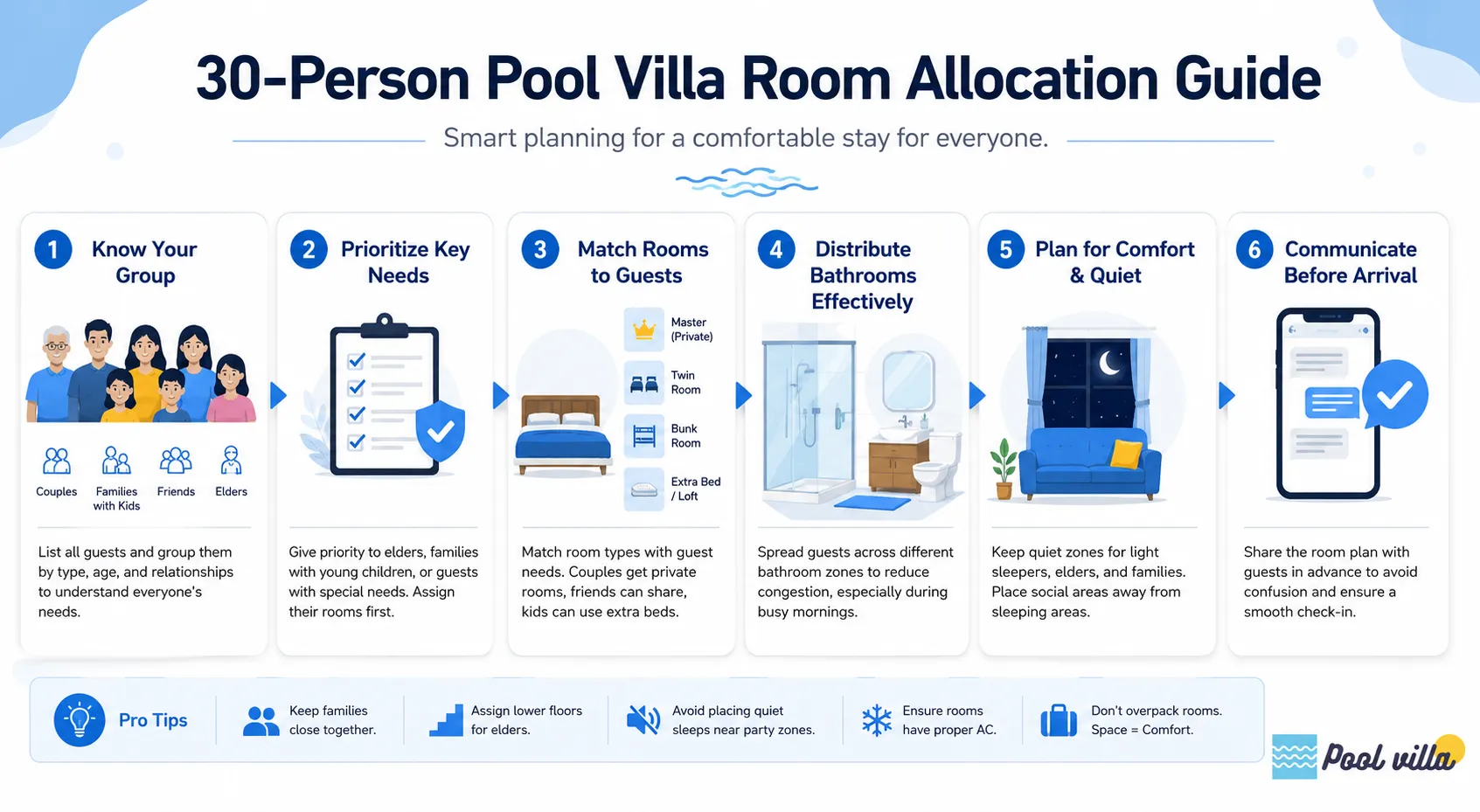
Step 1: Separate Guests by Group Type
For a 30-person pool villa stay, guests are usually divided into categories such as:
- Couples
- Families with children
- Single adults
- Friend groups
- Elderly guests
- Teenagers
- Guests needing quiet spaces
This creates a clearer picture of how many private and shared rooms are actually needed.
Step 2: Prioritize Essential Needs First
Certain guests should always receive priority placement.
These usually include:
- Elders
- Families with young children
- Guests with mobility limitations
- Light sleepers
- Guests needing private bathrooms
Assign these guests first before organizing friend groups or flexible sleepers.
Step 3: Match Bedroom Types Properly
Not every room should be treated equally.
A 30-person pool villa may include:
- Master bedrooms
- Shared bunk rooms
- Twin-bed rooms
- Family rooms
- Loft sleeping areas
- Sofa beds
- Extra mattresses
Each room type serves different purposes.
For example:
- Couples generally fit best in king-bed rooms
- Friends can share twin or bunk rooms
- Children may use extra mattress spaces
- Elders usually need quieter lower-floor rooms
The best allocation uses room function logically rather than randomly.
Step 4: Consider Bathroom Access
Bathroom planning is often overlooked in large villas.
If one section of the villa contains too many guests sharing one bathroom, congestion becomes a problem, especially during mornings.
Try to distribute guests evenly across bathroom zones.
For example:
- Families may benefit from ensuite bathrooms
- Shared friend groups can tolerate communal bathrooms more easily
- Elderly guests should avoid rooms requiring long walks to bathrooms at night
Bathroom convenience affects daily comfort more than many people expect.
Room Allocation Ideas for Different Guest Types
Couples
Couples generally expect more privacy and quieter sleeping arrangements.
The best setup includes:
- Private bedrooms
- King or queen beds
- Rooms farther from social areas
- Ensuite bathrooms if available
Avoid placing couples beside loud entertainment zones if the group plans late-night activities.
If private rooms are limited, prioritize couples with children or longer stays first.
Families With Children
Families usually need practical access rather than luxury.
Good family room placement includes:
- Nearby bathrooms
- Enough floor space
- Easy pool supervision
- Lower-floor access
- Rooms close to parents and children
Young children should not sleep in isolated rooms far from adults.
Some villas use family suites or connected rooms, which work well for larger family groups.
Extra mattresses are often more practical for children than separate bedrooms.
Friend Groups
Friend groups are usually the most flexible guests.
Shared sleeping arrangements often work well, including:
- Twin rooms
- Bunk-bed rooms
- Large shared bedrooms
- Loft sleeping spaces
Friends also tend to tolerate noise and shared bathrooms more easily.
However, avoid overcrowding rooms excessively. Even younger guests need reasonable personal space during multi-day stays.
Elderly Guests
Elderly guests should always receive special consideration during room allocation.
Priority factors include:
- Ground-floor access
- Nearby bathrooms
- Quiet surroundings
- Minimal stairs
- Stable walking surfaces
- Comfortable beds
Do not assign elders to loft spaces, bunk beds, or rooms requiring frequent stair use.
Late-night bathroom access should also remain simple and safe.
Mixed Adult Groups
Many 30-person trips include mixed adult groups where not everyone knows each other well.
In these cases:
- Privacy becomes more important
- Gender-based room division may help
- Shared rooms should be planned carefully
- Bathroom access should remain balanced
Avoid assuming all guests are comfortable sharing sleeping spaces.
Clear communication before arrival prevents awkward situations later.
How Many Bedrooms Are Usually Needed?
The ideal number depends on the group structure, not just the guest count.
For a comfortable 30-person pool villa stay, most groups need:
- 7 to 10 proper bedrooms
- Multiple bathrooms
- Flexible sleeping arrangements
- Some shared sleeping spaces
Trying to fit 30 adults into too few bedrooms usually reduces comfort significantly.
The villa may technically support 30 guests, but the real experience depends on layout quality and room distribution.
A villa with fewer bedrooms may still work well if:
- Some guests are children
- The group accepts shared rooms
- The stay is short
- The sleeping setup is organized properly
Always check actual bed configurations rather than relying only on maximum occupancy numbers.
Common Mistakes
Choosing Based Only on Capacity
Many groups book villas labeled “30 guests” without checking the actual room layout.
Maximum occupancy does not always mean comfortable occupancy.
Some villas count sofa beds, floor mattresses, or temporary bedding as part of capacity.
Always review:
- Bedroom count
- Bed types
- Bathroom numbers
- Shared sleeping areas
Ignoring Noise Zones
Rooms near:
- Pools
- Karaoke rooms
- Living areas
- BBQ spaces
- Gaming rooms
usually experience more nighttime noise.
Assigning families or elders near entertainment zones often creates problems.
Overcrowding Shared Rooms
Trying to maximize space efficiency sometimes reduces overall comfort.
Overcrowded rooms create:
- Poor sleep quality
- Lack of privacy
- Increased tension
- Storage problems
- Air-conditioning imbalance
A slightly lower occupancy per room usually creates a much better group experience.
Not Planning Bathroom Usage
Bathroom congestion becomes a serious issue in large groups.
If too many guests rely on one bathroom cluster, mornings become disorganized very quickly.
Spread guests more evenly across the villa layout whenever possible.
Making Last-Minute Assignments
Random room allocation on arrival often causes confusion and disagreements.
It is far better to organize sleeping arrangements before the trip begins.
Many experienced group organizers create a simple room plan in advance and share it with everyone before check-in.
Practical Tips for Better Results
Assign Rooms Before Arrival
Pre-planning reduces confusion during check-in.
Guests can settle in faster without negotiating rooms after travel.
This is especially helpful for:
- Families
- Large friend groups
- Corporate retreats
- Multi-generation trips
Create Quiet and Social Zones
Large villas often benefit from dividing spaces into:
- Quiet sleeping zones
- Social activity zones
This helps different guest types coexist more comfortably.
Keep Families Close Together
Parents usually prefer nearby rooms for supervision and convenience.
Avoid separating children too far from adults, especially in multi-floor villas.
Use Flexible Bedding Strategically
Extra mattresses and sofa beds work best for:
- Teenagers
- Younger guests
- Short stays
- Flexible friend groups
They are less suitable for elders or couples during longer stays.
Think About Morning Traffic
Large groups often create congestion in:
- Bathrooms
- Kitchen areas
- Hallways
- Dressing spaces
Balanced room placement helps reduce these bottlenecks.
When Should You Be Extra Careful?
Pool Safety for Children
Families with children should stay within reasonable visibility of pool areas.
However, rooms should not open directly into unsafe pool access zones for toddlers.
Adult supervision remains essential in pool villas.
Stair Safety
Some villas include steep stairs, split levels, or loft-style sleeping areas.
These may not suit:
- Elders
- Young children
- Guests with mobility concerns
Always check the layout carefully before assigning rooms.
Air-Conditioning Capacity
Overcrowded rooms place extra strain on cooling systems, especially in tropical destinations.
Too many guests in one room can create:
- Poor airflow
- Heat buildup
- Sleep discomfort
- Moisture problems
Balanced occupancy improves overall comfort.
Privacy Expectations
Mixed groups often include different cultural or personal expectations regarding privacy.
Clear communication beforehand avoids misunderstandings later.
This is especially important for:
- Corporate groups
- Extended families
- Large mixed-gender friend groups
FAQ
How many bedrooms are ideal for a 30-person pool villa?
Most groups are comfortable with 7 to 10 bedrooms, depending on whether guests are couples, families, or shared friend groups.
Should couples always receive private rooms?
Not necessarily, but couples usually benefit from quieter and more private arrangements, especially during multi-day stays.
What is the biggest mistake in room allocation?
Focusing only on maximum occupancy instead of actual comfort, privacy, and bathroom access.
Are bunk beds suitable for adults?
They can work for younger adults or close friend groups, but they are usually less comfortable for older guests or longer stays.
How should elders be prioritized?
Elders should generally receive lower-floor rooms with nearby bathrooms and minimal stair usage.
Is it better to assign rooms before arrival?
Yes. Pre-planning reduces confusion, speeds up check-in, and helps avoid disagreements within large groups.
Conclusion
Managing room allocation for a 30-person pool villa requires more than counting beds. The best arrangements consider privacy, comfort, bathroom access, noise levels, family structure, and guest compatibility.
A well-organized villa stay feels smoother, quieter, and far more enjoyable for everyone involved. Couples sleep better, families stay organized, elders remain comfortable, and shared spaces function more efficiently.
The most successful large-group trips usually come from realistic planning rather than maximum occupancy. Proper room allocation helps transform a crowded villa into a comfortable shared environment where every guest can enjoy the experience more comfortably.