Hosting or traveling with 20 people in one pool villa can become chaotic if the space is not organized properly. Even a large villa can feel crowded when sleeping areas, dining spaces, entertainment zones, and quiet areas overlap without structure.
This is why zoning matters. Proper pool villa zoning for 20 people helps reduce noise problems, improve privacy, prevent congestion, and create a more comfortable experience for everyone in the group. Instead of treating the villa as one shared space, zoning divides the property into functional areas that support different activities throughout the stay.
For large family trips, company outings, birthday celebrations, or friend gatherings, thoughtful zoning often determines whether the experience feels relaxing or stressful. A villa may technically accommodate 20 guests, but layout quality matters just as much as bed count.
This guide explains how to separate sleeping, dining, activity, quiet, and pool zones effectively when managing a large group stay.
What Does Pool Villa Zoning for 20 People Mean?
Pool villa zoning refers to organizing the villa into separate functional spaces so different activities can happen without disrupting each other.
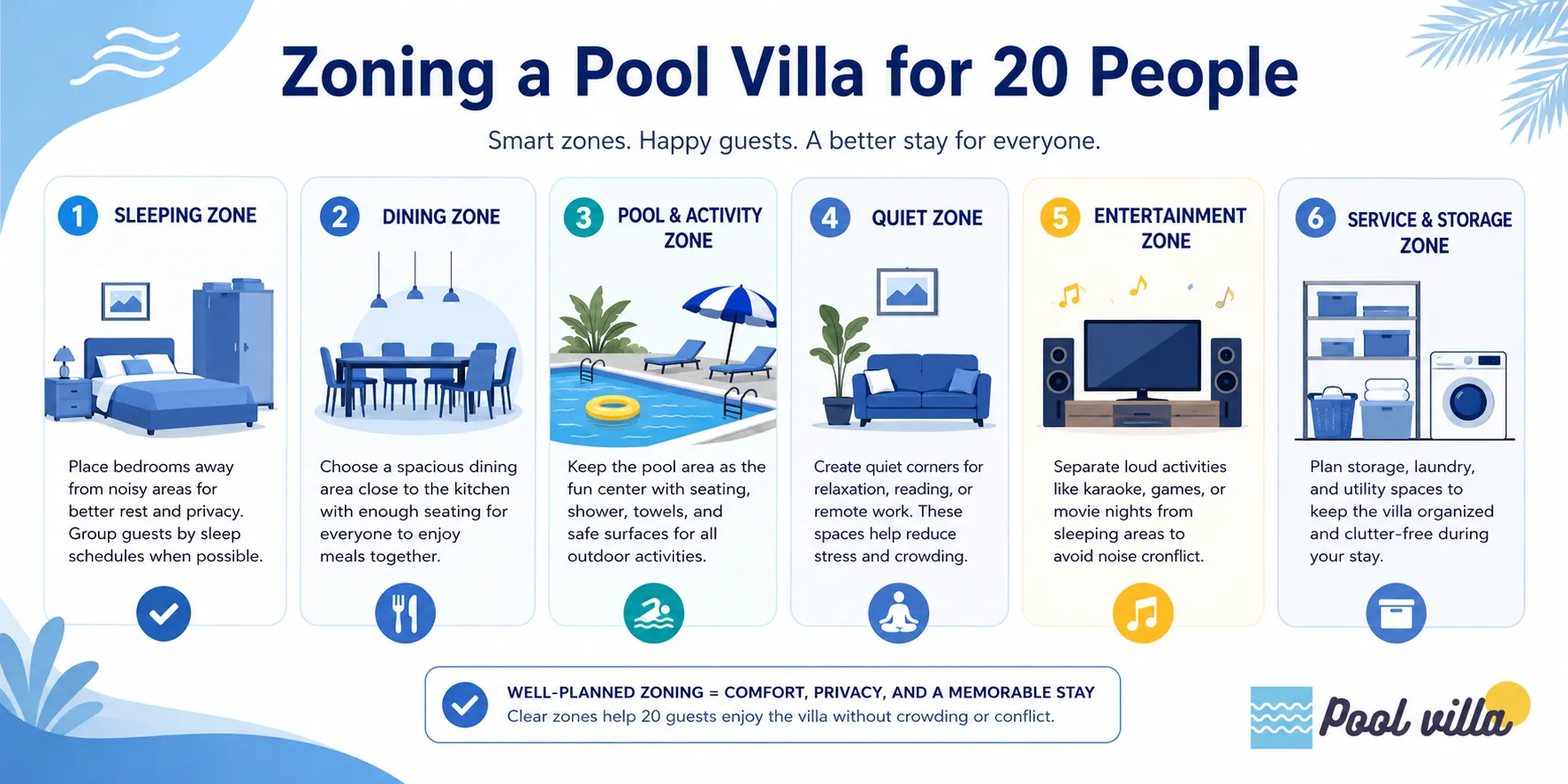
For a 20-person group, this usually includes:
- Sleeping zones
- Dining zones
- Pool and outdoor activity zones
- Quiet or relaxation zones
- Entertainment and social zones
- Service or storage areas
The goal is not simply dividing rooms. Good zoning improves movement, comfort, privacy, and noise control across the entire property.
In smaller groups, guests can usually share spaces without major issues. With 20 people, however, overlapping activities quickly create problems. Some guests may want to sleep while others are using karaoke systems, swimming late at night, or preparing food.
A properly zoned villa reduces these conflicts naturally through layout planning.
Why Does Zoning Matter in a Large Pool Villa?
Noise Control
Noise becomes one of the biggest issues in large group accommodations. Without clear zoning, bedrooms placed directly beside the pool, kitchen, or entertainment areas often lead to sleep disruption.
Separating loud and quiet spaces helps maintain comfort for different schedules within the group.
Better Privacy
Not every guest wants constant social interaction during a multi-day stay. Some people need quiet areas for rest, remote work, phone calls, or personal downtime.
Creating semi-private zones helps the villa feel less crowded even when fully occupied.
Improved Traffic Flow
When 20 people move through the same narrow areas repeatedly, congestion becomes unavoidable. This commonly happens around kitchens, bathrooms, entrances, and pool access points.
Zoning improves circulation by spreading activities across multiple areas instead of concentrating everyone in one location.
Safer Shared Spaces
Crowded pool decks, wet walkways, and overloaded dining areas increase accident risks. Organized zones reduce unnecessary movement and help prevent slipping, collisions, and clutter.
More Comfortable Group Dynamics
Large groups rarely operate on the same schedule. Some wake up early, others stay up late, and activity preferences vary significantly.
Zoning allows multiple experiences to happen simultaneously without constant compromise.
How Should You Approach Pool Villa Zoning for 20 Guests?
Start With Group Behavior, Not Just Room Count
Many people focus only on bedroom numbers when booking a villa. In reality, understanding how the group behaves is more important.
Consider:
- Will guests stay up late?
- Are children included?
- Will cooking happen regularly?
- Is the trip focused on partying or relaxation?
- Are there elderly guests who need quieter spaces?
- Will anyone work remotely during the stay?
These factors determine which zones need stronger separation.
Divide the Villa Into Activity Categories
For a 20-person setup, the villa should ideally separate into five main categories:
1. Sleeping Zones
Bedrooms should be placed away from the loudest activity areas whenever possible.
Good sleeping zones usually have:
- Reduced foot traffic
- Distance from pool speakers
- Access to nearby bathrooms
- Privacy from common spaces
- Air conditioning and sound insulation
For large groups, it is often useful to divide sleeping areas into:
- Quiet rooms for families or older guests
- Shared rooms for younger guests
- Flexible sleeping areas for late sleepers
2. Dining Zones
Dining areas become central gathering points during large stays. Poorly planned dining layouts often create bottlenecks and overcrowding.
A good dining zone should include:
- Enough seating for most of the group
- Easy kitchen access
- Good ventilation
- Clear walking paths
- Nearby trash and storage areas
Outdoor dining spaces work well for large groups because they reduce indoor heat and noise buildup.
3. Pool and Activity Zones
The pool area naturally becomes the social center of the villa. However, this area also generates the most noise and movement.
The pool zone should ideally include:
- Seating areas
- Towel storage
- Outdoor showers
- Safe non-slip flooring
- Space for drinks and snacks
- Controlled speaker placement
Avoid placing quiet bedrooms directly beside the main pool activity zone.
4. Quiet Zones
Quiet spaces are often overlooked but become extremely valuable during multi-day stays.
These areas may include:
- Balcony lounges
- Garden seating
- Reading corners
- Indoor relaxation rooms
- Small shaded outdoor areas
Not every guest wants continuous social interaction. Quiet zones help reduce mental fatigue during long group stays.
5. Entertainment Zones
Entertainment areas may include:
- Karaoke rooms
- Game rooms
- Barbecue spaces
- Movie rooms
- Outdoor lounges
These zones should be isolated as much as possible from sleeping areas.
Late-night entertainment is one of the most common causes of conflict in large villas.
Bedroom Zoning Strategies for 20 People
Separate Guests by Sleep Schedule
One practical approach is grouping guests according to lifestyle patterns rather than relationships alone.
For example:
- Early sleepers together
- Late-night guests together
- Families with children together
- Couples in quieter areas
- Younger guests near activity spaces
This reduces tension during nighttime hours.
Use Multi-Level Layouts Carefully
Two-story or three-story villas can improve zoning significantly when used properly.
A common setup includes:
- Upper floors for bedrooms and quiet areas
- Ground floors for social activities
- Outdoor spaces for entertainment
However, stairs may create accessibility problems for elderly guests or young children.
Avoid Overcrowded Shared Rooms
Technically fitting 20 guests into a villa does not always mean comfort.
Too many people in one bedroom often causes:
- Poor sleep quality
- Lack of luggage space
- Limited privacy
- Bathroom congestion
- Higher noise levels
For longer stays, balanced room distribution matters more than maximizing occupancy.
Dining and Kitchen Zoning for Large Groups
Create Separate Food Preparation Areas
With 20 guests, kitchens become high-traffic zones very quickly.
If possible, divide food-related areas into:
- Cooking space
- Drink station
- Snack area
- Cleaning area
This reduces crowding and improves efficiency during meal times.
Outdoor Dining Works Better for Large Groups
Indoor dining rooms may feel cramped when accommodating 20 people simultaneously.
Outdoor dining areas provide:
- Better airflow
- More flexible seating
- Easier cleanup
- Reduced indoor noise
- More social space
Covered outdoor spaces are especially useful in tropical destinations.
Plan for Refrigerator and Storage Capacity
Food storage becomes a major issue during group stays.
A villa designed for large groups should ideally have:
- Large refrigerators
- Secondary beverage coolers
- Extra countertop space
- Organized dry storage
Without adequate storage, kitchens become cluttered quickly.
Pool Zone Planning for 20 Guests
Prevent Congestion Around the Pool
The pool area usually attracts most guests during daytime hours.
To avoid overcrowding:
- Spread seating around the perimeter
- Create multiple access points
- Separate dining from swimming areas
- Keep walkways clear
- Use designated towel zones
Large groups need circulation space, not just a larger pool.
Manage Wet and Dry Areas
One common problem in pool villas is water spreading throughout the property.
Effective zoning separates:
- Wet zones near the pool
- Dry indoor relaxation spaces
- Shoe storage areas
- Towel drop locations
This improves cleanliness and reduces slipping hazards.
Control Music and Speaker Placement
Outdoor sound travels farther than many guests expect.
Speaker systems should avoid facing:
- Bedrooms
- Neighboring properties
- Quiet lounges
Creating one designated entertainment direction helps maintain balance throughout the villa.
Common Mistakes in Pool Villa Zoning
Treating Every Area as a Shared Space
Not all villa spaces should function as active gathering areas.
When every room becomes social space, guests lose opportunities for rest and privacy.
Ignoring Bathroom Access
Bathroom congestion becomes a serious issue in large groups.
Poor zoning often results in:
- Long waiting times
- Wet hallway traffic
- Shared bathroom conflicts
- Noise near bedrooms
Bathroom placement should support each major zone separately.
Placing Loud Activities Near Bedrooms
Karaoke systems, pool parties, and outdoor speakers directly beside sleeping zones usually create tension within the group.
Noise separation should be planned intentionally.
Underestimating Walking Flow
Large villas sometimes look spacious in photos but function poorly when fully occupied.
Narrow hallways, single staircases, and limited outdoor access points can create constant congestion.
Focusing Only on Maximum Capacity
Some villas advertise high occupancy numbers without considering realistic comfort.
A well-zoned villa for 16 guests may feel more comfortable than a poorly organized villa claiming to accommodate 20.
Practical Tips for Better Results
Assign Zones Before Arrival
Group organization becomes easier when expectations are set early.
Before check-in, decide:
- Bedroom assignments
- Quiet hours
- Main gathering spaces
- Smoking areas
- Food preparation responsibilities
This prevents confusion later.
Use Temporary Dividers if Necessary
Portable dividers, curtains, or furniture placement can help create semi-private areas in open-plan villas.
This is especially useful for:
- Shared sleeping spaces
- Remote work areas
- Children’s zones
- Quiet lounges
Keep One Flexible Space
A multipurpose area provides flexibility during longer stays.
Depending on the time of day, this space may function as:
- Game area
- Dining overflow
- Remote work space
- Children’s play area
- Relaxation zone
Flexible spaces improve adaptability for changing group needs.
Think About Nighttime Operations
Daytime and nighttime villa use are completely different.
At night:
- Noise sensitivity increases
- Lighting matters more
- Pathway safety becomes important
- Quiet zones become essential
Plan zoning for both daytime activity and nighttime comfort.
When Should You Be Extra Careful?
Families With Children
Children require safer movement zones and stronger supervision around pools and stairs.
Family-friendly zoning should include:
- Easy bathroom access
- Reduced slipping risks
- Quiet sleep areas
- Safe pool visibility
Elderly Guests
Older guests may struggle with:
- Long stair access
- Slippery outdoor surfaces
- Distant bedrooms
- Excessive nighttime noise
Ground-floor quiet rooms are usually preferable.
Villas Designed Primarily for Events
Some villas prioritize aesthetics or party spaces over practical daily use.
Large open layouts may look attractive but create challenges for sleeping privacy and noise management.
Multi-Day Stays
The longer the stay, the more important zoning becomes.
Small inconveniences become much more noticeable after several days of shared living.
Conclusion
Successful pool villa zoning for 20 people is about far more than fitting enough beds into one property. Comfort, privacy, traffic flow, noise control, and shared usability all affect the quality of the stay.
A well-zoned villa allows different activities to happen simultaneously without constant disruption. Guests can sleep, relax, socialize, swim, cook, or work without competing for the same space.
For large groups, thoughtful zoning often matters more than luxury features alone. Even an impressive villa can feel stressful if loud and quiet areas overlap poorly or if movement through the property becomes congested.
By separating sleeping, dining, entertainment, quiet, and pool zones carefully, large groups can create a more balanced, functional, and enjoyable villa experience for everyone involved.
FAQ
How many bedrooms should a pool villa for 20 people have?
Most comfortable setups include at least 6 to 8 bedrooms, depending on room size and sleeping arrangements. The ideal number depends on privacy expectations and group composition.
Why are quiet zones important in large pool villas?
Quiet zones help reduce mental fatigue, improve sleep quality, and give guests personal space during long group stays.
Should the pool area be separated from bedrooms?
Yes. Pool areas usually generate the highest noise levels and foot traffic. Separating them from sleeping zones improves overall comfort.
What is the biggest zoning mistake in large villas?
One of the most common mistakes is concentrating all activities in one central area without separating loud and quiet functions.
Is an open-plan villa good for 20 guests?
Open-plan layouts can work well for social interaction, but they often need additional quiet areas or semi-private zones to remain comfortable for larger groups.