Planning meals for a large group in a pool villa is often more complicated than choosing the villa itself. A 30-person stay involves shared schedules, limited kitchen space, food storage concerns, cooking responsibilities, dietary preferences, and dining logistics that can quickly become stressful without preparation.
Good food planning is not only about deciding what to eat. It also affects convenience, hygiene, budgeting, group coordination, and the overall atmosphere of the trip. Poor planning usually leads to wasted food, overcrowded kitchens, insufficient seating, delayed meals, and unnecessary costs from last-minute deliveries.
This guide explains how to approach food and dining planning for a 30 person pool villa stay in a practical and organized way. It covers meal structure, food storage, catering options, cooking arrangements, dining space management, and common mistakes that large groups should avoid.
What Does Food Planning for a 30-Person Pool Villa Stay Mean?
30 person pool villa food planning for a large pool villa group means organizing how meals will be prepared, stored, served, and shared throughout the trip.
For smaller groups, food arrangements are often informal. With 30 people, that approach usually fails because:
- Food quantities become difficult to estimate
- Refrigerator space may not be sufficient
- Cooking takes much longer
- Different meal times create confusion
- Cleanup becomes a major issue
- Dining areas may not fit everyone comfortably
A proper food plan should cover:
- Number of meals during the stay
- Grocery preparation
- Cooking responsibilities
- Catering or delivery decisions
- Dining schedules
- Kitchen equipment needs
- Food safety and storage
- Seating arrangements
- Waste management
The goal is to make shared dining efficient without turning the vacation into constant kitchen work.
Why Does This Matter?
Food organization strongly affects the overall experience of a large villa stay. Even luxury villas can feel chaotic when meal planning is poor.
Large Groups Consume More Resources Than Expected
Thirty people can go through food, ice, drinks, and disposable items surprisingly quickly. Small mistakes in estimation become expensive at group scale.
For example:
- One missing breakfast ingredient affects everyone
- Insufficient refrigerator space can spoil food
- Limited grill capacity creates long delays
- Too few dining seats split the group apart
Large groups also create higher pressure on kitchen facilities that were not designed for commercial-style cooking.
Shared Meals Influence Group Experience
For many pool villa trips, meals become the main social activity. BBQ nights, breakfast gatherings, and late-night snacks often shape the atmosphere of the stay.
Well-organized dining helps:
- Reduce stress
- Keep schedules smoother
- Improve group interaction
- Prevent arguments over responsibilities
- Minimize unnecessary spending
Without coordination, even simple meals can consume large amounts of time and energy.
Hygiene and Food Safety Become More Important
Food safety risks increase significantly in tropical climates and large-group environments.
Common problems include:
- Leaving cooked food outside too long
- Overloading refrigerators
- Cross-contamination from shared cooking
- Improper seafood or meat storage
- Insufficient ice for beverages and cooling
For a 30-person group, food poisoning or spoiled ingredients can affect the entire trip.
How Should You Approach It?
The best approach is to simplify operations. Large groups function better with structure rather than fully spontaneous meal planning.
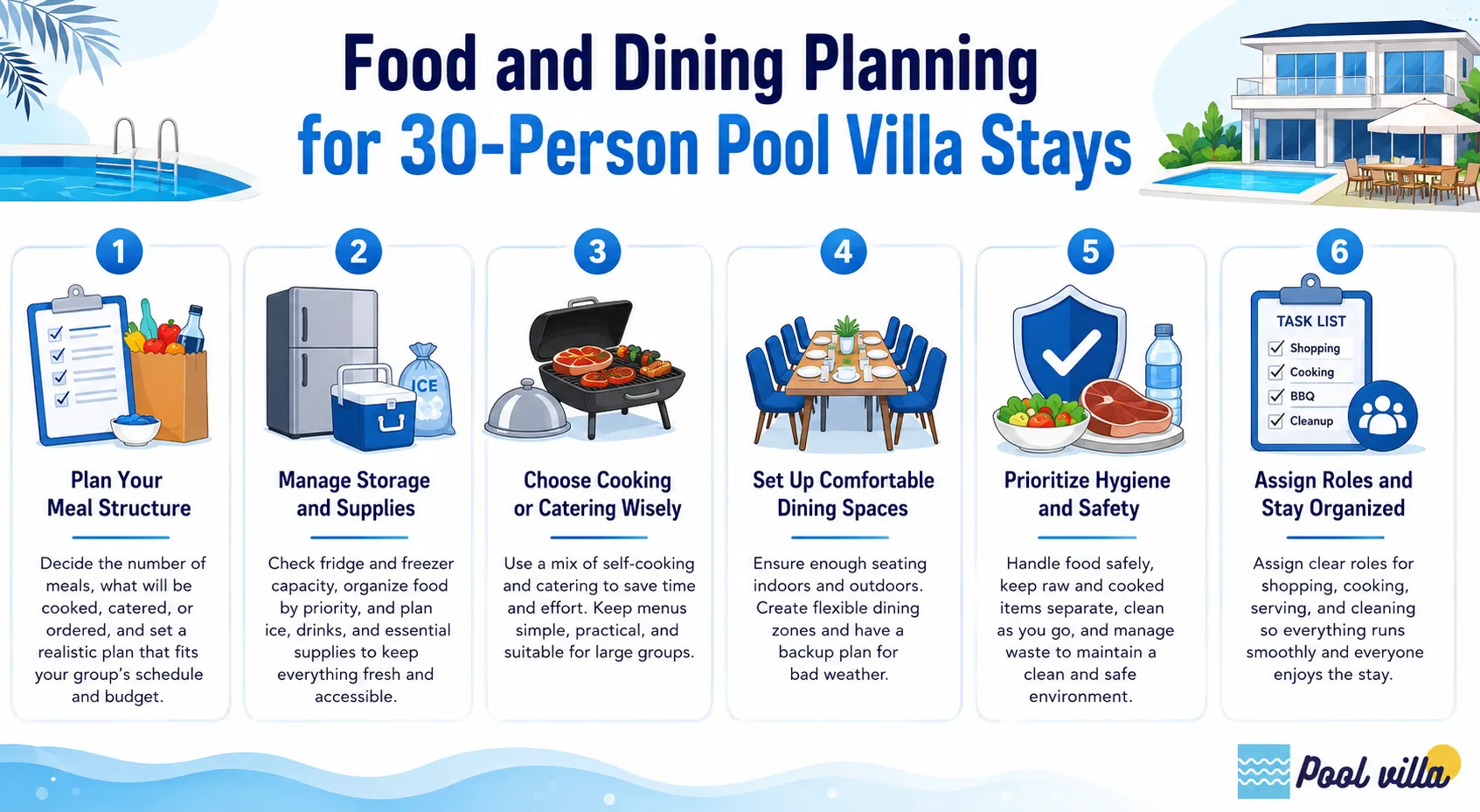
Decide the Meal Structure Before Arrival
Start by determining:
- How many breakfasts, lunches, and dinners are needed
- Which meals will be cooked
- Which meals will be catered or ordered
- Whether the group will eat together or separately
Most 30-person groups work best with:
- Simple breakfasts
- Flexible lunches
- One organized group dinner per day
Trying to fully cook three large meals daily often becomes exhausting.
Assign Food Responsibilities Clearly
Avoid unclear group coordination.
Instead, divide responsibilities such as:
- Grocery purchasing
- Ice and drink management
- BBQ preparation
- Cooking teams
- Cleanup rotation
- Food delivery coordination
When nobody is assigned, tasks usually fall on a small number of people.
Plan Food Quantities Realistically
Large-group overbuying is common. Many groups purchase excessive food because they underestimate how much waste occurs.
Focus on practical quantities instead of maximum abundance.
Useful planning habits include:
- Choosing multi-purpose ingredients
- Avoiding overly complex menus
- Limiting perishable foods
- Preparing shared dishes instead of individual meals
Simple menus are often more successful for villa stays than restaurant-style variety.
Separate Essential Meals From Entertainment Food
A common mistake is mixing core meal planning with snacks, alcohol, and party food.
Plan separately for:
- Main meals
- Pool snacks
- BBQ items
- Drinks
- Alcohol
- Midnight food
- Desserts
This helps prevent overspending and forgotten essentials.
Food Storage and Kitchen Planning
Food storage becomes one of the biggest operational challenges in large pool villa stays.
Check Refrigerator Capacity in Advance
Many villas advertise full kitchens, but refrigerator size may still be limited for 30 guests.
Before arrival, verify:
- Number of refrigerators
- Freezer space
- Ice storage
- Beverage cooling capacity
If refrigerator space is insufficient, groups may need:
- Portable coolers
- Extra ice boxes
- Daily grocery replenishment
- Separate drink coolers
Keeping drinks in separate coolers reduces pressure on kitchen refrigerators.
Organize Food by Usage Priority
Large shared kitchens become disorganized quickly without structure.
A practical system includes:
- One shelf for breakfast items
- One shelf for raw ingredients
- One section for drinks
- Separate containers for cooked food
- Clearly labeled shared items
This prevents constant searching and accidental food mixing.
Be Careful With Seafood and Raw Meat
Pool villa trips often include seafood BBQs or grilling sessions. These require extra attention in hot weather.
Important precautions include:
- Keep raw seafood chilled continuously
- Avoid leaving meat outdoors before cooking
- Use separate cutting boards
- Cook food in smaller batches
- Avoid storing partially cooked meat
Large groups often underestimate how quickly food temperature becomes unsafe outdoors.
Cooking vs Catering for Large Groups
Not every meal needs to be cooked by the group.
For 30 people, the best option often combines self-cooking with professional catering or delivery.
When Self-Cooking Makes Sense
Cooking works well when:
- The group enjoys shared cooking activities
- Meals are simple
- Kitchen facilities are large enough
- Guests stay multiple nights
- Budget control is important
Suitable self-cooked meals include:
- BBQ
- Breakfast buffets
- Pasta
- Fried rice
- Grilled foods
- Hot pot
Complex menus with many separate dishes usually create delays and kitchen congestion.
When Catering Is the Better Option
Catering is often worth considering for:
- Arrival dinners
- Special celebrations
- Birthday parties
- Corporate retreats
- Large seafood meals
Professional catering reduces:
- Cleanup workload
- Ingredient management
- Cooking stress
- Timing problems
It also allows the group to spend more time enjoying shared activities.
Hybrid Planning Usually Works Best
Many successful villa stays use a hybrid approach such as:
- Self-serve breakfast
- Ordered lunch
- Group BBQ dinner
This keeps meal preparation manageable while still maintaining the social atmosphere of shared dining.
Dining Space Planning for 30 Guests
Dining logistics are frequently overlooked when booking a large pool villa.
A villa may technically sleep 30 people while still having limited dining capacity.
Check Seating Before Booking
Important considerations include:
- Indoor dining table size
- Outdoor seating
- Poolside dining areas
- BBQ zone layout
- Shade and weather protection
If seating is insufficient, meals become fragmented and uncomfortable.
Create Flexible Dining Zones
Large groups often benefit from multiple dining areas such as:
- Main dining table
- Outdoor BBQ seating
- Snack station near the pool
- Drink area separate from food service
This reduces crowding and improves movement around the villa.
Consider Weather Conditions
Outdoor dining sounds ideal, but heat and rain can affect comfort significantly.
In tropical destinations, midday outdoor meals may become uncomfortable without:
- Fans
- Shade
- Covered terraces
- Indoor backup seating
Always plan an alternative dining arrangement for bad weather.
Common Mistakes
Buying Too Much Perishable Food
Many groups overestimate cooking capacity and underestimate waste.
Fresh seafood, vegetables, and meat often spoil before use when schedules change unexpectedly.
Buy strategically rather than excessively.
Ignoring Kitchen Workflow
Too many people cooking simultaneously creates confusion.
Common problems include:
- No counter space
- Delayed cooking
- Missing utensils
- Unsafe food handling
Assign smaller cooking teams instead of allowing everyone into the kitchen at once.
Forgetting Beverage and Ice Planning
Drink management is often underestimated in large groups.
Thirty guests can consume large quantities of:
- Water
- Soft drinks
- Ice
- Alcohol
- Mixers
Insufficient cooling becomes a major inconvenience quickly.
Creating Overly Ambitious Menus
Vacation cooking should remain practical.
Meals that require:
- Complex preparation
- Long cooking times
- Multiple pans
- Specialized equipment
often become stressful rather than enjoyable.
Practical Tips for Better Results
Prepare a Shared Grocery List
Use a centralized grocery checklist before arrival.
Divide items into categories:
- Breakfast
- BBQ
- Snacks
- Drinks
- Cooking supplies
- Cleaning products
This prevents duplicate purchases and forgotten essentials.
Use Disposable Items Strategically
Disposable plates and cups can reduce cleanup workload significantly for large groups.
However, balance convenience with waste management by using reusable items where practical.
Schedule One Main Group Meal Daily
Trying to coordinate every meal for 30 people can become exhausting.
One organized shared dinner per day is often enough to maintain the group atmosphere while allowing flexibility.
Keep Cooking Equipment Simple
Portable equipment can help support villa kitchens.
Useful additions may include:
- Extra coolers
- Portable grills
- Ice buckets
- Serving trays
- Food containers
Avoid bringing unnecessary appliances that create clutter.
Maintenance or Prevention
Good food management also helps maintain villa cleanliness and avoid property issues.
Control Food Waste Properly
Large groups generate significant waste.
Poor waste management can cause:
- Odors
- Insects
- Ant problems
- Overflowing trash bins
Dispose of food waste regularly instead of allowing garbage to accumulate overnight.
Protect Indoor Areas From Food Damage
Pool villas often contain expensive furniture and flooring.
Avoid:
- Eating wet poolside food indoors
- Leaving drinks near electronics
- Staining sofas with sauces or alcohol
- Bringing greasy food into bedrooms
Simple rules help maintain the property condition throughout the stay.
Clean Cooking Areas Immediately
Delaying cleanup creates larger problems later.
Quick post-meal cleaning helps prevent:
- Grease buildup
- Insect attraction
- Missing utensils
- Kitchen congestion
Large groups benefit from scheduled cleanup rotations.
When Should You Be Extra Careful?
During BBQ and Outdoor Cooking
BBQ areas create additional safety risks including:
- Burns
- Smoke accumulation
- Fire hazards
- Slippery wet surfaces
Keep cooking zones organized and supervised.
With Alcohol and Poolside Dining
Combining alcohol, water, and cooking equipment requires extra caution.
Be careful with:
- Glass near pools
- Slippery dining areas
- Electrical cooking appliances outdoors
- Late-night food preparation
With Food Allergies and Dietary Restrictions
For a 30-person group, dietary differences become more likely.
Before the trip, check for:
- Seafood allergies
- Vegetarian preferences
- Religious dietary restrictions
- Medical food limitations
Clear labeling helps avoid accidental mistakes during shared meals.
FAQ
How much food should a 30-person pool villa group prepare?
The exact amount depends on trip length, meal style, and whether catering is included. In most cases, groups should prioritize practical shared meals rather than excessive variety to reduce waste and simplify preparation.
Is catering better than self-cooking for large villa stays?
Catering is often better for at least one major meal, especially for celebrations or short stays. Self-cooking works best for simpler meals such as breakfast or BBQ gatherings.
How many refrigerators are needed for 30 guests?
One standard refrigerator is usually insufficient for a full 30-person stay with drinks and fresh ingredients. Extra coolers or additional refrigerators are often necessary.
What is the easiest meal setup for large groups?
Simple buffet-style meals, BBQ dinners, and self-serve breakfasts are usually the most efficient options for large pool villa groups.
Should everyone share cooking responsibilities?
Yes. Dividing responsibilities improves organization and prevents a small number of guests from handling all meal-related work throughout the trip.
Conclusion
Food and dining planning for a 30-person pool villa stay requires more structure than most groups initially expect. The combination of large guest numbers, shared facilities, limited storage, and outdoor dining conditions can create unnecessary stress without preparation.
The most successful villa trips usually keep meal planning simple, organized, and realistic. Clear responsibilities, practical menus, proper food storage, and flexible dining arrangements help the group spend less time solving logistical problems and more time enjoying the stay itself.
Instead of treating meals as an afterthought, large groups should view food planning as a core part of the overall villa experience. Proper preparation improves comfort, reduces waste, supports hygiene, and creates a smoother shared environment for everyone involved.