Choosing the safest pool villa location for families is not only about finding a villa with a private pool. The surrounding location matters just as much as the property itself. A villa may look comfortable in photos, but if it is far from hospitals, difficult to access by road, isolated from food options, or hard to reach in an emergency, it may not be the best choice for a family stay.
For families, safety is practical. It includes road access, travel time, nearby medical support, food availability, communication, pool supervision, neighborhood conditions, and how easily adults can solve problems if something changes. A beautiful remote villa can be relaxing, but it may require more planning. A city-adjacent villa may be convenient, but it may also have traffic, noise, or less privacy.
The safest location is usually the one that balances comfort, access, services, and emergency support. This guide explains how to evaluate family pool villa locations realistically so parents and group organizers can choose with more confidence.
What Does This Topic Mean?
A safe family pool villa location is a place where guests can enjoy a private villa stay while still having reasonable access to essential support. It does not mean the villa must be in a city center or beside a hospital. It means the location should be practical for the needs of children, parents, older relatives, and the wider group.
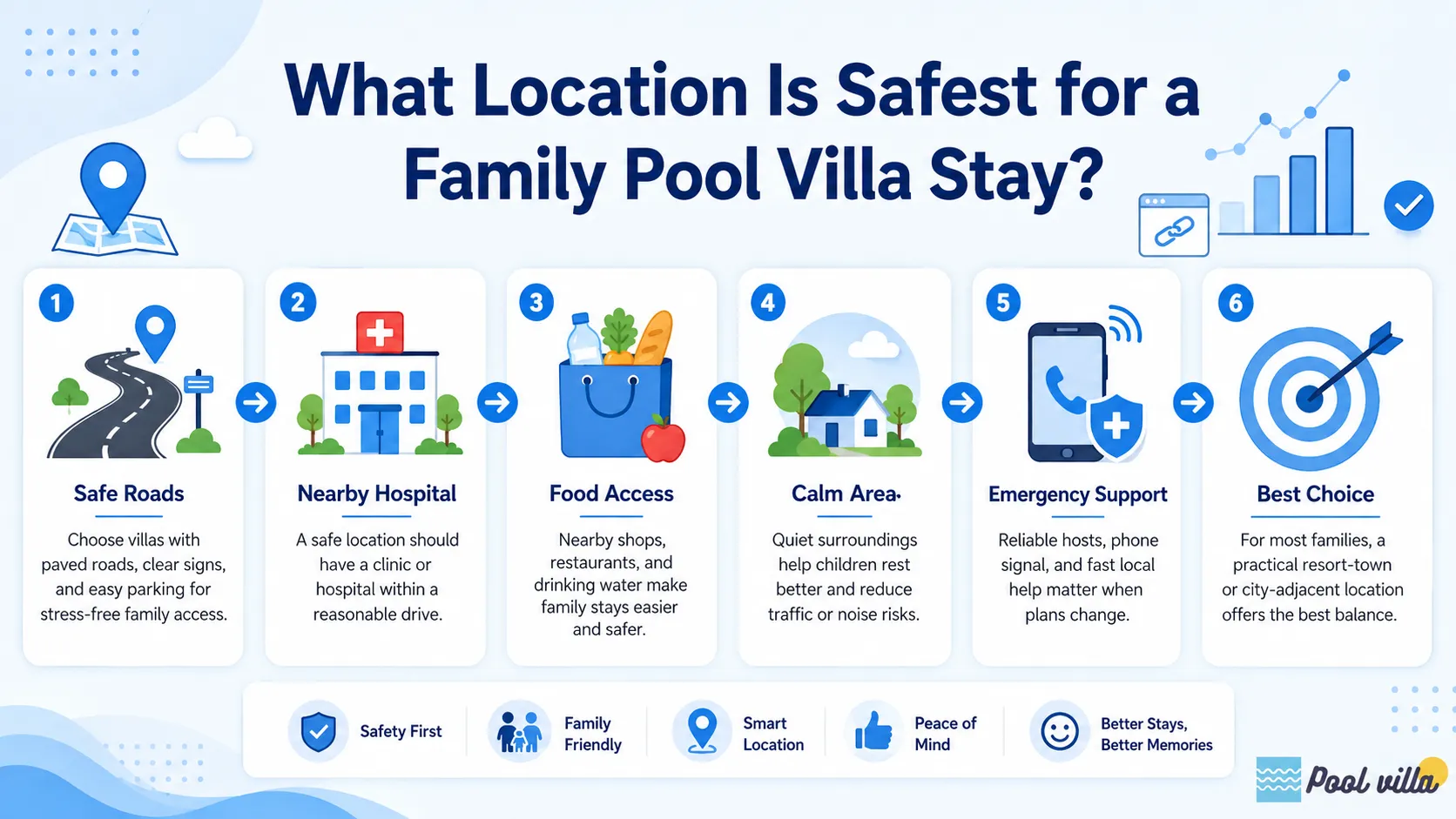
For a family stay, location safety includes several layers. The villa should be reachable by safe roads. It should not be too difficult to find, especially at night. Food, drinking water, pharmacies, and basic supplies should be available within a reasonable distance. Medical support should not be extremely far away. The surrounding area should feel calm enough for rest but not so isolated that every small problem becomes difficult to solve.
The safest pool villa location for families also depends on the trip type. A one-night stay near a city needs easy access and short travel time. A beach villa needs safe beach access and nearby services. A mountain villa needs reliable roads and weather awareness. An island villa needs clear transfers, emergency options, and backup timing.
The goal is not to remove every possible risk. The goal is to choose a location where normal family needs can be handled smoothly.
Why Does This Matter?
Family travel has less room for uncertainty than adult-only trips. Children may need snacks, medicine, rest, safe walking areas, and quick help if they become unwell. Older relatives may need easier roads, fewer stairs, nearby clinics, and comfortable access between the car and the villa. Parents may need to manage food, pool safety, bedtime routines, and transport without unnecessary stress.
A poor location choice can affect the whole stay. If the villa is hard to reach, guests may arrive tired before the trip begins. If there are no shops nearby, forgotten supplies become a problem. If the nearest hospital is too far away, minor health concerns can feel more serious. If the roads are steep, narrow, or poorly lit, returning after dinner may feel uncomfortable.
Safety also affects relaxation. Families enjoy pool villas most when adults feel prepared. When the location is practical, parents can focus on swimming, meals, rest, and family time instead of constantly solving logistics.
A safe location is not always the most dramatic location. For family stays, practical convenience often matters more than the most remote view or the most unusual setting.
How Should You Approach It?
Start by thinking about the youngest, oldest, or most vulnerable person in the group. A location that works for them will usually work for everyone else. If the group includes toddlers, elderly relatives, pregnant guests, or anyone with health needs, choose a location with easier access and stronger support nearby.
Next, match the location to the length of stay. For a one-night or weekend pool villa trip, a nearby location with simple road access is usually safer and more comfortable than a remote villa that takes many hours to reach. For a longer stay, families may be willing to travel farther if the villa has good services, reliable roads, and a clear emergency plan.
Then review the location using practical questions:
- How long does it take to reach the villa in real traffic?
- Are the roads safe, paved, and easy to drive?
- Is parking close to the villa entrance?
- Are grocery stores, restaurants, and pharmacies nearby?
- Is there a hospital or clinic within a reasonable distance?
- Is the area suitable for children and older guests?
- Can the host or villa team help during an emergency?
- Is mobile signal or Wi-Fi reliable enough for communication?
These questions are more useful than asking whether a location is generally “safe.” Family safety depends on how the location works in real situations.
What Location Options Should Families Consider?
Different pool villa locations offer different safety strengths and weaknesses. The best choice depends on your group, budget, travel style, and comfort level.
City-Adjacent Pool Villas
City-adjacent pool villas are often one of the safest options for families because they are usually closer to hospitals, pharmacies, supermarkets, restaurants, and transport services. They are practical for short stays, families with young children, and groups with older relatives.
The main risk is that city-adjacent villas may have more traffic, nearby neighbors, and stricter house rules. Families should check noise levels, privacy, road access, and whether the neighborhood is calm enough for children.
Resort-Town Pool Villas
Resort-town villas can offer a strong balance between comfort and convenience. They may be close to beaches, restaurants, shops, clinics, and local attractions. This can make them suitable for families who want a holiday atmosphere without being too isolated.
The main thing to check is whether the villa is in a busy area. A central resort-town location may be convenient but noisier. A quieter edge-of-town villa may offer better rest while still keeping services nearby.
Beach Pool Villas
Beach pool villas can be excellent for families, but safety depends on access and surroundings. A villa near the beach is useful if the walking route is safe, the shoreline is suitable, and adults can supervise children easily.
Families should be careful with beachfront villas near rough water, steep beach paths, rocks, public crowds, or busy roads. A near-beach villa with safer access may sometimes be better than a dramatic beachfront location.
Mountain Pool Villas
Mountain pool villas can offer privacy, fresh air, and calm surroundings, but they require more caution. Roads may be steep, narrow, or difficult during rain. Shops and hospitals may be farther away. Weather can also affect driving and outdoor comfort.
A mountain villa can work well for families if it has safe road access, good parking, nearby services, strong indoor space, and clear emergency support. Avoid locations that feel too remote for the needs of the group.
Island Pool Villas
Island pool villas can feel private and memorable, but they require the most planning. Ferries, boat transfers, weather, luggage, and emergency access should all be considered before booking.
For families, island villas are safest when transfers are simple, the villa team is reliable, medical support is accessible, and the trip is long enough to justify the travel effort. For very short stays, mainland or city-adjacent villas are often more practical.
Key Safety Factors to Check
Road Access
Safe road access is one of the most important location factors. Families should avoid villas that require difficult driving unless the group is prepared for it.
Check whether the road is paved, well lit, easy to find, and suitable for normal vehicles. If the villa is in a mountain, beach, or rural area, ask whether the road is safe during rain and whether larger vehicles can reach the property.
Parking also matters. A safe family location should have parking close enough for luggage, children, and older guests. Long walks from parking to the villa can become inconvenient, especially at night or during bad weather.
Hospital and Medical Access
Medical access does not need to be next door, but it should be realistic. Families should know where the nearest clinic, pharmacy, or hospital is located and how long it takes to reach.
This is especially important for families with young children, elderly guests, allergies, asthma, food sensitivities, or other health concerns. Even if no serious issue occurs, knowing medical support is nearby can make the stay feel calmer.
Before booking, check whether the host can recommend local medical support and whether emergency vehicles can reach the villa easily.
Food and Supplies
Food access is a major part of family safety and comfort. Children may need meals at specific times, snacks, drinking water, formula, or simple breakfast items. If the villa is far from shops or restaurants, families should prepare more carefully before arrival.
A safe family-friendly location usually has reasonable access to grocery stores, restaurants, delivery options, or markets. If the villa is remote, confirm whether the host can help arrange meals, groceries, or transport.
Food access is not only about convenience. It reduces stress when plans change, children get hungry, or guests need basic supplies.
Emergency Support
Emergency support includes more than medical care. It also includes host communication, local staff availability, road access, transport options, and reliable phone signal.
Before booking, check whether the villa has:
- a responsive host or property manager;
- clear check-in instructions;
- emergency contact details;
- reliable Wi-Fi or mobile signal;
- nearby transport options;
- clear directions for drivers;
- backup support if something breaks or changes.
A beautiful villa with poor communication may not be ideal for families. Strong support can make a big difference if there is a power issue, water problem, illness, injury, or transport delay.
Pool and Property Layout
Although this article focuses on location, the villa layout still matters. A safe location should be matched with a property that supports family supervision.
Check whether the pool is visible from the living area or terrace. Look for slippery surfaces, steep stairs, unfenced drops, open water features, and whether children can access the pool without adults noticing.
For family stays, a slightly less scenic villa with a safer layout may be better than a dramatic property with risky edges, steep paths, or hard-to-supervise outdoor areas.
Common Mistakes
Choosing Only by Photos
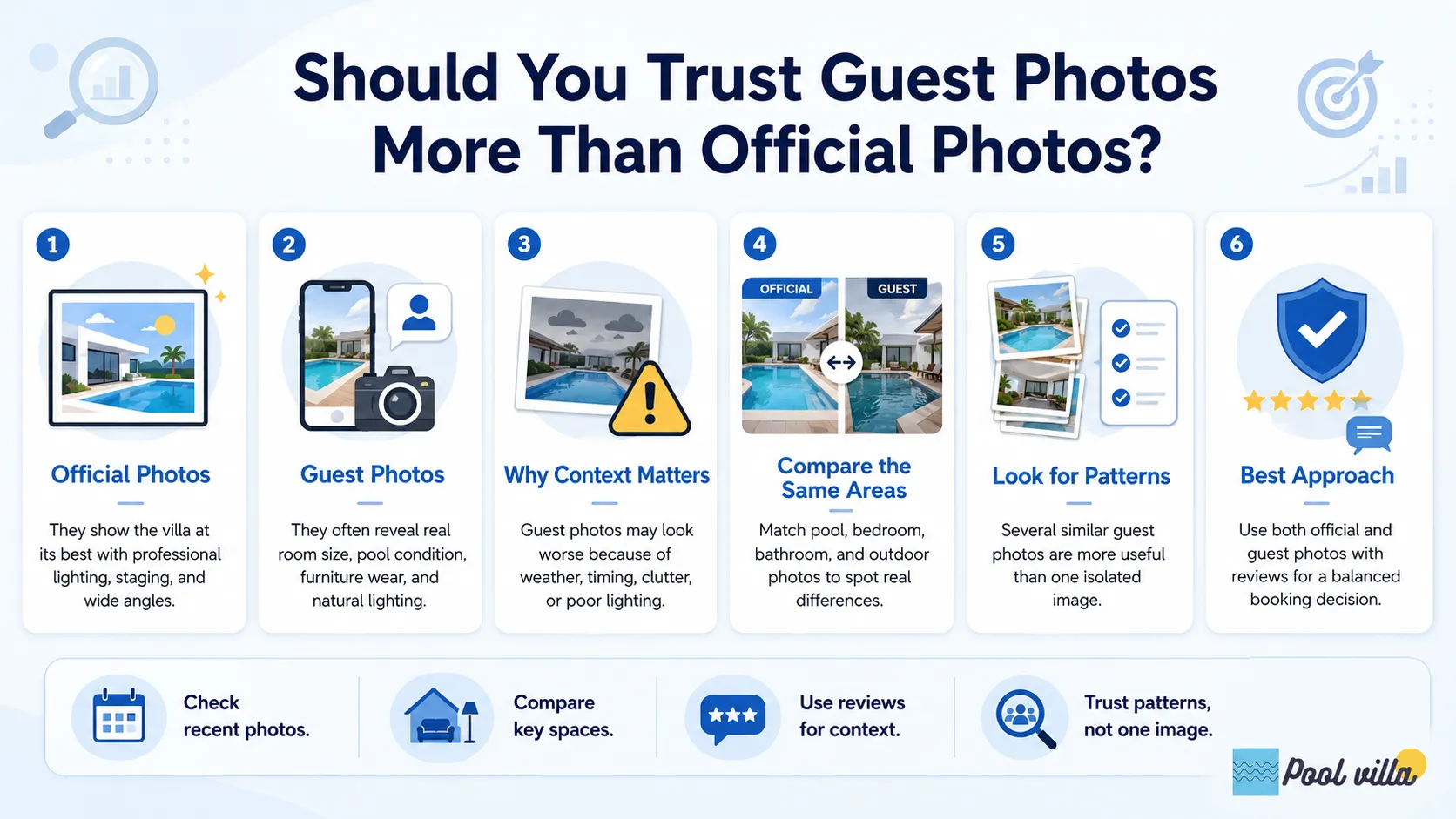
Photos often show the pool, bedrooms, and view, but they may not show road access, nearby services, or the surrounding neighborhood. Families should always check the location as carefully as the villa design.
Assuming Remote Means Safer
Remote villas can feel peaceful, but distance can create problems if food, medicine, transport, or medical help is needed. Privacy should be balanced with practical access.
Ignoring Travel Time
Long travel can make children tired and parents stressed. For short stays, too much travel time can reduce the value of the trip and make the stay feel rushed.
Not Checking Medical Support
Many travelers think about hospitals only after something happens. Families should check medical access before booking, especially when traveling with young children or older relatives.
Overlooking Night Access
A road that feels easy during the day may feel difficult at night. Poor lighting, narrow lanes, steep roads, or unclear entrances can create problems for late arrivals.
Practical Tips for Better Results
Choose the safest pool villa location for families by ranking practical needs before scenery. Start with roads, travel time, medical support, food access, and host reliability. After those are acceptable, compare views, design, and special features.
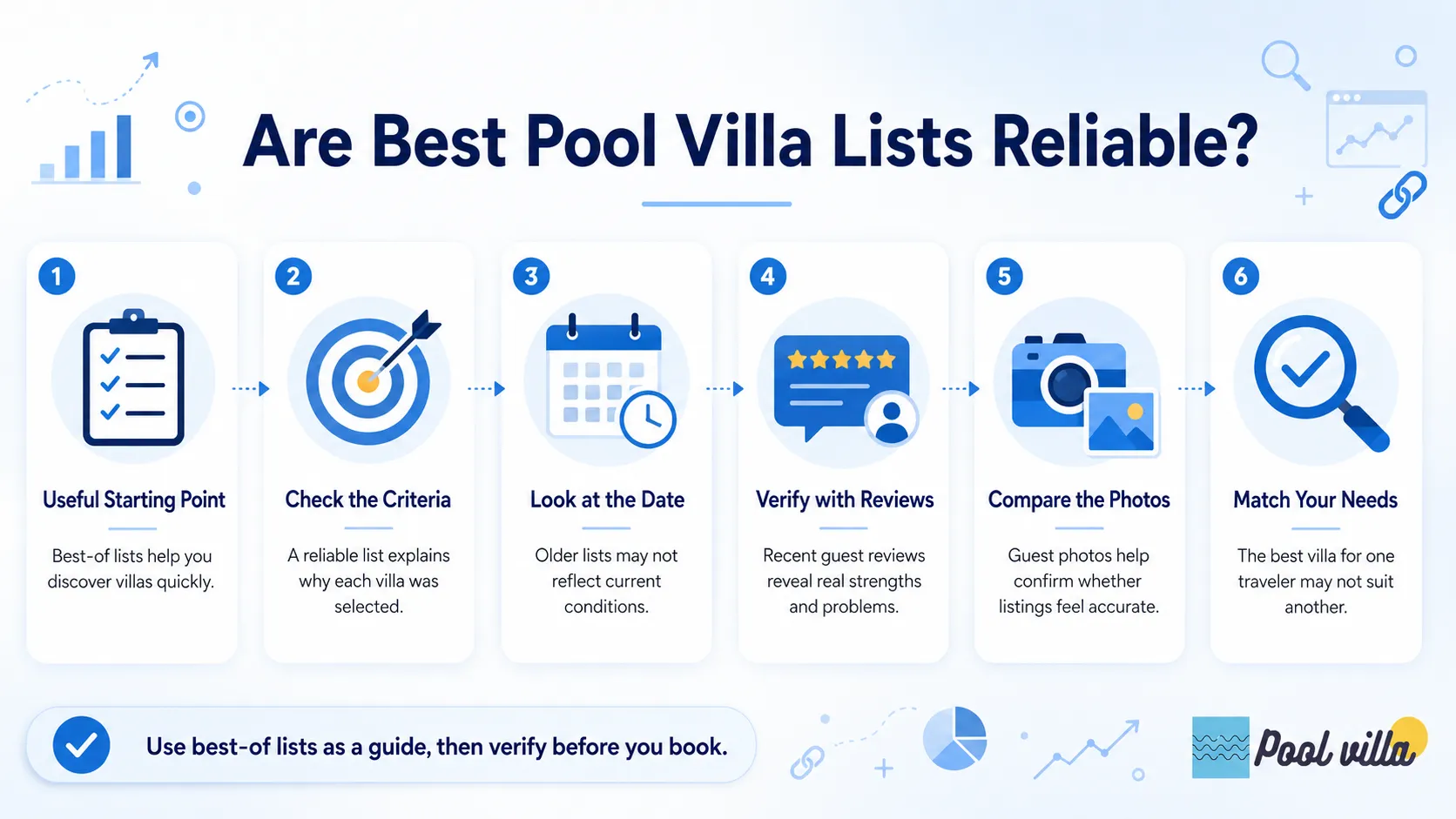
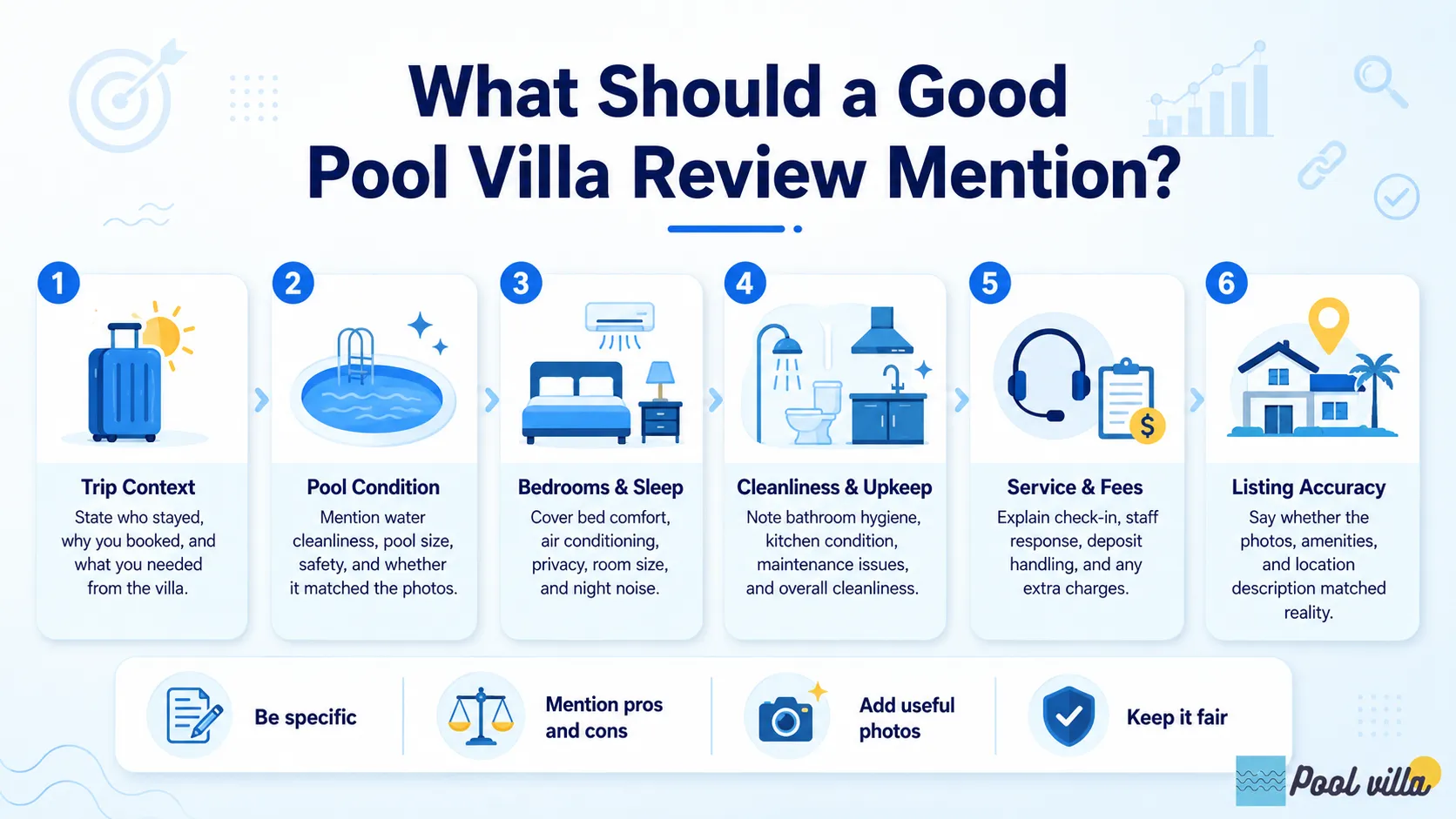
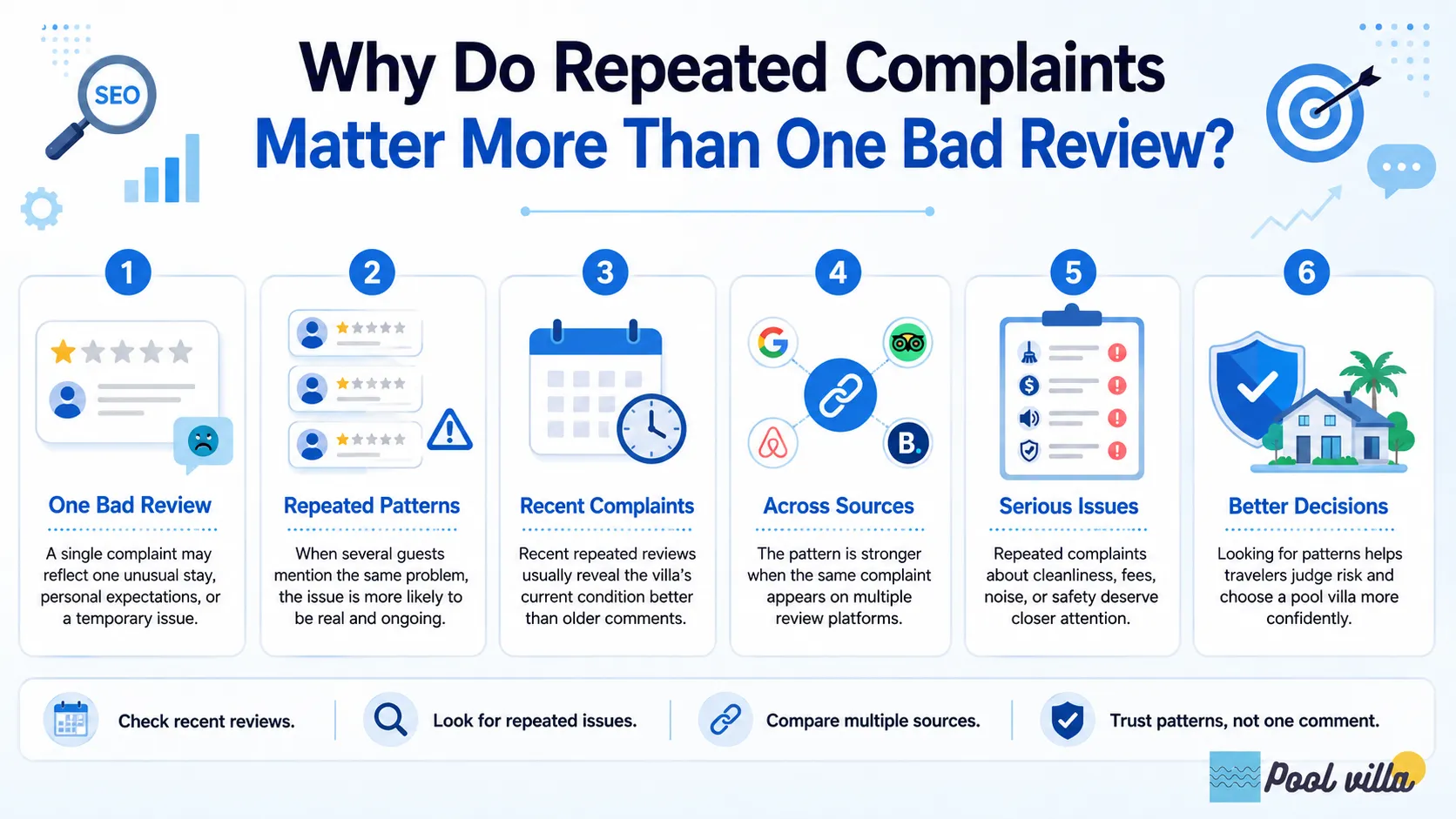
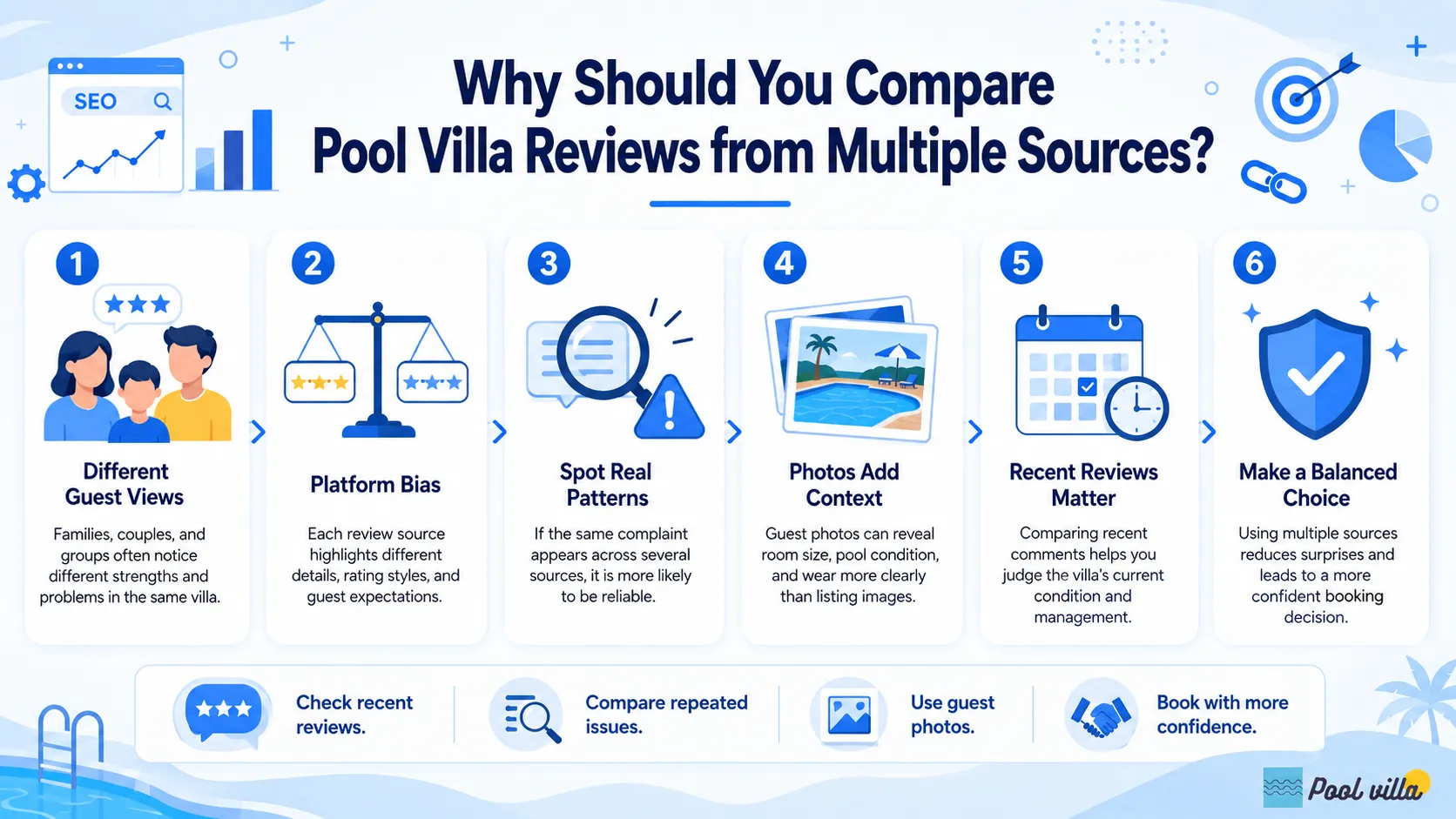
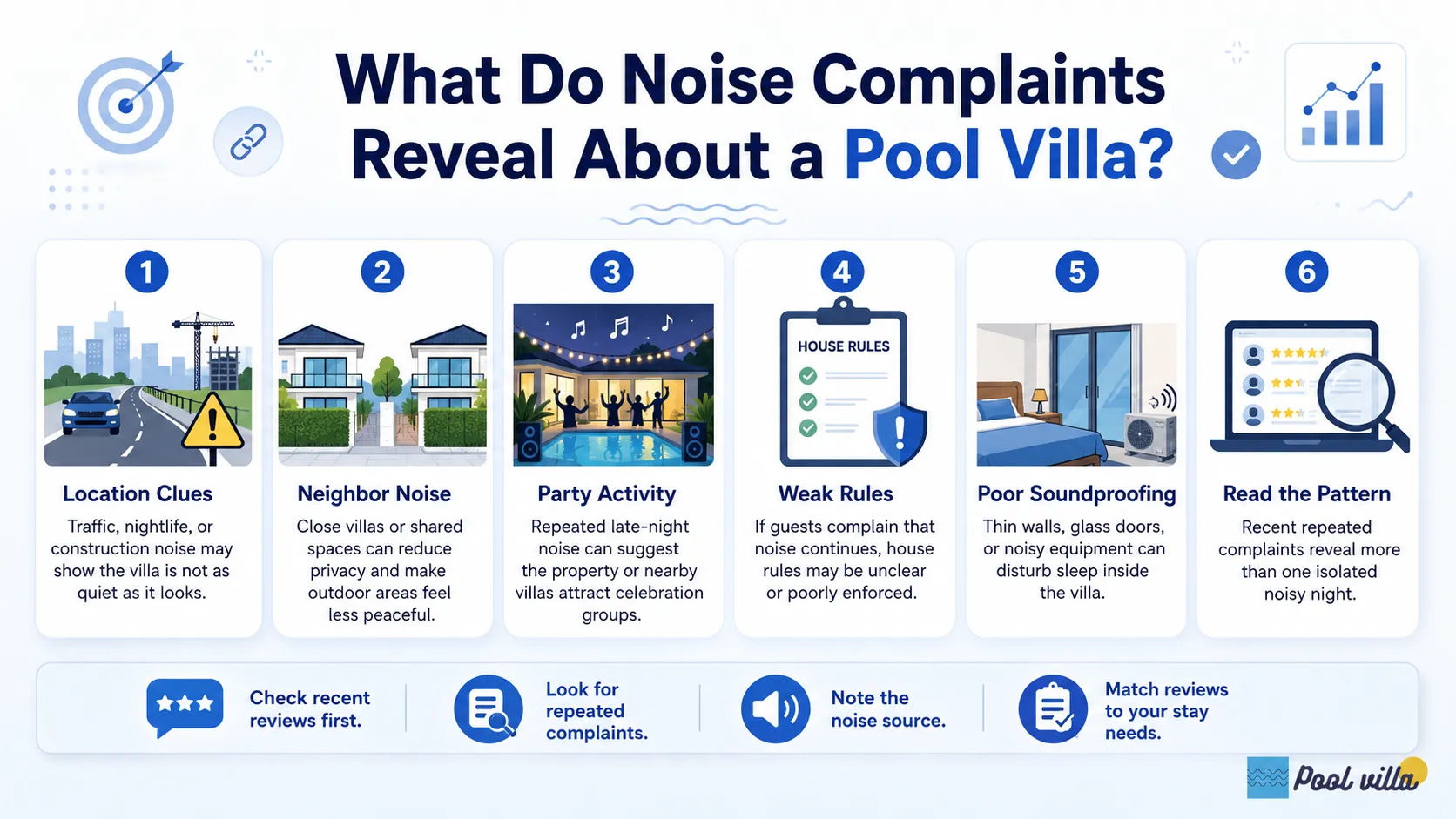
Read recent reviews carefully. Look for comments about road access, cleanliness, safety, host communication, nearby shops, noise, parking, and whether the villa is suitable for children.
Ask direct questions before booking. Useful questions include how far the nearest hospital is, whether food delivery works, whether the road is safe at night, and whether the pool is easy to supervise.
Prepare essential supplies before arrival, especially if the villa is outside a city area. Bring basic medicine, snacks, water, chargers, child-specific items, and anything your family may need quickly.
For group family trips, share the location, check-in details, parking information, and emergency contacts with all adults before departure.
When Should You Be Extra Careful?
Be extra careful when booking mountain, island, remote beach, or countryside villas. These locations can be beautiful, but they require stronger planning for roads, supplies, weather, and emergency access.
Take extra care during rainy season. Wet roads, slippery pool decks, reduced visibility, boat delays, or difficult beach access can affect family safety.
Be cautious with villas that do not clearly show the surrounding area. If photos focus only on the pool and interiors, ask for more details about access, roads, neighbors, and nearby services.
Also be careful when traveling with infants, toddlers, elderly guests, or anyone with medical needs. In these cases, convenience and emergency support should be prioritized over isolation or dramatic views.
FAQ
What is the safest pool villa location for families?
The safest location is usually one with easy road access, nearby food options, reasonable medical support, reliable communication, and a calm surrounding area. City-adjacent and resort-town villas often work well for families.
Are remote pool villas safe for families?
They can be safe if access, supplies, medical support, and host communication are well planned. However, remote villas require more preparation than city-adjacent or resort-town locations.
Is a beach pool villa safe for children?
A beach pool villa can be safe if beach access is easy, the sea conditions are suitable, roads are not too busy, and the pool area is easy to supervise.
Should families choose a villa near a hospital?
Families do not always need to stay beside a hospital, but medical support should be reachable within a realistic time. This matters more for young children, older guests, and anyone with health concerns.
What should families check before booking?
Check travel time, road access, parking, nearby shops, restaurants, pharmacies, hospitals, emergency contacts, pool visibility, and recent guest reviews.
Conclusion
The safest pool villa location for families is not always the most remote, most scenic, or most luxurious. It is the location that supports real family needs: safe roads, manageable travel time, nearby food, medical access, reliable communication, and practical emergency support.
For many families, city-adjacent or resort-town villas offer the best balance of comfort and safety. Beach, mountain, and island villas can also work well, but they need closer review of access, weather, supplies, and support.
Before booking, look beyond the photos. Check how the location works in real situations, especially if children or older guests are traveling. When the location is practical, the whole family can relax more easily and enjoy the pool villa stay with greater confidence.