
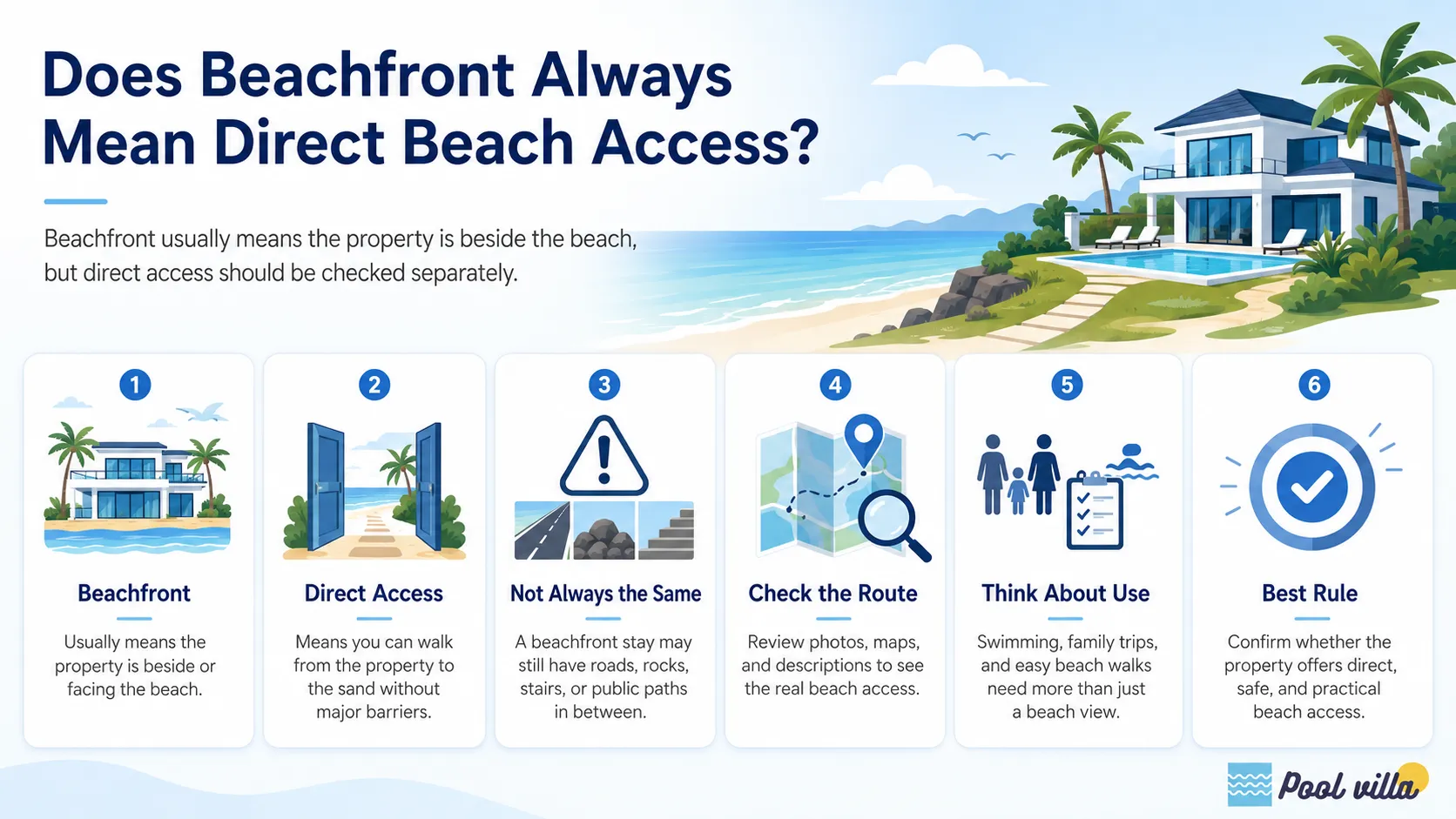
Beachfront sounds simple, but in villa and hotel descriptions it can mean different things. Many travelers assume that a beachfront pool villa or beachfront stay automatically includes direct access to the sand. In reality, beachfront usually means the property is located beside, facing, or very close to the beach, but it does not always guarantee easy, private, or direct beach access.
This distinction matters when booking a pool villa, resort, or beach house. A property may be physically close to the coastline but separated from the beach by rocks, walls, public paths, roads, cliffs, fences, tides, or restricted access points. Another property may face the sea beautifully but require guests to walk around the building, use a shared path, or drive a short distance to reach a usable swimming beach.
If you are asking, “does beachfront mean direct beach access?” the safest answer is: not always. Beachfront suggests proximity to the beach, but direct access must be confirmed separately. This guide explains what beachfront usually means, why it can be confusing, and what to check before booking.
What Does This Topic Mean?
Beachfront refers to a property located directly on or beside the beach area. It usually means the villa, hotel, or resort faces the coast and is positioned very close to the shoreline. However, the exact meaning depends on how the property uses the term and how the land is arranged.
Direct beach access means guests can move from the property to the beach without major barriers. This may involve walking from the garden, pool area, terrace, or gate directly onto the sand or through a short path controlled or clearly provided by the property.
The confusion happens because beachfront describes location, while direct beach access describes usability. A property can be beachfront in terms of position but still not offer simple access to the beach.
For example, a beachfront villa may:
- face the beach but sit behind a public walkway;
- overlook the shoreline from a raised level;
- be separated from the sand by rocks or seawalls;
- have beach views but no guest gate to the beach;
- be beside the coast but not near a safe swimming area;
- require guests to use a shared or public entrance nearby.
This is why beachfront should not be treated as a complete access description. It tells you the property is near or facing the beach, but not exactly how guests reach it.
Why Does This Matter?
The difference between beachfront and direct beach access affects the entire guest experience. Many travelers choose beachfront properties because they want convenience. They imagine walking from the pool to the sand, swimming in the sea, taking morning beach walks, or returning easily to the villa during the day.
If the property does not offer true direct access, the stay may feel different from expected. Guests may need to walk along a road, use stairs, cross a public area, or drive to a better beach. This can be inconvenient for families, older guests, couples, or groups carrying towels, food, beach toys, or photography equipment.
It also affects value. Beachfront properties often cost more than near-beach or sea view properties. If a listing uses beachfront wording but access is difficult, the higher price may not match the practical benefit.
Privacy is another important issue. A villa may have direct beach access, but if the beach is public, people may walk past the pool, terrace, or garden. Direct access can be convenient, but it can also reduce privacy if the property is open to the shoreline.
Understanding the wording helps you choose based on real use, not only attractive photos or marketing language.
How Should You Approach It?
The best approach is to separate three questions:
- Is the property actually beside the beach?
- Can guests reach the beach directly and safely?
- Is the beach usable for the activities you want?
A property may satisfy one question but not all three. For example, a villa may be truly beachfront but located above a rocky coastline. It may have an excellent sea view and beautiful setting, but not an easy swimming beach. Another villa may be slightly set back from the beach but have a safe, clear walking path to the sand.
Check the Exact Access Route
Do not rely only on the word beachfront. Look for clear statements such as “direct beach access,” “private gate to the beach,” “walk directly onto the sand,” or “beach access from the villa garden.” These phrases are more useful than general beachfront wording.
If the listing only says “beachfront location” or “steps from the beach,” check whether the route is shown in photos or explained in the description.
Review the Photos Carefully
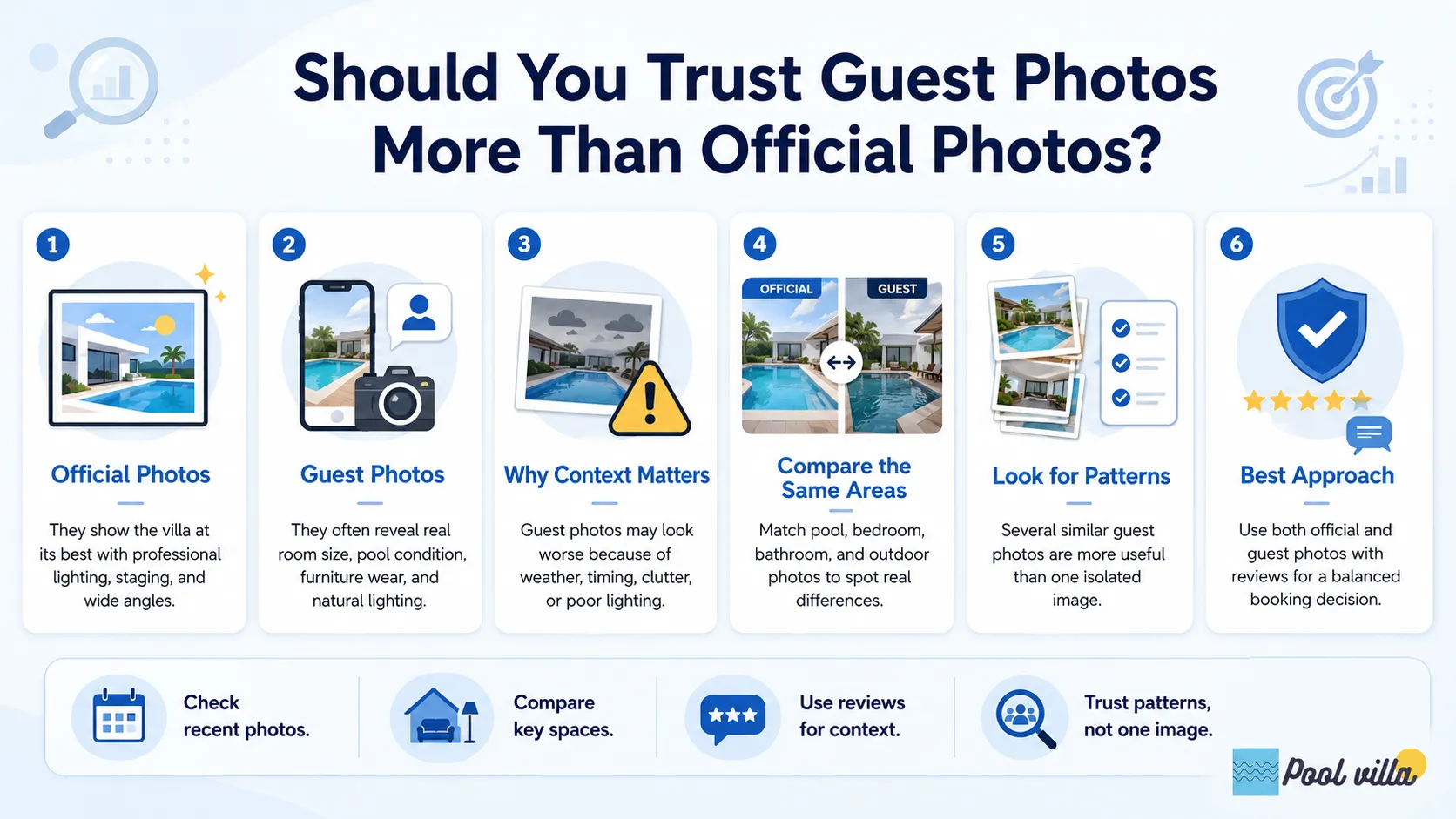
Photos can show the best angles without showing access barriers. A villa may appear directly on the beach from a drone photo, but ground-level access may involve stairs, a locked gate, rocks, or a shared path.
Look for photos that show:
- the villa boundary facing the beach;
- the path from the pool or garden to the sand;
- beach gates or stairs;
- the shoreline condition;
- whether there is a road or walkway between the property and beach;
- whether the beach is sandy, rocky, narrow, or tidal.
Wide photos are often more useful than close-up pool or sunset images.
Use Maps Carefully
Maps can help you understand whether the property is beside the coast, but they do not always reveal access quality. A villa may look close to the beach on a map but still require a long walk due to fences, private land, cliffs, or limited public entrances.
Map distance should be combined with access details, guest reviews, and direct confirmation from the host or property manager.
Beachfront vs Direct Beach Access
Beachfront and direct beach access are related, but they are not the same.
Beachfront is mainly about position. It suggests that the property is located at the front of the beach or directly facing the shoreline. It may offer sea views, coastal atmosphere, and proximity to the water.
Direct beach access is about movement. It means guests can physically reach the beach from the property in a simple and practical way.
A property can be beachfront without direct access if there is a barrier between the villa and the sand. A property can also have beach access without being fully beachfront, such as a villa set behind another property but connected by a short path.
When comparing options, focus on what you actually need. If your priority is scenery, beachfront or sea view may be enough. If your priority is swimming, walking, or taking children to the beach often, direct access matters much more.
Common Situations Where Beachfront Does Not Mean Direct Access
A Road or Public Path Is Between the Property and Beach
Some beachfront villas face the sea but have a road, promenade, or walking path between the property and sand. This may still be convenient, but it is not the same as stepping directly from the villa onto the beach.
This setup can also affect privacy because people may pass in front of the property throughout the day.
The Villa Is Elevated Above the Shoreline
A property may be built on a cliff, hillside, raised platform, or seawall. It may be beachfront by view and location, but access to the beach may require stairs, a path, or a short drive.
This can be beautiful but less practical for families, older guests, or anyone who wants frequent beach access.
The Shoreline Is Rocky or Not Swimmable
Some beachfront properties face a rocky coast rather than a sandy beach. They may offer oceanfront scenery but not safe or comfortable swimming access.
If swimming is important, check whether the beach is sandy, calm, and suitable for entering the water.
Access Is Shared or Public
A beachfront property may use a shared path with other villas, a resort walkway, or a public beach entrance. This may still be useful, but it may not feel private.
Shared access is common in beach destinations and is not necessarily a problem. The key is knowing what to expect.
Tides Affect the Beach
In some coastal areas, the beach may be wide and usable at low tide but narrow or partly covered at high tide. A villa may appear beachfront, but the beach experience can change throughout the day.
If beach walks or swimming are important, check whether tides affect access and usability.
What Should You Check Before Booking?
Before booking a beachfront pool villa or beach property, ask direct and practical questions.
Useful questions include:
- Can guests walk directly from the property to the beach?
- Is there a private gate, path, or stairway to the sand?
- Is there a road, wall, fence, or public path between the villa and beach?
- How long does it take to reach the beach on foot?
- Is the route suitable for children or older guests?
- Is the beach sandy, rocky, or tidal?
- Is the beach safe for swimming?
- Is the beach public, private, shared, or resort-managed?
- Can people on the beach see the pool or terrace?
- Are there photos showing the exact access route?
Clear answers to these questions are more useful than general labels like “beachfront,” “oceanfront,” or “near the sea.”
Common Mistakes
Assuming Beachfront Means Private Beach
Beachfront does not always mean private beach. In many destinations, beaches are public or shared. A villa may sit beside the beach, but people may still walk past the shoreline.
If privacy matters, check whether the pool, terrace, and garden are visible from the beach.
Assuming Sea View Means Beach Access
Sea view means the property has a view of the sea. It does not mean the villa is beachfront, and it does not guarantee beach access. Some sea view villas are on hillsides or cliffs far from the sand.
Trusting Listing Words Without Checking Details
Marketing descriptions can be broad. Terms like beachfront, oceanfront, beachside, coastal, beach access, and near beach may be used differently by different properties.
Always check practical access, not only wording.
Ignoring the Type of Beach
A property may have direct access to the coast, but the beach may not be suitable for swimming. Rocks, waves, currents, coral, tides, or boats can affect usability.
Forgetting Group Needs
A short walk may be easy for adults but difficult for children, elderly guests, or anyone carrying beach items. Access should match the people traveling.
Practical Tips for Better Results
Look for listings that clearly describe access. The best descriptions explain whether guests can walk directly to the sand, how long it takes, and whether the route is private or shared.
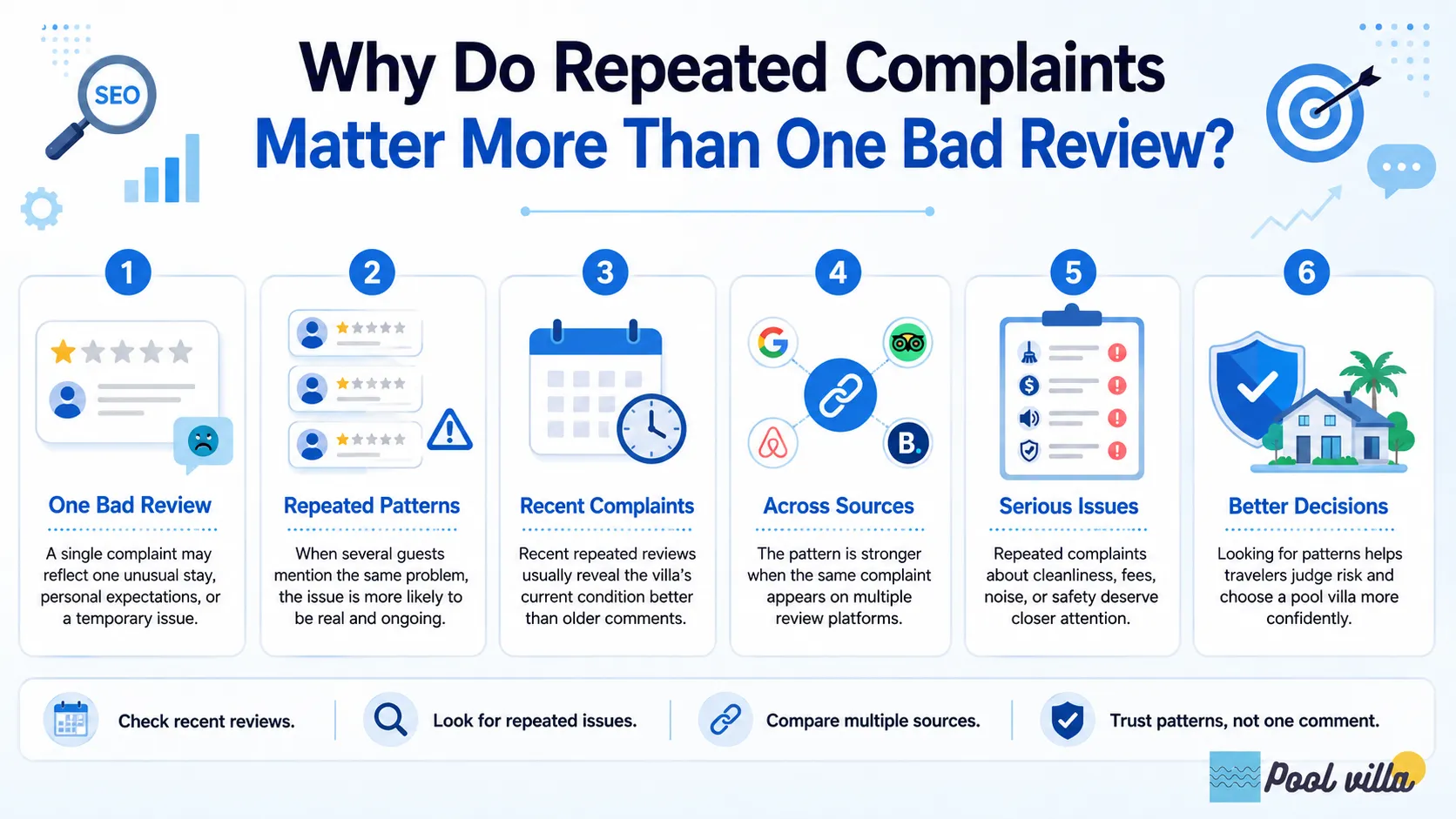
Study guest reviews. Previous guests often mention whether the beach is truly accessible, whether the listing description was accurate, and whether the location felt convenient.
Compare beachfront with near-beach and sea view options. Sometimes a near-beach villa with a safe, easy path may be more practical than a beachfront villa with poor access or weak privacy.
If the villa is expensive because of its beachfront position, make sure that position gives you the benefit you expect. For some travelers, the benefit is the view. For others, it is easy beach access. These are different priorities.
Ask the host or property manager for a simple explanation of the route from the villa to the beach. A clear answer should be specific, not vague.
When Should You Be Extra Careful?
Be extra careful when booking for families with children, older guests, or travelers with mobility concerns. Stairs, steep paths, rocks, or road crossings can make beach access less comfortable.
Take extra care if the listing uses only broad words such as “beachfront,” “beachside,” or “steps from the beach” without showing the access route.
Be cautious with drone photos. They can make a property look closer and more connected to the beach than it feels at ground level.
Also be careful with villas in busy tourist areas. Direct beach access may come with more public activity, noise, and reduced privacy.
If beach swimming is important, confirm that the beach is actually suitable for swimming during your travel season. Weather, tides, waves, and currents can affect access and safety.
FAQ
Does beachfront always mean direct beach access?
No. Beachfront usually means the property is beside or facing the beach, but it does not always guarantee direct, private, or easy access to the sand.
What is the difference between beachfront and beach access?
Beachfront describes location near or facing the beach. Beach access describes how guests physically reach the beach from the property.
Does beachfront mean private beach?
Not always. A beachfront property may face a public or shared beach. Privacy depends on local rules, property layout, and how visible the villa is from the shoreline.
Is sea view the same as beachfront?
No. A sea view property may overlook the ocean from a hillside, road, or inland location. It may not be directly beside the beach.
What should I ask before booking a beachfront villa?
Ask whether guests can walk directly to the beach, whether the access is private or shared, whether there are stairs or roads, and whether the beach is safe and usable.
Conclusion
Beachfront does not always mean direct beach access. It usually suggests that a property is located beside, facing, or very close to the beach, but it does not fully explain how guests reach the sand or whether the beach is private, safe, or easy to use.
The most reliable approach is to separate location from access. Beachfront tells you where the property sits. Direct beach access tells you how practical the beach experience will be.
Before booking, check the access route, beach type, privacy, safety, reviews, maps, and photos. When you understand the difference between beachfront proximity and true beach access, you can choose a villa or stay that matches your expectations and avoids disappointment.