
Booking a pool villa often requires paying a deposit in advance. For many travelers, this raises an important question: is the deposit refundable if plans change, the booking is canceled, or problems occur during the stay?
The answer depends on several factors, including the booking terms, cancellation policy, timing of cancellation, and whether any property damage occurs. Some deposits are fully refundable, while others are partially refundable or completely non-refundable.
Understanding how pool villa deposits work before confirming a reservation can help avoid disputes, unexpected charges, and financial loss. This article explains the practical details travelers should know before paying a deposit for a pool villa booking.
What Does a Pool Villa Deposit Mean?
A pool villa deposit is an upfront payment required to secure a reservation. Property owners or villa management companies use deposits to reduce the risk of last-minute cancellations, no-shows, or damage to the property.
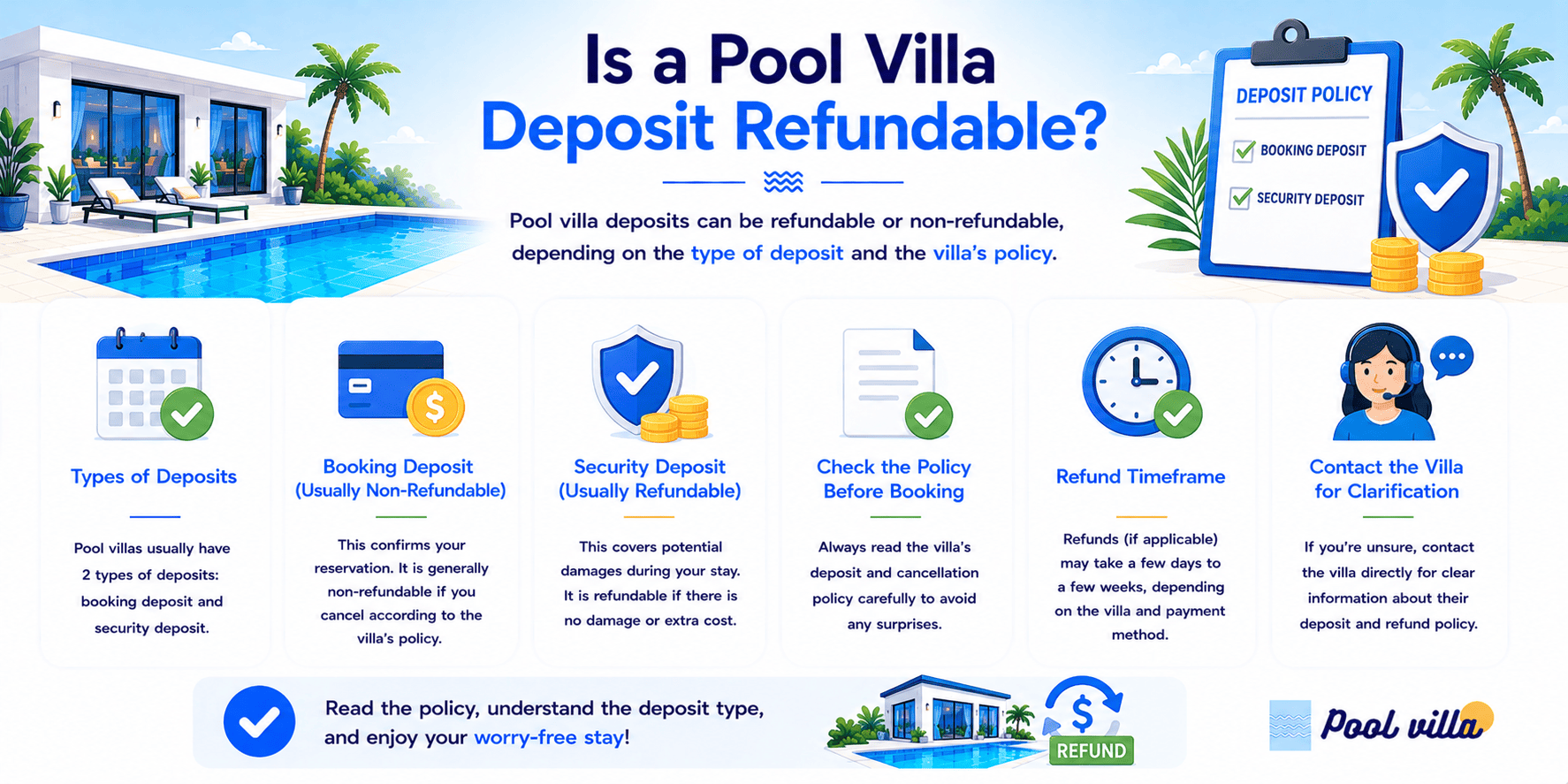
In most cases, there are two main types of deposits:
Booking Deposit
This is paid when confirming the reservation. It may be:
- Fully refundable
- Partially refundable
- Non-refundable
The refund conditions are usually stated in the booking policy.
Security Deposit
A security deposit is intended to cover potential damage, excessive cleaning, missing items, or violations of house rules during the stay.
If no problems occur, the security deposit is usually returned after check-out.
Some villas combine both types into one payment, while others separate them clearly.
Why Does Deposit Refundability Matter?
Many travelers focus only on the villa price and overlook the deposit terms. However, deposit policies can significantly affect the total financial risk of a booking.
Refundability matters because unexpected situations can happen, including:
- Flight cancellations
- Illness or emergencies
- Weather disruptions
- Changes in travel plans
- Group cancellations
- Visa issues
- Double bookings or property problems
Without understanding the deposit policy, travelers may lose a large amount of money even if they cancel for legitimate reasons.
For property owners, deposits also provide protection against:
- Last-minute cancellations
- Property damage
- Unauthorized parties
- Rule violations
- Unpaid extra charges
A fair deposit policy balances protection for both sides.
How Should You Approach Pool Villa Deposit Policies?
The safest approach is to review the booking conditions carefully before paying anything. Never assume all pool villas follow the same refund rules.
Read the Cancellation Policy Carefully
The cancellation policy usually explains:
- Whether the deposit is refundable
- Cancellation deadlines
- Partial refund conditions
- Administrative fees
- No-show penalties
- Peak season exceptions
Some villas offer full refunds if canceled far enough in advance, while others keep the entire deposit regardless of timing.
For example:
- Cancellation 30 days before arrival may receive a full refund
- Cancellation 14 days before arrival may receive a 50% refund
- Cancellation within 7 days may be non-refundable
The exact policy varies by property.
Check Whether the Deposit Is Non-Refundable
Many travelers misunderstand the phrase “non-refundable deposit.”
If the booking terms clearly state the deposit is non-refundable, recovering the money may be difficult unless exceptional circumstances apply.
This is especially common during:
- Holiday periods
- Songkran season
- New Year bookings
- Long weekends
- High-demand travel dates
Peak-season reservations often carry stricter cancellation terms because villas may struggle to rebook canceled dates on short notice.
Ask About Security Deposit Conditions
Security deposits should clearly explain:
- The deposit amount
- What deductions may apply
- Inspection procedures
- Refund timeframe
- Accepted payment methods
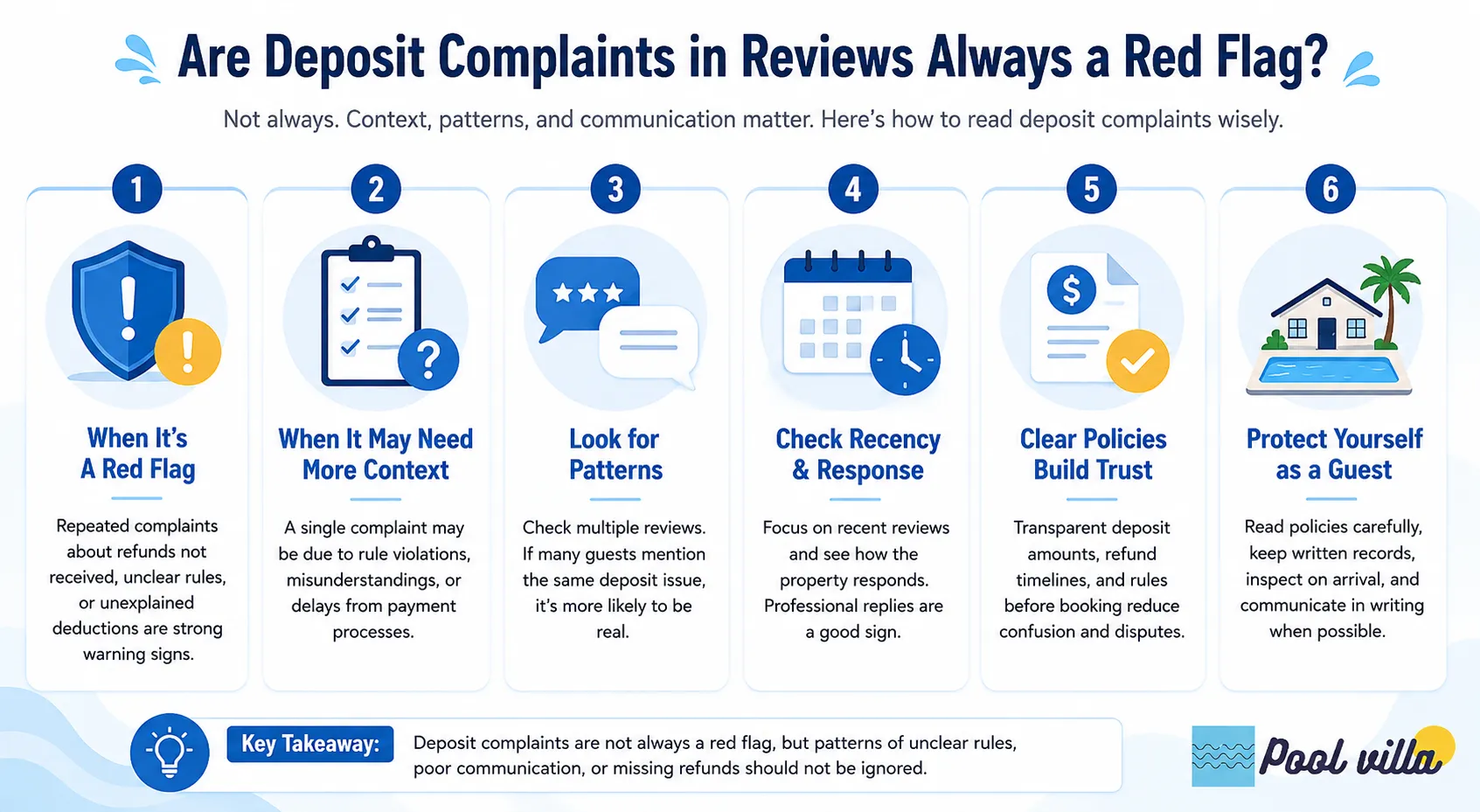
Professional villa operators usually document damage claims with photos or written reports.
If the rules are vague, disputes become more likely.
Common Reasons a Pool Villa Deposit May Not Be Refunded
Not all deposit deductions are unfair. In many cases, refunds are reduced because the booking terms were violated or damage occurred.
Late Cancellation
This is the most common reason for losing a deposit.
If the cancellation occurs after the allowed refund period, the villa owner may keep part or all of the deposit.
Property Damage
Security deposits may be withheld if guests cause damage such as:
- Broken furniture
- Pool equipment damage
- Stained linens
- Cigarette burns
- Glass breakage
- Water damage
- Electronics damage
The cost of repairs is often deducted from the deposit.
Violating House Rules
Many pool villas have strict rules regarding:
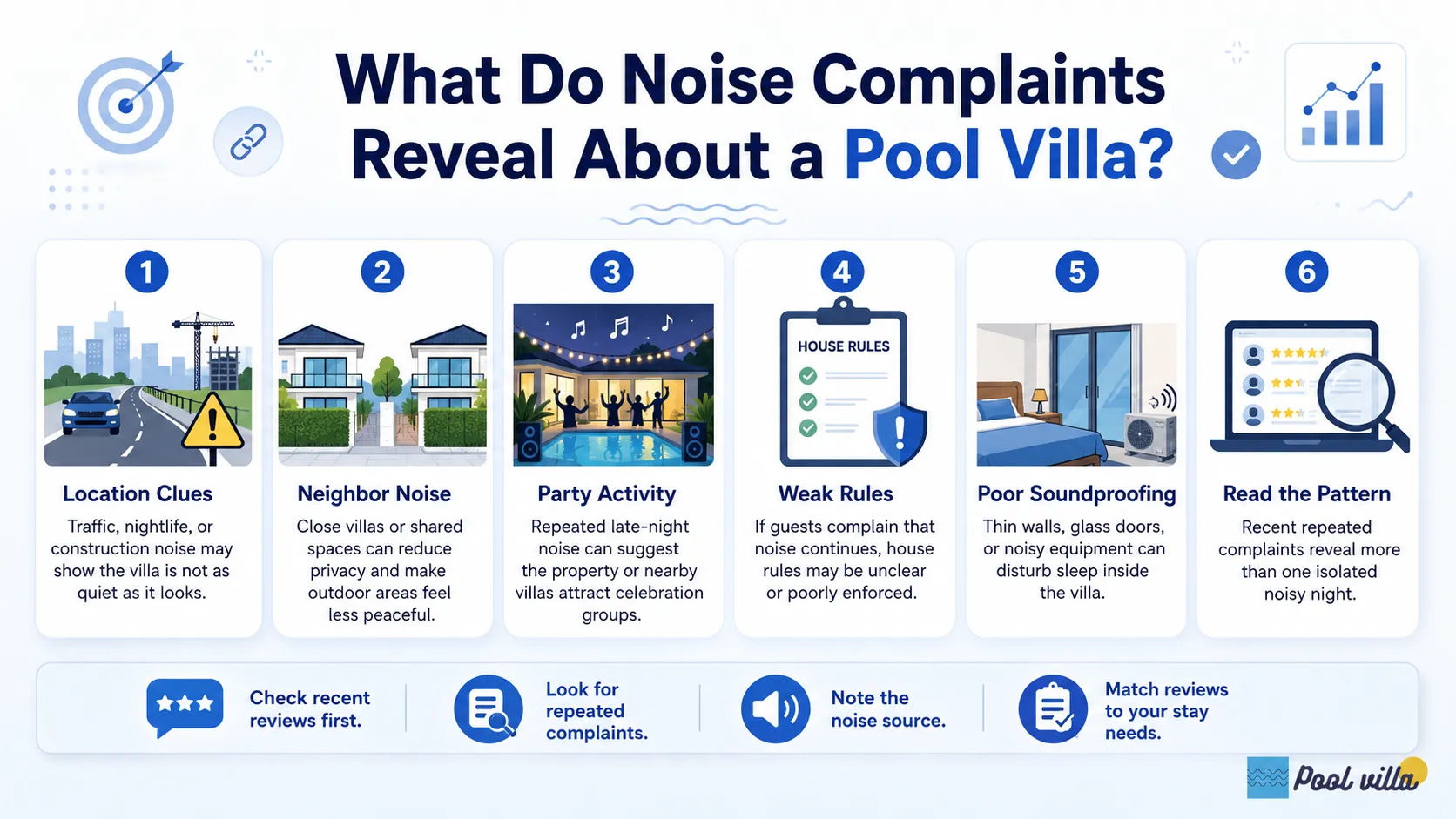
- Noise levels
- Parties and events
- Maximum guest limits
- Pets
- Smoking
- Pool usage hours
Breaking these rules may lead to deposit penalties.
Extra Cleaning Costs
Excessive mess, stains, or improper waste disposal may result in cleaning charges deducted from the security deposit.
Unauthorized Guests or Events
Some guests attempt to hold parties or bring additional visitors without approval. Villas often impose penalties for this because it increases wear, liability, and neighborhood complaints.
Common Mistakes Travelers Make
Not Reading the Full Policy
Some travelers only look at the nightly rate and ignore the refund conditions entirely.
This creates problems later when cancellation becomes necessary.
Booking Through Unverified Sources
Unofficial listings or unclear booking arrangements increase the risk of refund disputes.
Professional booking platforms and established villa operators usually provide clearer documentation and payment records.
Assuming Verbal Agreements Are Enough
Always request written confirmation for:
- Refund terms
- Deposit conditions
- Special exceptions
- Date changes
- Event approvals
Without written proof, resolving disputes becomes much harder.
Ignoring Check-In Documentation
If the villa already has damage during check-in, guests should report it immediately with photos.
Otherwise, they may later be blamed for pre-existing issues.
Practical Tips for Better Results
Take Screenshots of Policies Before Booking
Policies can sometimes change after booking. Saving screenshots or copies of the terms helps protect against future disputes.
Use Payment Methods With Buyer Protection
Credit cards and reputable booking platforms may offer some protection in case of fraud or major disputes.
Direct bank transfers to unknown operators carry higher risk.
Communicate in Writing
Use email or platform messaging systems instead of relying only on phone calls or chat apps.
Written records are useful if disagreements occur later.
Inspect the Villa During Arrival
Check for:
- Existing damage
- Broken appliances
- Pool condition
- Missing items
- Cleanliness issues
Report problems immediately.
Understand Refund Timelines
Some security deposits are refunded immediately after inspection, while others may take several business days depending on the payment method.
Ask about the expected timeline before arrival.
When Should You Be Extra Careful?
Certain situations require extra attention because refund disputes are more common.
Large Group Bookings
Bigger groups increase the risk of:
- Damage
- Noise complaints
- Extra cleaning fees
- Rule violations
Some villas apply stricter deposit policies for group stays.
Event or Party Bookings
Birthday parties, bachelor parties, and celebrations often involve higher deposits and stricter refund rules.
Some villas may charge separate event fees in addition to the standard deposit.
Peak Holiday Seasons
Holiday bookings are usually harder to refund because demand is high and cancellations can create revenue loss for the property owner.
Always verify refund conditions carefully during peak periods.
Long-Stay Reservations
Long-term bookings may involve larger deposits and more detailed contractual terms.
Review all conditions carefully before making payment.
Can Travel Insurance Help?
In some cases, travel insurance may help recover financial losses from non-refundable deposits.
Coverage depends on the policy and reason for cancellation. Common covered situations may include:
- Medical emergencies
- Serious illness
- Natural disasters
- Flight disruptions
- Certain legal emergencies
However, standard travel insurance does not automatically cover every canceled trip.
Travelers should review policy details carefully before relying on insurance protection.
FAQ
Are pool villa deposits usually refundable?
Some are refundable, while others are not. The answer depends entirely on the booking terms and cancellation policy.
Can a villa owner keep the security deposit without proof?
Professional operators should provide evidence of damage or violations. Guests should request documentation if deductions are made.
How long does it take to receive a security deposit refund?
It varies by property and payment method. Some refunds are processed within 24 hours, while others may take several business days.
What happens if bad weather affects the trip?
Refund eligibility depends on the cancellation policy. Some properties offer flexibility, while others enforce standard non-refundable terms.
Is a booking deposit different from a security deposit?
Conclusion
Whether a pool villa deposit is refundable depends mainly on the booking agreement, cancellation terms, and guest behavior during the stay. Some deposits are fully refundable under specific conditions, while others are partially refundable or completely non-refundable.
Travelers should never assume refundability without reviewing the written policy carefully. Understanding cancellation deadlines, security deposit conditions, and house rules can prevent misunderstandings and financial disputes later.
Before booking a pool villa, take time to verify the terms, keep written records, and clarify any unclear conditions in advance. A careful approach helps protect both the guest and the property owner while reducing the risk of avoidable refund problems.