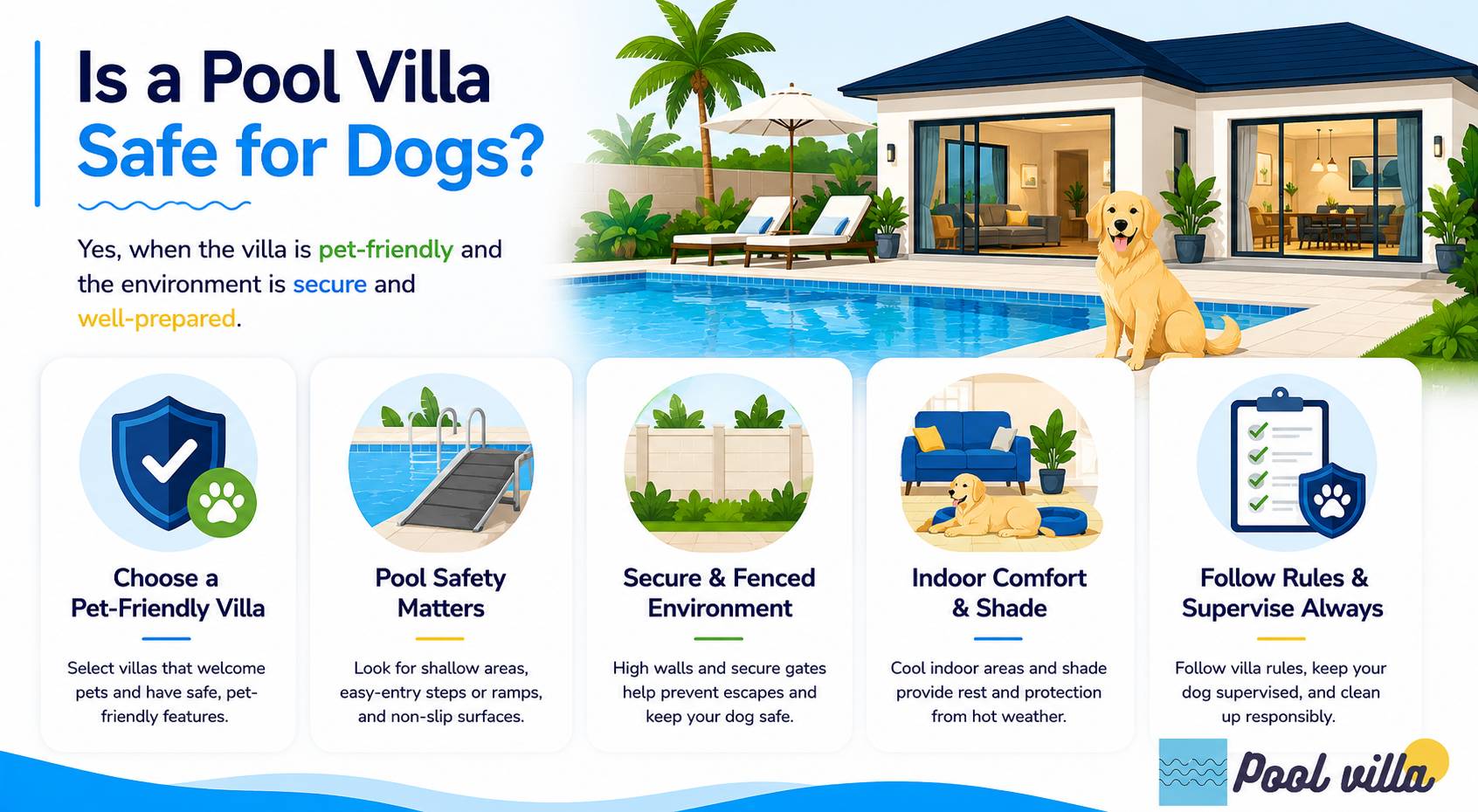
Is pool villa safe for dogs? The answer depends on the villa layout, pool access, outdoor space, gate security, flooring, stairs, and how closely owners supervise their dogs during the stay. A private pool villa can be comfortable for dog owners because it may offer more space, privacy, and outdoor areas than a hotel room. However, a villa is not automatically safe just because it allows pets.
A dog-safe pool villa should have secure boundaries, controlled pool access, shaded outdoor areas, safe walking surfaces, and clear pet rules. Dogs may face risks around swimming pools, slippery tiles, stairs, balconies, open gates, garden hazards, cleaning chemicals, and nearby roads.
This guide explains pool villa safety for dogs, what owners should check before booking, and how to reduce risks after arrival.
What Does a Dog-Safe Pool Villa Mean?
A dog-safe pool villa is a villa where the layout and rules make it easier for owners to keep dogs comfortable and protected. It does not mean dogs can freely use every area without supervision. It means the villa has fewer obvious risks and gives owners more control.
A dog-safe pool villa may include:
- secure gates
- enclosed garden or terrace
- controlled pool access
- shaded outdoor space
- non-slippery walking areas
- safe stairs or single-level layout
- no open balcony risks
- clear pet rules
- safe cleaning product storage
- enough space for dog bedding and bowls
- nearby walking areas
The most important factor is not only whether dogs are allowed. The main question is whether the villa is suitable for your dog’s size, age, energy level, swimming ability, and behavior.
Why Pool Villa Safety for Dogs Matters
Pool villa safety for dogs matters because dogs often behave differently in a new place. They may explore quickly, follow smells, run toward open gates, slip near wet pool tiles, or become nervous around unfamiliar sounds.
A villa can also include features that are normal for people but risky for dogs, such as open pools, steep steps, balconies, low garden walls, glass doors, outdoor furniture, and cleaning chemicals.
Common risks include:
- dogs falling into the pool
- dogs slipping on wet tiles
- dogs escaping through gates
- dogs running toward roads
- dogs chewing plants or outdoor items
- dogs struggling on stairs
- dogs overheating outdoors
- dogs damaging furniture or poolside areas
- dogs accessing cleaning products
A safe stay starts with checking the villa before allowing the dog to move freely.
How to Judge Whether a Villa Is Safe for Your Dog
The question “is pool villa safe for dogs” should be answered based on your dog’s behavior, not only the villa’s pet-friendly label. A villa may allow dogs, but it may still have open pool access, slippery tiles, gaps under gates, steep stairs, or outdoor areas that are difficult to supervise. The safest choice is a villa that matches your dog’s size, age, energy level, and habits.
A dog-safe pool villa should make it easy to control where your dog can go. Pool access is one of the first things to check. If the pool is directly connected to the living room, bedroom, or terrace, owners should confirm whether doors can be closed or locked. Dogs that are curious, energetic, or not used to swimming may approach the water too quickly. Even dogs that can swim should not be left near the pool without supervision because they may slip, panic, or struggle to climb out.
Gate security is another key part of pool villa safety for dogs. Some villas look enclosed in photos, but small gaps under gates, side paths, low walls, or hidden openings behind plants may allow dogs to escape. This is especially important if the villa is near a road, parking area, or unfamiliar neighborhood. Owners should check all gates and fences after arrival before allowing the dog to roam freely.
Outdoor comfort also matters. A dog-safe pool villa should have shaded areas, clean water access, and safe walking surfaces. Poolside tiles, stone paths, and artificial grass can become hot during the day. Wet tiles can also become slippery after swimming, rain, or cleaning. Senior dogs, puppies, and dogs with joint problems may need extra care on these surfaces.
Owners should also check indoor hazards. Cleaning chemicals, trash bins, electrical cords, breakable items, and low cabinets may be accessible to dogs in a new villa. Dogs may explore unfamiliar spaces quickly, especially if they are nervous or excited. Setting up a clear resting area with a dog bed, water bowl, and familiar blanket can help the dog settle and reduce unwanted chewing, scratching, or wandering.
A good way to decide is pool villa safe for dogs is to do a short walk-through before unpacking fully. Check the pool edge, gate gaps, stairs, balconies, garden plants, cleaning products, shaded areas, and road access. If any area feels risky, keep the dog away from it or use a leash until you can manage the space safely.
In the end, pool villa safety for dogs depends on both the property and the owner’s supervision. A villa with secure gates, controlled pool access, shaded outdoor space, and clear pet rules can work very well. But even in a suitable villa, dogs should be supervised around pools, stairs, balconies, gates, and outdoor areas throughout the stay.
Pool Safety for Dogs
The pool is usually the biggest safety concern. Some dogs can swim well, but others may panic or struggle. Even a strong swimmer can have problems if the pool has steep sides or no easy exit.
Before allowing your dog near the pool, check:
- pool depth
- pool steps
- shallow entry points
- pool edge height
- slippery tiles
- night lighting
- whether your dog can climb out easily
- whether the pool is directly accessible from rooms
- whether pets are allowed in or near the pool
Do not assume your dog understands the pool layout. Let your dog explore slowly while supervised. If your dog is not used to swimming, keep pool access controlled.
A dog-safe pool villa should make it easy to prevent unsupervised pool access.
Slippery Floors and Wet Areas
Pool villas often have tiled floors, terraces, outdoor bathrooms, and wet poolside areas. These surfaces can become slippery after swimming, rain, cleaning, or wet paws.
This is especially important for:
- puppies
- senior dogs
- small dogs
- large heavy dogs
- dogs with joint problems
- dogs that run excitedly
Check poolside tiles, bathroom floors, outdoor walkways, stairs, and entrances after rain. Keep your dog from running near wet areas. Dry paws before entering indoor spaces if possible.
Slippery surfaces can also increase cleaning and damage issues, so managing wet paws protects both the dog and the villa.
Gates, Fences, and Escape Risks
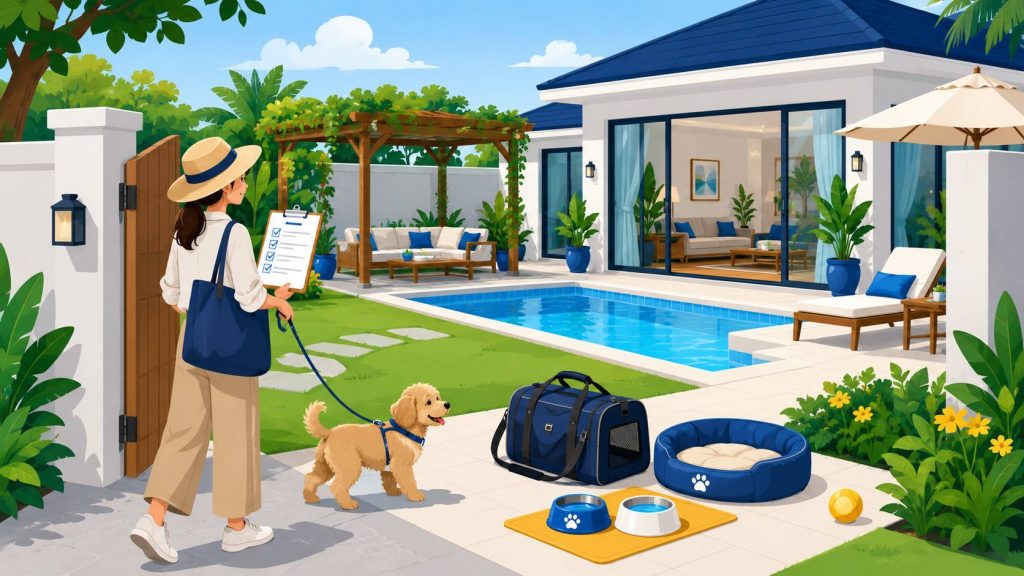
Gate security is one of the most important checks when asking, “is pool villa safe for dogs?” A villa may look enclosed in photos, but there may be gaps under gates, low walls, open side paths, or spaces behind plants.
After arrival, inspect:
- main gate
- side gates
- garden fence
- gaps under gates
- gaps behind plants
- driveway access
- road-facing areas
- service entrances
- balcony doors
- sliding doors
Keep your dog leashed until you have checked the outdoor boundaries. Some dogs may escape quickly when guests arrive, cars enter, or delivery staff open the gate.
A dog-safe pool villa should have secure boundaries that match your dog’s size and behavior.
Stairs, Balconies, and Raised Areas
Some villas have stairs, split-level layouts, rooftop terraces, balconies, or raised pool decks. These can be risky for dogs, especially if they are small, elderly, nervous, or very active.
Check:
- stair steepness
- open gaps between steps
- slippery stairs
- balcony railing gaps
- low balcony walls
- outdoor steps after rain
- furniture near balcony edges
- lighting at night
If your dog is not used to stairs, limit access at first. For small dogs or puppies, balcony gaps may be especially dangerous. For senior dogs, stairs may create stress or discomfort.
A single-level villa may be easier for dogs, especially for longer stays.
Outdoor Space and Garden Safety
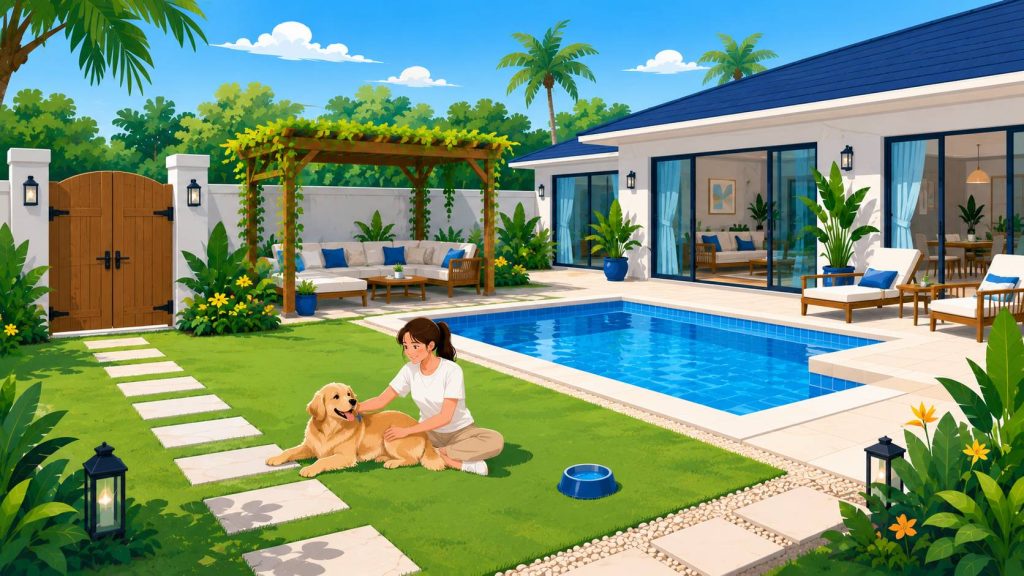
Outdoor space can make a pool villa more comfortable for dogs, but it should be checked carefully. A garden may include plants, insects, stones, drains, chemicals, or hidden escape points.
Look for:
- sharp plants
- thorny bushes
- toxic plants
- loose stones
- open drains
- pest traps
- fertilizer
- pesticides
- garden tools
- insects or nests
- uneven ground
- low lighting at night
If you are unsure whether a plant or garden product is safe, keep your dog away from that area. Dogs may sniff, chew, dig, or roll in unfamiliar outdoor spaces.
Outdoor space should be secure, shaded, and easy to supervise.
Shade, Heat, and Water
Dogs can overheat in warm destinations, especially around pool decks, stone paths, tiles, or sunny gardens. A villa may look comfortable, but outdoor surfaces can become hot during the day.
Check whether the villa has:
- shaded terrace
- covered outdoor area
- trees or umbrellas
- cool indoor space
- air conditioning or fans
- safe water bowl location
- fresh drinking water access
Do not leave dogs outdoors in strong sun for long periods. Keep water available and allow your dog to rest indoors when needed.
A dog-safe pool villa should support both outdoor time and cool rest.
Cleaning Chemicals and Indoor Hazards
Pool villas may have cleaning products, pool chemicals, pest control items, fragrance oils, trash bins, cables, and breakable décor. Dogs may sniff or chew unfamiliar items.
After arrival, check:
- under-sink cabinets
- laundry areas
- bathroom storage
- pool maintenance supplies
- kitchen cleaning products
- trash bins
- exposed electrical cords
- glass items
- small decorative objects
Move unsafe items out of reach where possible, while respecting the property. If something cannot be moved, keep your dog away from that area.
Pool villa safety for dogs includes indoor hazards as well as outdoor risks.
Dog Behavior and Supervision
A villa may be safe for one dog but not another. A calm senior dog may need shade and easy walking surfaces. An energetic young dog may need secure gates and close pool supervision. A nervous dog may bark, scratch doors, or try to escape.
Think about your dog’s behavior:
- Does your dog chase people or vehicles?
- Does your dog bark at noises?
- Does your dog try to escape?
- Can your dog swim?
- Is your dog comfortable with stairs?
- Does your dog chew furniture?
- Can your dog be left alone?
- Does your dog get anxious in new places?
Do not leave dogs alone near pools, balconies, gates, or outdoor areas. If the villa allows dogs to be left alone, choose a safe indoor space and follow the rules.
What to Check Before Booking
Before booking, ask the villa host:
- Are dogs allowed?
- Are there size or breed restrictions?
- Are dogs allowed near the pool?
- Are dogs allowed in the pool?
- Is the garden fully enclosed?
- Are gates secure?
- Are there gaps under fences?
- Is the villa near a busy road?
- Are there stairs or balconies?
- Are pets allowed indoors?
- Are dogs allowed on furniture?
- Is there a pet fee or deposit?
- What damage or cleaning rules apply?
Written confirmation is helpful, especially for pet rules and pool access.
What to Check After Arrival
After check-in, do a quick safety walk-through before letting your dog explore.
Check:
- pool edge and exit points
- slippery floors
- gates and fence gaps
- stairs
- balconies
- garden hazards
- cleaning chemicals
- trash bins
- road access
- shaded areas
- water bowl location
- outdoor lighting
- safe resting area
This walk-through can prevent many common problems.
Common Mistakes to Avoid
Mistake 1: Assuming Pet-Friendly Means Dog-Safe
A villa may allow dogs but still have pool, gate, stair, or garden risks.
Better approach: Check the layout before booking and after arrival.
Mistake 2: Letting Dogs Roam Immediately
Dogs may find escape gaps or unsafe areas quickly.
Better approach: keep dogs leashed until the villa is checked.
Mistake 3: Leaving Dogs Near the Pool Alone
Even dogs that can swim may slip, panic, or struggle to climb out.
Better approach: supervise all poolside time.
Mistake 4: Ignoring Heat and Shade
Outdoor surfaces can become hot and uncomfortable for paws.
Better approach: provide shade, water, and indoor rest.
Mistake 5: Forgetting Cleaning and Damage Rules
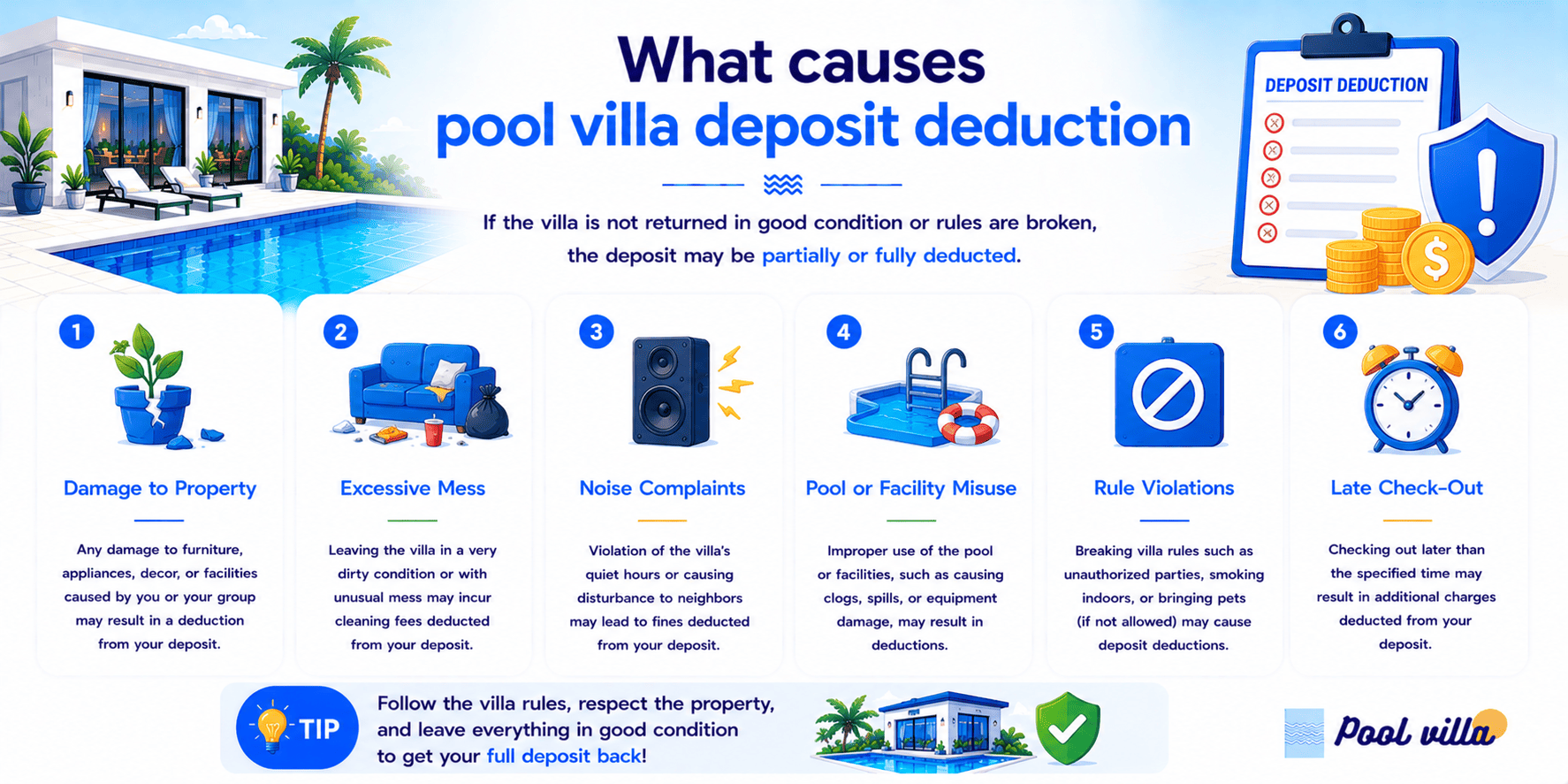
Wet paws, fur, scratching, and chewing can lead to extra fees.
Better approach: bring pet towels, bedding, and cleaning supplies.
Practical Tips for a Safer Dog-Friendly Villa Stay
Choose a villa based on your dog’s real needs, not only the villa’s appearance.
Confirm pet rules before paying the deposit.
Check pool access and gate security as soon as you arrive.
Bring your own dog bed, towel, bowl, leash, waste bags, and cleaning wipes.
Supervise your dog near pools, stairs, balconies, and gates.
Keep your dog off restricted furniture.
Dry your dog after rain, swimming, or outdoor play.
Clean waste quickly and dispose of it properly.
Provide shade and fresh water throughout the stay.
Report any damage honestly.
When Should Dog Owners Be Extra Careful?
Dog owners should be extra careful when staying with:
- puppies
- senior dogs
- small dogs
- large active dogs
- nervous dogs
- dogs with poor swimming ability
- dogs with joint problems
- dogs that bark often
- dogs that try to escape
- dogs that chew furniture
Extra care is also needed when the villa has open pool access, slippery tiles, steep stairs, balconies, low walls, nearby roads, limited shade, or unclear pet rules.
Cost, Time, or Difficulty
Choosing a dog-safe pool villa may take more time, but it can prevent stress during the stay. Guests may need to ask more questions about gates, pool access, outdoor space, fees, and cleaning rules.
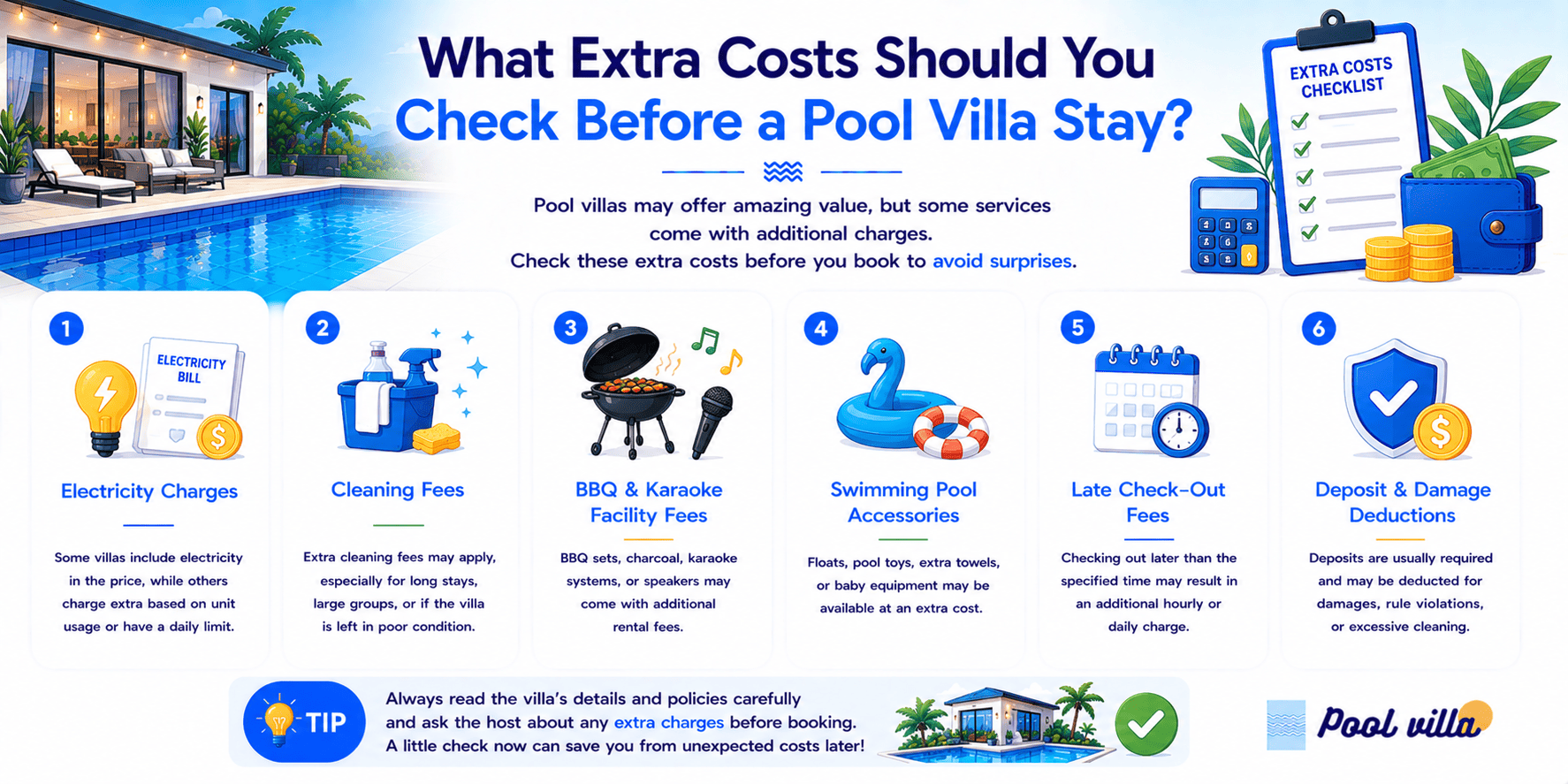
Possible extra costs include pet fees, refundable deposits, extra cleaning fees, damage charges, pet supplies, pet transport, or vet costs if an accident happens.
A slightly more suitable villa may be better value than a cheaper villa with risky pool access, open gates, or poor outdoor safety.
Conclusion
Is pool villa safe for dogs? A pool villa can be safe for dogs when the property has secure gates, controlled pool access, safe outdoor areas, shaded rest space, manageable stairs, and clear pet rules. However, dog safety depends on both the villa layout and owner supervision.
A dog-safe pool villa should be checked before booking and again after arrival. Owners should review pool edges, slippery tiles, gates, fences, stairs, balconies, gardens, cleaning chemicals, and nearby roads.
With the right planning, pool villa safety for dogs can be managed well, allowing both dogs and owners to enjoy a more comfortable and responsible stay.
FAQs
Is pool villa safe for dogs?
A pool villa can be safe for dogs if it has secure gates, controlled pool access, shaded outdoor space, safe flooring, and clear pet rules. Owners should inspect the villa and supervise dogs carefully.
What makes a dog-safe pool villa?
A dog-safe pool villa has secure boundaries, safe pool access, shaded areas, non-slippery surfaces, suitable stairs, enclosed outdoor space, and pet-friendly rules.
Can dogs swim in a pool villa pool?
Dogs can swim only if the villa allows it and the pool is safe for them. Owners should check pool steps, exit points, slippery tiles, and hygiene rules before allowing dogs in the pool.
What should owners check when arriving with a dog?
Owners should check gates, fence gaps, pool edges, stairs, balconies, slippery floors, garden hazards, cleaning chemicals, road access, shade, and safe resting areas.
Are stairs and balconies risky for dogs?
Yes, stairs and balconies can be risky for small dogs, puppies, senior dogs, and nervous dogs. Owners should check gaps, slippery surfaces, railings, and lighting.
How can owners reduce pool villa safety risks for dogs?
Owners can reduce risks by supervising dogs, controlling pool access, keeping gates closed, checking outdoor boundaries, providing shade and water, using pet towels, and following villa rules.