
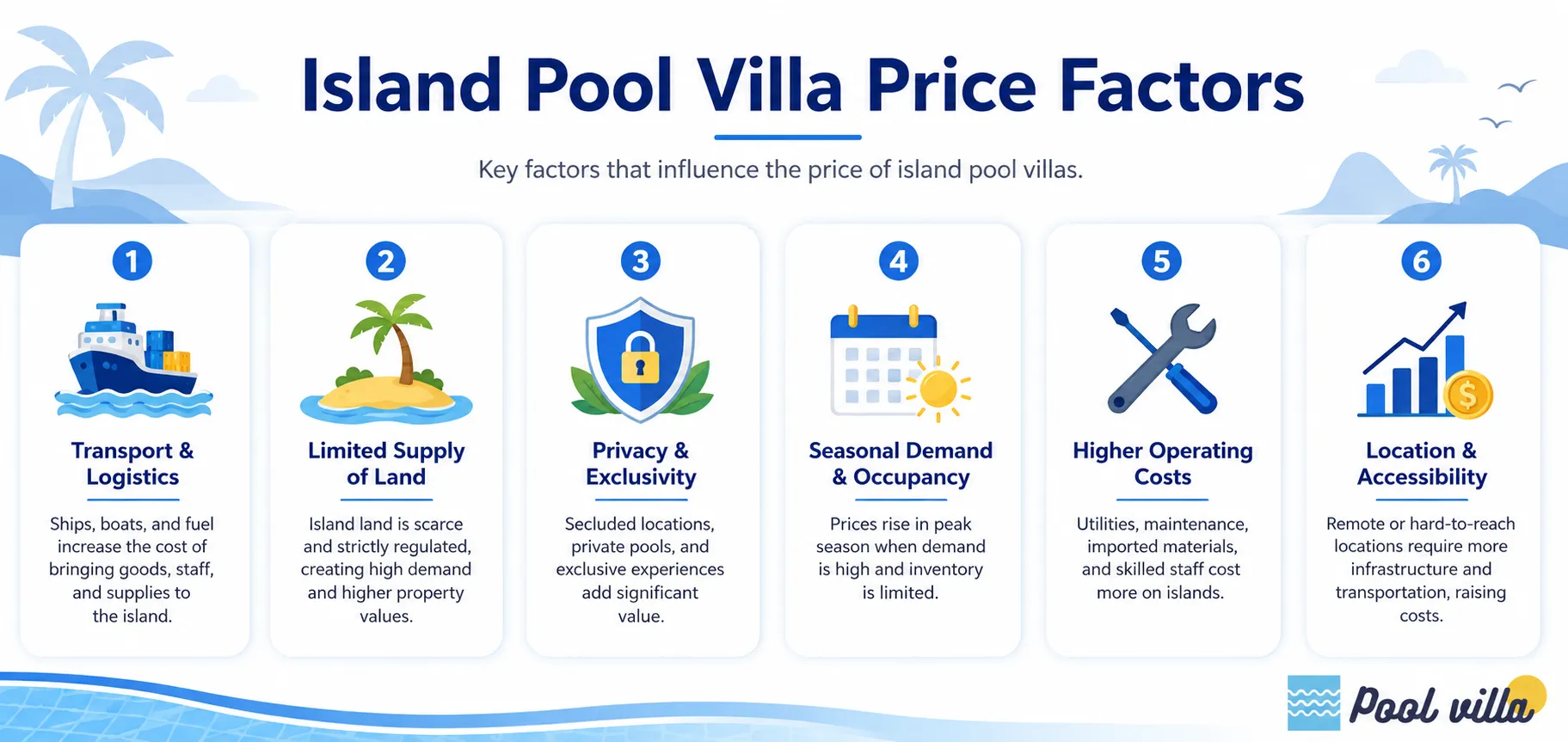
Island pool villas are often more expensive than similar properties on the mainland, even when the size, design, or amenities appear comparable. Many travelers notice the higher rates but do not fully understand what drives those costs.
The price difference is rarely caused by luxury branding alone. Island destinations operate under different logistical and economic conditions. Transportation costs are higher, land availability is limited, seasonal demand can fluctuate sharply, and maintaining private villas in remote coastal environments requires ongoing investment.
For travelers planning a stay, understanding these factors helps set realistic expectations and improve budgeting decisions. It also helps explain why two pool villas with similar photos and features may have very different pricing structures depending on the island location.
This guide explains the main island pool villa price factors, with a focus on transportation, limited supply, privacy, and seasonal demand.
What Does Island Pool Villa Price Factors Mean?
Island pool villa price factors are the conditions that influence how much a villa costs to rent on an island destination compared to mainland properties.
These factors usually include:
- Transportation and logistics costs
- Limited land and property supply
- Higher maintenance expenses
- Increased demand during tourism seasons
- Privacy and exclusivity
- Infrastructure limitations
- Import costs for materials and services
Island destinations naturally create operational challenges that increase overall business expenses. Those costs are often reflected in nightly villa rates.
For example, a beachfront pool villa on an island may require:
- Boat transportation for supplies
- Imported construction materials
- Specialized maintenance teams
- Backup utilities and water systems
- Higher staffing costs
- Additional transportation for guests
Even routine operations become more expensive when properties are separated from mainland infrastructure.
Why Does This Matter?
Understanding island pool villa pricing matters because it helps travelers make better financial and booking decisions.
Without understanding these cost factors, many travelers assume island villas are overpriced. In reality, pricing is often tied to genuine operational limitations and demand conditions.
This matters for several reasons.
Better Budget Planning
Island accommodations can involve additional expenses beyond the room rate, including:
- Ferry transfers
- Private speedboat services
- Island transportation fees
- Seasonal surcharges
- Higher food and beverage prices
Knowing this in advance reduces the risk of unexpected costs.
More Realistic Expectations
A villa on a remote island may cost more while offering fewer convenience features than a mainland luxury property.
That does not necessarily mean the villa has poor value. Instead, part of the cost comes from exclusivity, location, and logistical complexity.
Smarter Booking Timing
Island pricing changes significantly throughout the year. Travelers who understand seasonal demand can often find much better rates during shoulder seasons without sacrificing the overall experience.
Better Property Comparisons
Comparing island villas directly against mainland hotels or city resorts can be misleading. The pricing structure operates differently because the operating environment is different.
How Should You Approach Island Pool Villa Pricing?
The best approach is to evaluate island villas based on overall experience and operational realities rather than nightly price alone.
Consider the Island’s Accessibility
The more difficult an island is to reach, the higher the operating costs usually become.
Highly accessible islands with airports and strong infrastructure typically have more stable pricing. Remote islands that require multiple transportation methods usually cost more.
Questions worth considering include:
- Does the island have an airport?
- Are supplies transported by boat?
- Is transportation affected by weather?
- How developed is the local infrastructure?
Remote destinations may offer stronger privacy and scenery, but they also increase operational complexity.
Evaluate Privacy Levels
Privacy is one of the strongest price drivers for island villas.
Many travelers choose island villas specifically because they want:
- Secluded beachfront access
- Minimal tourist crowds
- Private pools
- Quiet surroundings
- Exclusive experiences
Properties with isolated locations or private beach access generally command premium rates because limited supply increases demand.
Analyze Seasonal Demand
Island tourism often depends heavily on weather patterns.
Peak seasons usually include:
- Dry seasons
- Holiday periods
- School vacations
- International travel peaks
During these periods, demand rises sharply while available inventory remains limited.
Low-season pricing may appear attractive, but travelers should also consider:
- Rainfall
- Ferry cancellations
- Rough sea conditions
- Reduced local services
- Temporary business closures
The cheapest season is not always the best overall value.
Compare Total Experience, Not Just Size
Two villas with identical bedroom counts may offer very different experiences depending on location.
Factors that influence perceived value include:
- Beach proximity
- Sunset views
- Private access
- Staff service
- Transportation convenience
- Distance from tourist crowds
An island villa’s appeal often comes from location quality rather than building size alone.
Transport and Logistics as Major Price Factors
Transportation is one of the biggest reasons island pool villas cost more.
Everything required to operate the property must reach the island somehow.
Construction Materials
Building on islands is significantly more expensive than mainland construction.
Materials often require:
- Cargo shipping
- Ferry transport
- Specialized handling
- Weather-dependent delivery schedules
Heavy items such as concrete, steel, glass, and pool equipment increase transportation costs dramatically.
Remote islands may also face construction delays due to rough weather or limited docking infrastructure.
Maintenance Costs
Pool villas require constant maintenance, especially in coastal environments.
Salt air, humidity, and strong sunlight accelerate wear on:
- Air conditioning systems
- Outdoor furniture
- Pool systems
- Plumbing
- Metal fixtures
- Electrical equipment
On islands, replacement parts may not be immediately available. Maintenance teams may need to travel from larger cities or mainland locations.
This increases operational expenses over time.
Staff and Supply Transportation
Many islands cannot fully support luxury hospitality operations locally.
Some villas rely on imported:
- Food ingredients
- Cleaning products
- Technical equipment
- Skilled labor
- Hospitality staff
Transporting these resources consistently adds ongoing operational costs.
Utility Infrastructure
Utilities on islands can be less stable than mainland systems.
Some villas require:
- Backup generators
- Water storage systems
- Private filtration systems
- Septic management systems
These systems increase both installation and maintenance expenses.
Limited Supply and Land Scarcity
Limited supply is another major reason island villas command higher prices.
Unlike mainland cities where development can continue expanding outward, islands have natural physical limitations.
Beachfront Land Is Extremely Limited
The most desirable island villas are usually located:
- Directly on the beach
- On cliffs with sea views
- In secluded coastal areas
- Near protected natural scenery
There are only so many premium coastal plots available.
Once prime land is developed, new supply becomes limited. This naturally increases long-term property values and rental prices.
Development Restrictions
Many islands enforce strict building regulations to protect the environment.
Restrictions may include:
- Height limitations
- Coastal setback requirements
- Environmental impact controls
- Protected natural zones
While these regulations help preserve island beauty, they also reduce the number of developable properties.
Lower supply combined with strong tourism demand increases pricing pressure.
High Demand for Premium Locations
Luxury travelers often prioritize privacy and scenery over convenience.
As a result, premium island villas frequently maintain high occupancy rates despite higher prices.
Popular island destinations may experience strong competition during peak seasons, especially for:
- Large villas
- Beachfront properties
- Villas with sunset views
- Family-friendly luxury villas
Limited inventory supports premium pricing.
Privacy and Exclusivity Increase Value
Privacy is one of the core reasons many travelers choose island pool villas instead of traditional hotels.
That privacy carries significant value in the hospitality market.
Private Space Is a Luxury Feature
Unlike crowded resorts, private villas offer controlled personal space.
Guests often pay higher rates for:
- Private swimming pools
- Exclusive outdoor areas
- Quiet environments
- Personalized service
- Reduced interaction with crowds
This experience becomes even more valuable on islands known for tourism congestion.
Exclusive Locations Create Premium Pricing
Villas located in isolated areas often require additional infrastructure and transportation planning.
Examples include:
- Hillside villas
- Remote beachfront properties
- Villas accessible only by private roads or boats
These locations increase operational difficulty but also improve exclusivity.
Smaller Inventory Supports Higher Rates
Hotels can operate hundreds of rooms in one location. Many luxury island villas operate as individual private properties with limited booking capacity.
A villa with only a few premium units must maintain higher nightly pricing to support:
- Maintenance costs
- Staffing
- Utilities
- Property management
- Seasonal income fluctuations
This naturally raises average rates compared to large-scale resorts.
Seasonal Demand and Price Fluctuation
Seasonality has a major impact on island pool villa pricing.
Unlike urban hotels that may receive stable year-round demand, island destinations often depend heavily on tourism cycles.
Peak Season Pricing
Peak seasons usually bring:
- Better weather
- Calmer seas
- Lower rainfall
- Holiday tourism
- International visitors
During these periods:
- Demand increases sharply
- Availability becomes limited
- Minimum stay requirements may increase
- Last-minute booking flexibility decreases
Prices can rise substantially during holiday periods and major travel seasons.
Shoulder Season Opportunities
Shoulder seasons often provide the best balance between price and experience.
Travelers may still enjoy:
- Good weather
- Lower crowds
- Better booking flexibility
- Reduced nightly rates
For budget-conscious travelers, shoulder seasons often provide stronger overall value than peak season travel.
Low Season Risks
Low season pricing can look attractive, but travelers should understand the trade-offs.
Potential issues include:
- Storms
- Ferry delays
- Limited restaurant operations
- Rough sea conditions
- Reduced tourism services
Some travelers enjoy the quieter atmosphere, while others may find the reduced convenience frustrating.
Common Mistakes When Evaluating Island Villa Prices
Many travelers misunderstand island villa pricing because they compare properties too simplistically.
Comparing Only Nightly Rates
A lower nightly rate does not always mean lower overall trip cost.
Some villas require:
- Expensive private transfers
- Long transportation routes
- Additional service fees
Meanwhile, slightly more expensive villas may include:
- Airport transfers
- Breakfast
- Staff services
- Better accessibility
Total trip cost matters more than base room price alone.
Ignoring Transportation Conditions
Travelers sometimes overlook weather-related transportation risks.
Certain islands experience:
- Seasonal ferry cancellations
- Flight delays
- Rough sea conditions
Cheaper villas on remote islands may involve higher travel uncertainty.
Booking Too Late During Peak Season
Island inventory is naturally limited.
Waiting too long during peak periods often results in:
- Higher pricing
- Fewer premium options
- Reduced flexibility
- Inferior locations
Popular villas can sell out months in advance during high-demand seasons.
Assuming All Islands Have Similar Costs
Not all island destinations operate under the same conditions.
Pricing varies based on:
- Infrastructure quality
- Tourism popularity
- Accessibility
- Labor availability
- Import dependency
A highly developed island may offer more competitive pricing than a remote luxury destination.
Practical Tips for Better Results
Travelers can manage island villa costs more effectively with realistic planning.
Book Early for Peak Seasons
Advance booking often provides:
- Better property selection
- More stable pricing
- Better transportation options
This is especially important for family villas and large group accommodations.
Travel During Shoulder Seasons
Shoulder seasons frequently offer the best balance between:
- Price
- Weather
- Crowd levels
- Villa availability
This strategy works particularly well for travelers with flexible schedules.
Evaluate Accessibility Carefully
A beautiful remote villa may not suit every traveler.
Consider:
- Transfer complexity
- Travel duration
- Weather reliability
- Accessibility for children or older travelers
Convenience can significantly affect overall trip satisfaction.
Read What Is Included
Island villas vary widely in included services.
Always check for:
- Airport transfers
- Boat transfers
- Breakfast
- Housekeeping
- Electricity charges
- Security deposits
This helps avoid budgeting surprises.
Maintenance and Long-Term Operational Challenges
Island pool villas face long-term maintenance challenges that directly affect pricing.
Coastal Weather Damage
Salt exposure accelerates corrosion and material deterioration.
Property owners must regularly maintain:
- Metal structures
- Outdoor decking
- Pool equipment
- Roofing systems
- Air conditioning systems
Frequent repairs increase operational expenses.
Utility Reliability
Some islands experience infrastructure limitations involving:
- Water supply
- Electricity stability
- Waste management
Luxury villas often invest heavily in backup systems to maintain guest comfort.
Staffing Challenges
Remote islands sometimes struggle to maintain consistent skilled labor availability.
Recruiting and retaining experienced hospitality staff may require:
- Higher wages
- Staff accommodation
- Transportation support
These costs are reflected in room pricing over time.
When Should You Be Extra Careful?
Certain situations require additional attention when booking island pool villas.
During Monsoon or Storm Seasons
Weather can affect:
- Ferry schedules
- Flight reliability
- Outdoor activities
- Beach conditions
Travel insurance may become more important during these periods.
When Booking Remote Villas
Remote villas may offer excellent privacy but limited emergency access.
Travelers should confirm:
- Medical access
- Transportation options
- Communication reliability
- Emergency support availability
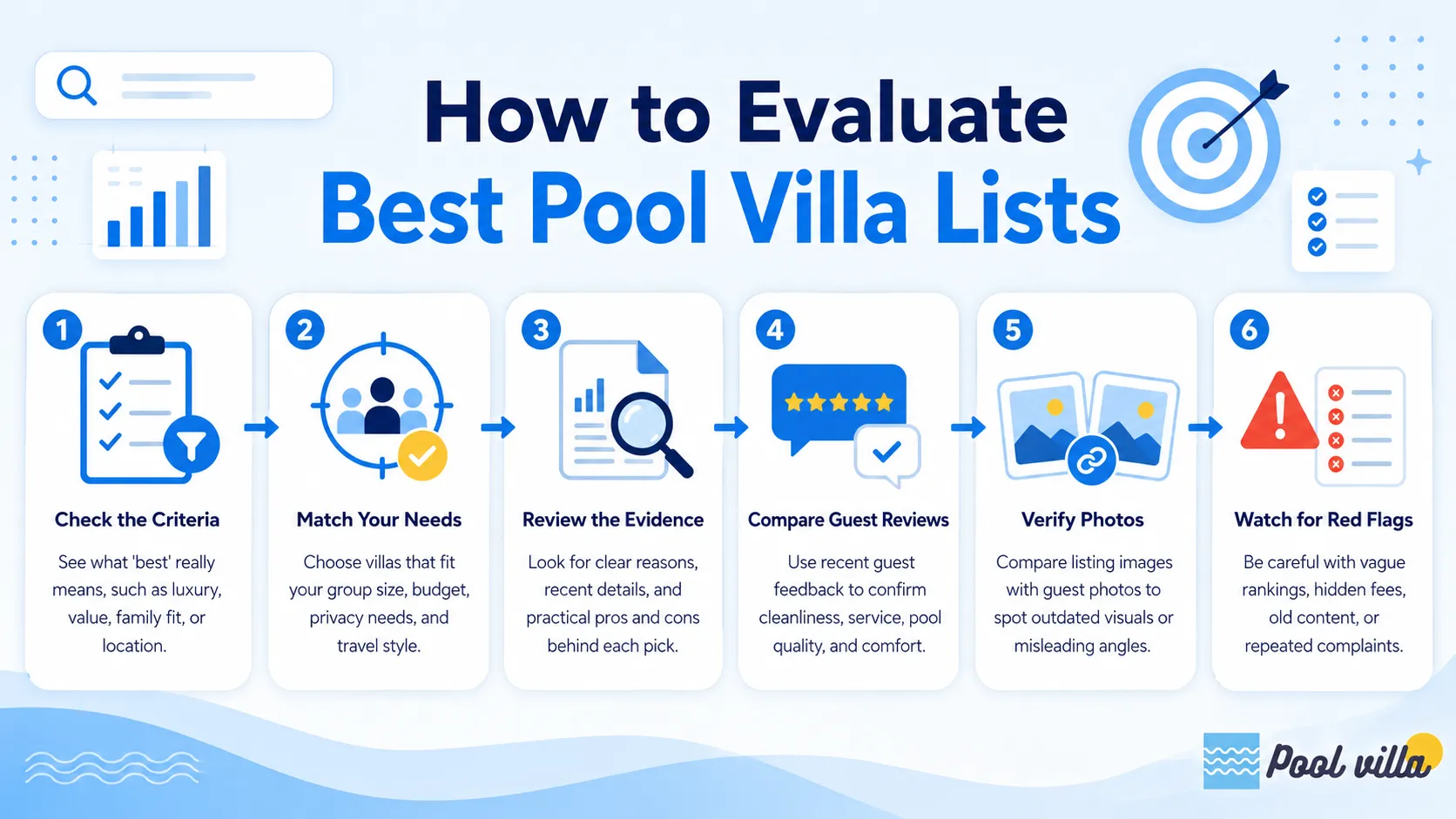
When Comparing Luxury Claims
Not all “luxury” island villas provide the same standards.
Some properties emphasize scenery and privacy more than modern infrastructure or service quality.
Reading detailed property descriptions and recent guest feedback helps create more realistic expectations.
Conclusion
Island pool villa price factors are shaped by much more than appearance or branding. Transportation logistics, limited land supply, privacy, exclusivity, seasonal demand, and long-term maintenance all contribute to higher operational costs compared to mainland properties.
Understanding these factors helps travelers evaluate pricing more realistically and make smarter booking decisions. In many cases, higher pricing reflects genuine environmental and logistical challenges rather than simple markups.
The best approach is to compare island villas based on total experience, accessibility, privacy, and long-term value rather than nightly rate alone. Travelers who understand how island destinations operate are usually better prepared to choose the right villa, avoid unnecessary costs, and enjoy a more satisfying overall stay.
FAQ
Why are island pool villas more expensive than mainland villas?
Island villas usually face higher transportation, maintenance, staffing, and supply costs. Limited beachfront land and strong seasonal demand also increase pricing.
Does booking early help reduce island villa costs?
Yes. Early booking often provides better rates and more property choices, especially during peak tourism seasons.
Are remote island villas always better for privacy?
Remote villas often provide better privacy, but they may also involve more complicated transportation and reduced convenience.
What season usually offers the best value?
Shoulder seasons often provide the best balance between price, weather, and crowd levels.
Why do beachfront island villas cost significantly more?
Beachfront land on islands is extremely limited. High demand combined with restricted supply naturally increases pricing for premium coastal properties.