
Remote pool villas attract travelers looking for privacy, quiet surroundings, and a more exclusive experience away from crowded tourist areas. Unlike city hotels or resort properties, these villas are often located in mountains, rural coastal zones, islands, forests, or isolated beachfront areas. While many people assume remote accommodations should always be cheaper, the reality is much more complex.
Remote pool villa pricing depends on several operational and market-related factors. Privacy, transportation access, infrastructure limitations, maintenance costs, staffing, and seasonal demand all influence how owners set rental rates. In some destinations, remoteness creates a luxury experience that allows villas to charge premium prices. In other areas, difficult access and high operating costs increase expenses behind the scenes.
Understanding remote pool villa price factors helps travelers compare properties more realistically and allows property owners to better understand long-term operational costs. A villa’s price is not determined only by its size or luxury features. The surrounding environment and logistical challenges also play a major role.
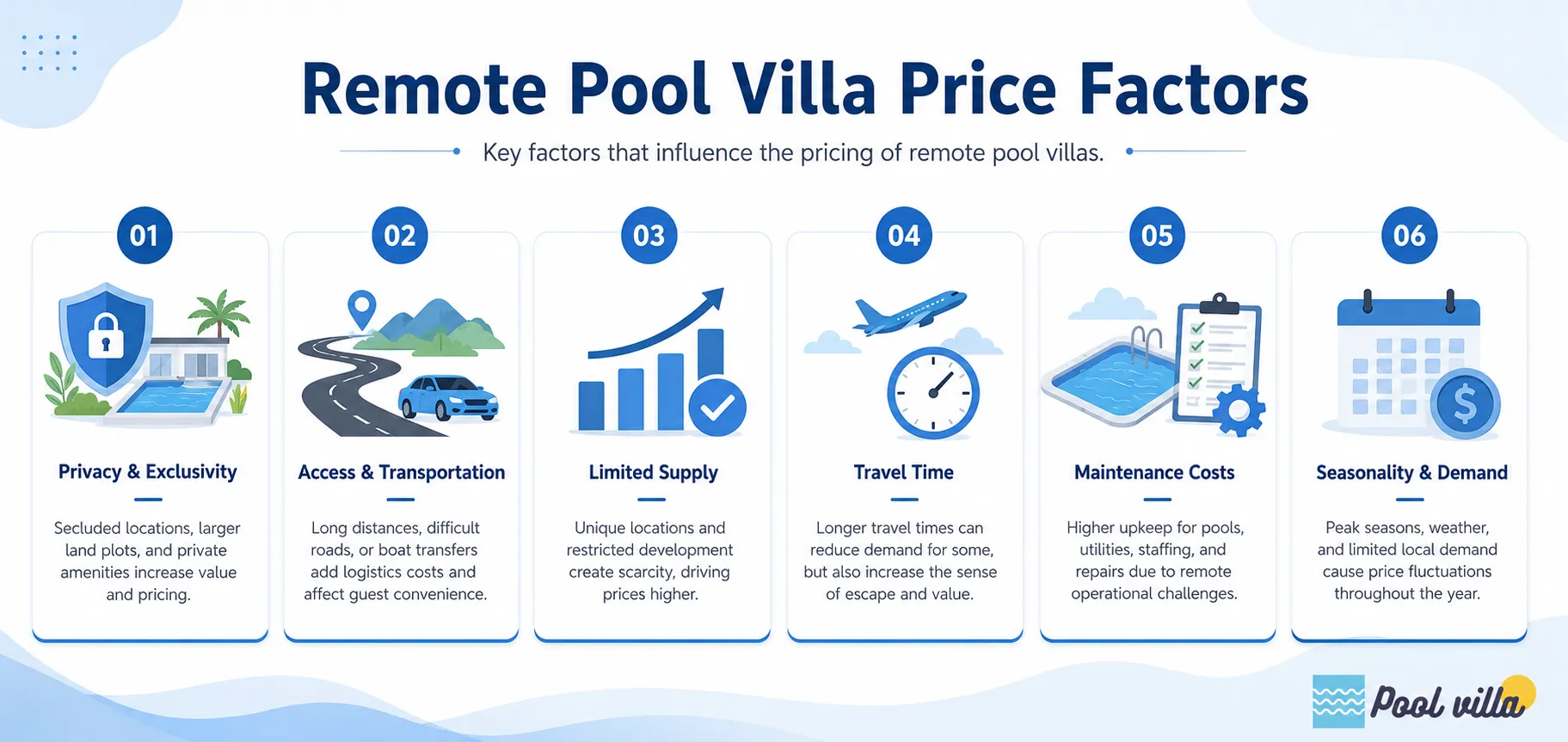
This guide explains how privacy, access, supply, travel time, and maintenance affect remote villa pricing and why these factors matter in the real market.
What Does This Topic Mean?
Remote pool villa price factors refer to the conditions that influence the rental value and operating costs of villas located far from major cities or developed tourist zones.
These villas are commonly found in:
- Mountain destinations
- Private beach areas
- Rural countryside locations
- Islands
- Forest retreats
- Hillside developments
- Nature-focused tourism areas
Unlike urban hotels, remote villas often operate independently with limited nearby infrastructure. Owners may need to manage their own water systems, electricity backup, transportation arrangements, and maintenance operations.
Pricing is usually influenced by several key factors, including:
- Privacy and exclusivity
- Transportation access
- Distance from airports
- Local tourism demand
- Utility infrastructure
- Maintenance difficulty
- Construction costs
- Staffing availability
- Seasonal accessibility
Because every remote destination operates differently, villa prices can vary significantly even between properties that appear similar in size or design.
Why Does This Matter?
Understanding remote villa pricing matters because many travelers compare prices without considering operational realities.
For example, a remote beachfront villa may seem expensive compared to a city apartment or hotel room. However, maintaining a property in an isolated area often costs much more due to transportation, staffing, utility systems, and environmental exposure.
Owners may need to spend more on:
- Pool maintenance
- Water delivery
- Backup generators
- Waste disposal systems
- Staff transportation
- Emergency repairs
- Imported building materials
At the same time, guests booking remote villas are usually paying for more than accommodation alone. They are often paying for:
- Privacy
- Scenic surroundings
- Lower crowd density
- Exclusive experiences
- Nature-focused environments
For property investors, pricing also affects long-term sustainability. A villa that is priced too low may struggle to cover operating costs, while overpricing can reduce occupancy in destinations with limited demand.
Understanding these factors helps both guests and operators make better decisions.
How Privacy Affects Remote Pool Villa Pricing
Privacy is one of the most important pricing drivers in the remote villa market.
Many travelers specifically choose remote villas because they want separation from busy tourist zones, neighboring buildings, or crowded resort environments. Villas that offer strong privacy often command higher rates, especially in luxury travel markets.
Features that increase privacy value include:
- Large private land plots
- Secluded surroundings
- Private beach access
- Hidden hillside locations
- Gated entrances
- Sound isolation
- Minimal nearby development
For high-end travelers, privacy itself becomes part of the luxury experience.
Larger Land Areas Increase Costs
Remote villas designed for privacy often require larger pieces of land. This increases development and maintenance expenses.
Owners may need to invest more in:
- Landscaping
- Security systems
- Infrastructure installation
- Road access
- Outdoor maintenance
Even if rural land costs less than urban land, maintaining large outdoor areas still requires ongoing operational spending.
Exclusivity Creates Premium Pricing
Some remote villas are intentionally designed as private retreats, wellness escapes, or honeymoon destinations. In these cases, exclusivity becomes a major part of the property’s market value.
Properties with limited nearby competition can often charge higher nightly rates because guests are paying for an experience that cannot easily be replicated in crowded destinations.
How Access and Transportation Influence Pricing
Accessibility strongly affects remote pool villa pricing.
A beautiful villa may lose market appeal if reaching the property is too complicated. However, transportation challenges also increase operating expenses, which can raise rental prices.
Distance From Airports and Tourist Areas
Travel time directly affects convenience.
Many remote villas require:
- Long car transfers
- Boat transportation
- Ferry connections
- Four-wheel-drive vehicles
These additional transportation needs increase overall trip costs for guests and operational costs for owners.
Some villas include transportation services in the booking price, while others charge separately.
Infrastructure Limitations Increase Operating Costs
Remote destinations often have weaker infrastructure than urban areas.
This can affect:
- Road quality
- Electricity reliability
- Water systems
- Internet stability
- Emergency support services
To maintain guest comfort, villa operators may install:
- Backup generators
- Water storage systems
- Satellite internet
- Private waste systems
These investments increase both setup and long-term maintenance expenses.
Difficult Access Reduces Market Size
Not every traveler wants complicated transportation arrangements. Families with children, elderly travelers, or short-stay visitors may prefer more accessible accommodations.
As a result, remote villas sometimes target smaller but higher-paying market segments such as:
- Luxury travelers
- Wellness tourists
- Honeymoon couples
- Nature-focused travelers
This smaller target market often leads to higher nightly pricing strategies.
How Limited Supply Affects Remote Villa Prices
Limited supply is another major factor behind remote villa pricing.
In many remote destinations, development opportunities are restricted by geography, environmental regulations, or infrastructure limitations.
Scarcity Increases Value
Certain remote environments are difficult to replicate. Examples include:
- Private island villas
- Cliffside ocean properties
- Jungle retreats
- Mountain-view villas
- Isolated beachfront homes
Because supply is limited, these properties often maintain strong pricing power, especially during peak travel seasons.
Construction Costs Are Often Higher
Building a villa in a remote location is usually more expensive than constructing a property in a city.
Construction materials may require:
- Long-distance transportation
- Boat delivery
- Specialized labor
- Heavy equipment access
Difficult terrain and weather conditions can also slow construction projects and increase labor expenses.
These higher development costs are commonly reflected in rental pricing.
Small Tourism Markets Create Seasonal Volatility
Some remote destinations depend heavily on seasonal tourism.
During high season, prices may rise sharply because demand exceeds supply. During low season, occupancy may drop significantly due to weather conditions or limited visitor traffic.
This creates more aggressive seasonal pricing patterns compared to stable urban markets.
How Travel Time Changes Guest Perception of Value
Travel time affects how guests view a property’s value.
For some travelers, long travel times reduce convenience. For others, remoteness increases the sense of escape and exclusivity.
Convenience-Oriented Travelers May Avoid Remote Villas
Travelers who prioritize convenience may avoid properties that require long transfers or multiple transportation steps.
Common concerns include:
- Complicated travel schedules
- Limited transportation availability
- Poor road conditions
- Distance from restaurants or shops
This can reduce demand from mainstream tourism markets.
Experience-Focused Travelers Often Pay More
Some guests intentionally choose remote destinations because they want a unique experience away from crowded areas.
These travelers may value:
- Nature immersion
- Quiet surroundings
- Wellness-focused stays
- Romantic privacy
- Digital detox experiences
In these cases, travel time becomes part of the experience rather than a disadvantage.
Longer Stays Support Pricing
Remote villas often depend on longer guest stays because short visits may not justify the travel effort.
Many operators encourage longer bookings through:
- Weekly discounts
- Minimum stay requirements
- Seasonal packages
Longer stays help owners balance preparation costs and operational logistics.
How Maintenance Costs Affect Remote Pool Villa Pricing
Maintenance is one of the most overlooked remote pool villa price factors.
Operating a remote property is often more expensive than maintaining a similar villa in a developed urban area.
Pool Maintenance Becomes More Complicated
Swimming pools require regular servicing regardless of location. In remote areas, maintenance becomes more difficult because technicians and supplies may not be easily available.
Additional costs may include:
- Technician travel expenses
- Chemical transportation
- Delayed replacement parts
- Water delivery systems
Coastal environments may also increase salt corrosion and humidity damage.
Repairs Take Longer and Cost More
Simple repairs can become expensive in isolated areas because specialized technicians may need to travel long distances.
This affects systems such as:
- Air conditioning
- Water pumps
- Electrical systems
- Security equipment
- Smart home technology
Remote property owners often maintain larger repair budgets to handle unexpected problems.
Staffing Costs Are Higher
Finding experienced hospitality staff in remote locations can be challenging.
Owners may need to provide:
- Staff accommodation
- Transportation support
- Higher wages
- Rotational schedules
Staff shortages can also affect service quality during peak seasons.
Environmental Exposure Increases Wear
Remote villas near beaches, forests, or mountains are often exposed to harsh environmental conditions.
Common long-term maintenance issues include:
- Mold growth
- Salt damage
- Humidity deterioration
- Storm-related wear
- Pest control problems
Properties that ignore preventive maintenance may experience rapid deterioration.
Common Mistakes
Assuming Remote Villas Should Always Be Cheap
Many travelers expect remote accommodations to cost less than city hotels. However, operational complexity often increases pricing instead.
Ignoring Transportation Expenses
Guests sometimes focus only on nightly rates while overlooking:
- Airport transfers
- Boat transportation
- Fuel costs
- Vehicle rental expenses
The total trip cost may be much higher than expected.
Overlooking Infrastructure Limitations
Not all remote villas offer the same infrastructure quality.
Guests should confirm:
- Internet reliability
- Backup electricity systems
- Water supply stability
- Mobile signal coverage
These details can significantly affect comfort during longer stays.
Booking Without Checking Seasonal Conditions
Certain remote destinations become difficult to access during heavy rain or rough sea conditions.
Checking weather patterns before booking is especially important for island and mountain villas.
Practical Tips for Better Results
Match the Villa to Your Travel Style
Travelers should decide whether they prioritize:
- Convenience
- Privacy
- Luxury service
- Scenic surroundings
- Nature experiences
Remote villas are usually best suited for travelers seeking relaxation and exclusivity rather than fast-paced tourism.
Research Transportation Carefully
Before booking, verify:
- Total travel time
- Ferry schedules
- Road conditions
- Airport transfer availability
- Late-night transportation options
Travel logistics can strongly affect the overall experience.
Compare Total Value, Not Just Nightly Rates
Some villas include services such as:
- Airport pickup
- Daily housekeeping
- Private chefs
- Concierge assistance
Others charge these services separately.
Comparing overall value is more useful than comparing room rates alone.
Maintenance or Prevention
For property owners, preventive maintenance is essential in remote environments.
Important strategies include:
- Regular pool inspections
- Generator testing
- Drainage maintenance
- Humidity management
- Corrosion-resistant materials
- Pest prevention programs
Preventive maintenance is usually less expensive than emergency repairs in isolated locations.
Owners who invest in long-term upkeep generally maintain better guest satisfaction and stronger pricing stability.
Conclusion
Remote pool villa price factors are influenced by far more than location alone. Privacy, transportation access, limited supply, travel logistics, maintenance complexity, and infrastructure challenges all shape pricing decisions.
Some remote villas achieve premium pricing because they offer exclusivity, natural surroundings, and peaceful experiences that urban properties cannot easily provide. Others face higher operational costs simply because maintaining services in isolated environments is more difficult.
For travelers, understanding these factors helps create more realistic expectations when comparing accommodations. For property owners and investors, it highlights the importance of balancing guest experience with long-term operational sustainability.
A remote pool villa is not simply a place to stay. In many cases, the surrounding environment, level of privacy, and logistical complexity become part of the property’s overall value.