
When booking a pool villa, many guests focus mainly on the nightly rate and amenities. However, additional charges such as booking deposits and security deposits often create confusion, especially for first-time renters. Some travelers assume both payments are the same, while others misunderstand when the money will be refunded or whether it is refundable at all.
Understanding the difference between a booking deposit and a security deposit is important before confirming a reservation. These two payments serve completely different purposes, and misunderstanding them can lead to disputes, unexpected costs, or canceled bookings.
In practical terms, a booking deposit helps secure the reservation, while a security deposit protects the property owner against damage, rule violations, or unpaid expenses during the stay. Both are common in the pool villa industry, particularly for private villas, luxury accommodations, and large group rentals.
This guide explains how each type of deposit works, why property owners require them, how refund policies usually operate, and what guests should check carefully before making a payment.
What Does Pool Villa Deposit vs Security Deposit Mean?
The phrase “pool villa deposit vs security deposit” refers to two separate payments that are commonly required during the booking process.
What Is a Booking Deposit?
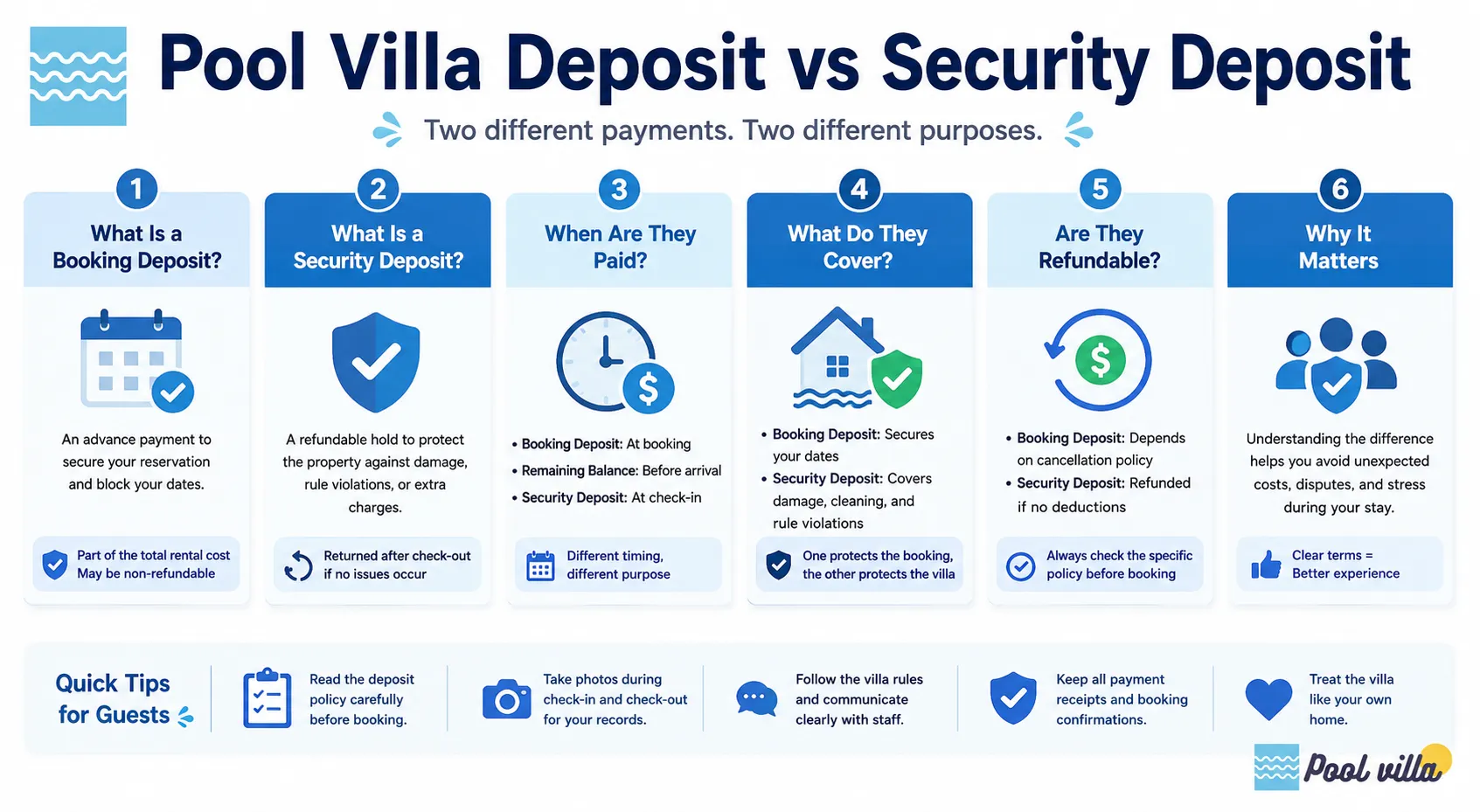
A booking deposit is an advance payment made to confirm and secure a reservation. Once the deposit is paid, the villa owner or management company blocks the selected dates and removes them from availability for other guests.
In most cases, the booking deposit is:
- Part of the total rental cost
- Paid before arrival
- Sometimes non-refundable
- Used to reduce cancellation risk for the property owner
For example, a villa may require a 30% booking deposit at the time of reservation, with the remaining balance paid before check-in.
The booking deposit is not meant to cover damages or misconduct during the stay. Its main purpose is reservation commitment.
What Is a Security Deposit?
A security deposit, sometimes called a damage deposit, is a temporary amount held to protect the property against losses caused during the guest’s stay.
This deposit is usually refundable if:
- No property damage occurs
- Villa rules are followed
- Extra cleaning is not required
- No unpaid charges remain
Security deposits are common in pool villas because these properties often include expensive furniture, private pools, entertainment systems, outdoor equipment, and high-maintenance facilities.
Unlike a booking deposit, the security deposit is generally returned after check-out if everything is in acceptable condition.
Why Does This Difference Matter?
Many guest disputes happen because travelers do not fully understand which payment is refundable and which is not.
Financial Expectations
A booking deposit may be partially refundable or completely non-refundable depending on the cancellation policy. Guests who cancel late sometimes expect a full refund without realizing the deposit was intended to secure the dates.
A security deposit works differently. Guests usually expect this payment to be returned unless there is verified damage or a rule violation.
Understanding the distinction helps travelers avoid unrealistic expectations.
Budget Planning
Pool villas often require both deposits at different stages.
For example:
- Booking deposit: paid immediately after reservation
- Remaining rental balance: paid before arrival
- Security deposit: paid at check-in
Guests who only prepare for the rental fee may face unexpected upfront costs.
Preventing Disputes
Clear understanding reduces arguments between guests and property owners. Most problems occur when:
- Policies were not read carefully
- Deposit conditions were unclear
- Damage responsibilities were disputed
- Refund timelines were misunderstood
Knowing how both deposits operate helps guests protect themselves and make informed decisions.
How Should You Approach Pool Villa Deposits?
Before paying any deposit, guests should carefully review the booking conditions and payment terms.
Read the Deposit Policy Carefully
The policy should clearly explain:
- The amount required
- Payment deadlines
- Refund conditions
- Cancellation rules
- Damage responsibility
- Refund processing time
If the terms are vague or incomplete, ask for clarification before transferring money.
Check Whether the Deposit Is Refundable
Not all booking deposits are refundable.
Some villas offer:
- Fully refundable deposits
- Partial refunds
- Non-refundable deposits
- Refunds only under certain cancellation periods
Security deposits also vary. Some are returned immediately after check-out, while others may take several business days after inspection.
Understand the Inspection Process
Ask how the property inspection works after check-out.
Professional villa operators usually:
- Inspect the property after departure
- Document damage if found
- Compare the condition against check-in records
- Process refunds after verification
This process protects both parties.
Keep Payment Records
Always keep:
- Transfer receipts
- Booking confirmations
- Deposit agreements
- Check-in photos
- Communication records
These documents are important if a disagreement occurs later.
How Booking Deposits Usually Work
Although policies vary between villas, the process generally follows a similar structure.
Reservation Stage
The guest selects dates and confirms availability. The property owner then requests a booking deposit.
Without payment, the dates may remain open for other guests.
Deposit Payment
The guest transfers the required amount through:
- Bank transfer
- Credit card
- Online booking platform
- Digital payment service
Once received, the reservation becomes official.
Balance Payment
The remaining rental amount is usually paid:
- Before arrival
- At check-in
- In installments for larger bookings
The booking deposit is applied toward the final rental price.
Cancellation Situations
If the guest cancels:
- Early cancellation may qualify for partial or full refund
- Late cancellation may result in forfeiture
- Peak season bookings often have stricter terms
Holiday periods and high-demand weekends typically involve less flexible policies because property owners face greater revenue risk.
How Security Deposits Usually Work
Security deposits are handled differently because they focus on property protection rather than reservation commitment.
Collection Before Check-In
The security deposit may be:
- Pre-authorized on a credit card
- Paid in cash
- Transferred before arrival
- Collected during check-in
Luxury pool villas often require higher security deposits due to expensive interiors and private facilities.
Property Inspection
After check-out, management checks for:
- Broken furniture
- Pool damage
- Missing items
- Excessive cleaning needs
- Unauthorized parties
- Smoking violations
- Stained linens or upholstery
Normal wear and tear is usually not deducted from the deposit.
Refund Timeline
Refund processing depends on the property’s system.
Typical refund periods range from:
- Immediate return at check-out
- 3 to 7 business days
- Up to 14 days for detailed inspections
Guests should ask about the expected timeline in advance.
Common Mistakes Guests Make
Assuming Both Deposits Are the Same
This is the most common misunderstanding. Guests sometimes expect the booking deposit to be refunded automatically after check-out, even though it was part of the rental payment.
Ignoring the Cancellation Policy
Some travelers only review the villa photos and pricing but skip the cancellation terms completely.
This becomes a problem when plans change unexpectedly.
Failing to Document Property Condition
Guests should inspect the villa upon arrival and report existing damage immediately.
Without documentation, pre-existing issues may later become disputed.
Hosting Unauthorized Parties
Pool villas are frequently rented for birthdays, gatherings, or celebrations. However, many properties prohibit large events without prior approval.
Unauthorized parties can lead to:
- Security deposit deductions
- Immediate cancellation of stay
- Additional penalties
Paying Without Verified Booking Details
Guests should never transfer deposits without receiving proper booking confirmation and payment instructions from legitimate property management.
Practical Tips for Better Results
Ask Questions Before Paying
Clarify details such as:
- Refund timelines
- Cleaning expectations
- Check-out procedures
- Damage policies
- Guest limits
Clear communication reduces misunderstandings later.
Use Secure Payment Methods
Whenever possible, use payment methods that provide transaction records and protection.
Avoid sending money through unverified channels.
Take Photos During Check-In
Photographs help document:
- Existing scratches
- Broken items
- Pool condition
- Furniture condition
This creates a clear reference point.
Follow Villa Rules Carefully
Simple compliance helps avoid unnecessary deductions.
Pay attention to:
- Pool usage rules
- Quiet hours
- Smoking restrictions
- Maximum occupancy
- Equipment instructions
Keep Communication Professional
If an issue occurs, remain calm and communicate clearly with management. Most disputes are easier to resolve when both sides maintain proper documentation and reasonable communication.
When Should You Be Extra Careful?
Certain booking situations involve higher financial risk.
Large Group Bookings
Bigger groups increase the chance of:
- Property damage
- Noise complaints
- Rule violations
- Cleaning issues
As a result, villas may require larger security deposits.
Holiday and Peak Season Rentals
During high-demand periods, cancellation policies are often stricter.
Booking deposits during:
- New Year
- Songkran
- Long weekends
- School holidays
may become non-refundable much earlier than standard reservations.
Luxury Pool Villas
High-end villas frequently contain expensive interior materials, premium electronics, and custom outdoor features.
Security deposits may be significantly higher because repair costs can also be much higher.
Last-Minute Reservations
Some villas request full payment immediately for last-minute bookings. Guests should verify all deposit conditions carefully before transferring funds.
How Property Owners Benefit From Deposits
Deposits are not only about protecting revenue. They also help property owners manage operational risk.
Booking deposits reduce losses from cancellations that leave dates unsold. Security deposits encourage responsible guest behavior and help cover repair or cleaning costs when problems occur.
For pool villas specifically, maintenance expenses can be substantial. Pools, outdoor areas, water systems, and luxury furnishings require regular upkeep. Deposits help property owners manage these risks more sustainably.
At the same time, professional villa operators should apply deposit policies fairly and transparently. Clear communication builds trust and improves the overall guest experience.
FAQ
Is a booking deposit always non-refundable?
No. Some pool villas offer refundable booking deposits if cancellation occurs within a certain timeframe. Others apply partial refunds or fully non-refundable terms.
Can a security deposit be used as part of the rental payment?
Usually no. Security deposits are typically separate from the rental fee because they are intended only for damage protection.
How long does it take to receive a security deposit refund?
Refund timelines vary by property. Some villas process refunds immediately, while others require several business days after inspection.
What happens if damage exceeds the security deposit amount?
If repair costs exceed the deposit, the property owner may request additional payment depending on the rental agreement and evidence of damage.
Why are security deposits higher for pool villas?
Pool villas often contain expensive facilities, private pools, outdoor furniture, entertainment systems, and luxury interiors that increase maintenance and repair costs.
Conclusion
Understanding the difference between a booking deposit and a security deposit is essential when renting a pool villa. Although both involve upfront payments, they serve completely different purposes.
A booking deposit secures the reservation and protects the property owner from cancellations. A security deposit protects the villa against damage, excessive cleaning, or rule violations during the stay.
Guests who carefully review deposit policies, document property condition, follow villa rules, and maintain clear communication are far less likely to face disputes or unexpected charges.
Before confirming any reservation, take the time to understand exactly what each deposit covers, whether it is refundable, and under what conditions deductions may apply. Clear expectations on both sides create a smoother and more professional pool villa rental experience.