
A pool villa deposit refund is one of the most common concerns travelers have when booking private accommodation. Unlike hotels that often use standardized cancellation systems, many pool villas operate with their own booking policies, damage rules, and security deposit conditions. This can create confusion, especially when guests cancel a booking, change travel plans, or accidentally violate house rules.
Understanding how pool villa deposit refund conditions work helps guests avoid disputes, unexpected charges, and financial losses. It also allows property owners and guests to manage expectations clearly before check-in.
In most cases, whether a deposit is refunded depends on several factors, including cancellation timing, property damage, excessive cleaning requirements, unauthorized guests, noise complaints, or breaches of villa policies. Some deposits are fully refundable, while others may be partially withheld or completely non-refundable under certain circumstances.
This guide explains the most common refund conditions, how deposits are typically handled, and what guests should watch for before making a reservation.
What Does Pool Villa Deposit Refund Mean?
A pool villa deposit refund refers to the return of money paid in advance by a guest under specific booking conditions. The deposit may serve different purposes depending on the property.
Common types of deposits include:
- Booking deposits
- Security deposits
- Damage deposits
- Reservation guarantees
- Cleaning or incident deposits
A booking deposit is usually paid to confirm the reservation. In some villas, this payment becomes partially or fully non-refundable after a certain date.
A security or damage deposit is different. This amount is held temporarily to cover possible losses caused by:
- Property damage
- Missing items
- Extra cleaning
- Rule violations
- Noise complaints
- Unauthorized parties
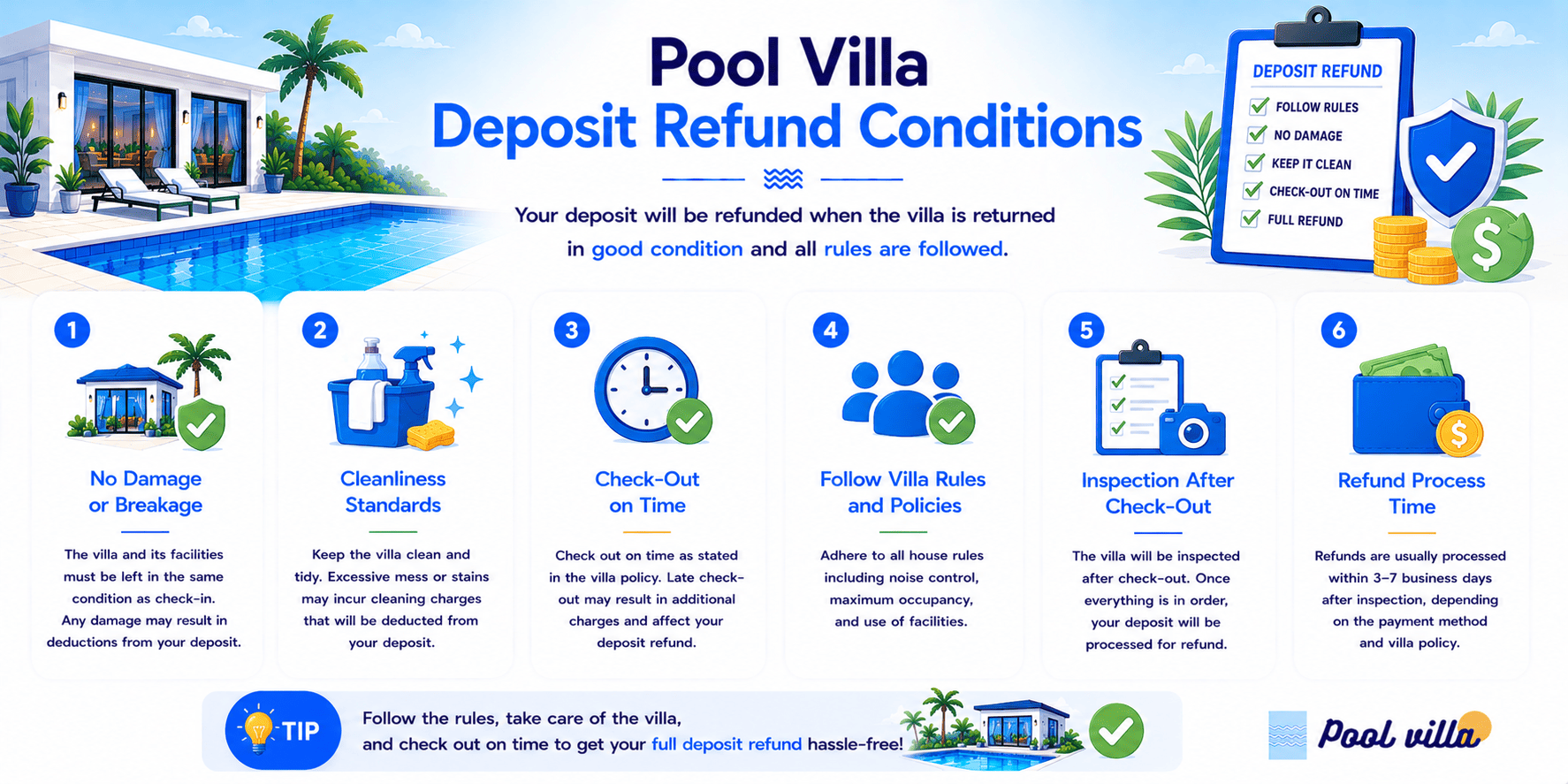
If no problems occur during the stay, the villa owner or management company normally returns the deposit after checkout.
The refund process can vary significantly between properties. Some villas release deposits within 24 hours, while others may take several business days depending on inspection procedures and payment systems.
Why Do Pool Villa Deposit Refund Conditions Matter?
Deposit conditions directly affect financial risk for travelers. Many guests focus only on nightly pricing and overlook refund policies until a problem occurs.
Understanding the conditions matters because pool villa bookings often involve larger payments than standard hotel stays. Luxury villas, group accommodations, and holiday-season reservations may require substantial upfront deposits.
Refund policies also become especially important during:
- Peak travel periods
- Long-stay bookings
- Group vacations
- Event-related travel
- Holiday reservations
- Last-minute cancellations
A misunderstanding about refund conditions can lead to disputes between guests and property managers. For example, a guest may assume the deposit is fully refundable, while the villa policy clearly states otherwise after a certain cancellation deadline.
For villa owners, deposits help reduce operational risks. Private villas typically contain expensive furniture, pool equipment, electronics, and outdoor facilities that can be damaged during guest stays.
Well-defined deposit policies protect both parties when expectations are clear from the beginning.
Common Types of Pool Villa Deposit Refund Conditions
Refundable Security Deposits
This is one of the most common arrangements.
Guests pay a temporary security deposit before check-in. The property owner refunds the amount after inspecting the villa.
Refund eligibility usually depends on:
- No property damage
- No missing items
- No smoking violations
- No excessive mess
- Compliance with occupancy rules
- No unauthorized events or parties
If issues are found, deductions may be taken from the deposit.
Partial Refund Policies
Some villas apply partial refunds depending on cancellation timing.
Examples may include:
- 100% refund if canceled 30 days before arrival
- 50% refund if canceled 14 days before arrival
- No refund within 7 days of check-in
This approach allows villa owners to recover some income if they cannot rebook the property quickly.
Non-Refundable Deposits
Certain villas require non-refundable booking deposits from the start.
These policies are more common during:
- New Year holidays
- Songkran or major festivals
- High-demand weekends
- Large group bookings
- Luxury villa reservations
In these situations, owners may reject refund requests regardless of the reason for cancellation unless special terms apply.
Refunds Subject to Inspection
Many villas release deposits only after completing a full property inspection.
Management teams may inspect:
- Pool condition
- Furniture damage
- Kitchen appliances
- Towels and linens
- Electronic devices
- Outdoor equipment
If no problems are identified, the refund is processed according to the property’s timeline.
How Cancellation Timing Affects Deposit Refunds
Cancellation timing is one of the biggest factors influencing pool villa deposit refunds.
Early Cancellations
Guests who cancel well before arrival generally have the best chance of receiving a full or partial refund.
Villa owners have more time to:
- Find replacement guests
- Adjust pricing
- Reopen booking dates
- Reduce financial losses
Many properties offer more flexible refund terms for cancellations made weeks or months in advance.
Last-Minute Cancellations
Last-minute cancellations usually carry stricter penalties.
Private villas are often harder to rebook on short notice, especially:
- Large villas
- Luxury properties
- Remote locations
- Holiday periods
As a result, many operators enforce non-refundable policies close to check-in dates.
Peak Season Reservations
Holiday periods often come with the strictest refund conditions.
During high-demand periods, villa owners may:
- Require larger deposits
- Shorten refund windows
- Apply stricter cancellation rules
- Refuse date changes
Guests should carefully review the booking terms before confirming reservations during busy seasons.
Damage-Related Deposit Deductions
One of the main reasons deposits are withheld is property damage.
Common Damage Issues
Typical examples include:
- Broken furniture
- Damaged pool equipment
- Stained mattresses or linens
- Cracked glass doors
- Water damage
- Burn marks
- Lost keys
- Damaged electronics
Even accidental damage may still result in deductions.
Pool-Related Damage
Pool villas involve additional risks compared to standard accommodations.
Examples include:
- Improper chemical use
- Broken pool lights
- Damaged pumps
- Overflow problems
- Clogged filtration systems
Pool repairs can be expensive, which is why many villas maintain strict deposit policies.
Excessive Cleaning Charges
Not all deductions involve physical damage.
Additional cleaning fees may apply for:
- Heavy stains
- Smoking indoors
- Food waste left throughout the property
- Excessive trash
- Vomit or spills
- Pet-related messes
Some villas clearly list these fees in advance, while others evaluate conditions after checkout.
Rule Violations That May Affect Refund Eligibility
Many guests assume deposits only cover physical damage. In reality, rule violations are another major reason refunds may be reduced or denied.
Unauthorized Guests
Most villas have occupancy limits for safety, insurance, and operational reasons.
Problems occur when guests:
- Bring extra visitors
- Hold parties without approval
- Exceed maximum occupancy
- Allow overnight visitors not included in the booking
This can result in deposit deductions or immediate cancellation of the stay.
Noise Complaints
Noise complaints are particularly important in residential villa areas.
Excessive noise may involve:
- Loud music
- Late-night parties
- Outdoor gatherings
- Poolside events
If neighbors complain or authorities become involved, villa owners may withhold part of the deposit.
Smoking Violations
Many villas prohibit indoor smoking.
Smoke odor removal and deep cleaning can be costly, especially in luxury properties with fabric furniture, curtains, and air conditioning systems.
Guests who violate smoking policies may lose part or all of their deposit.
Pet Policy Violations
Some villas prohibit pets entirely, while others allow pets under strict conditions.
Unauthorized pets may cause issues such as:
- Furniture damage
- Allergens
- Odors
- Additional cleaning costs
Violating pet policies may affect refund eligibility.
How Should Guests Protect Their Deposit?
Read the Full Booking Policy Carefully
Many refund disputes happen because guests only review pricing and photos.
Before booking, check:
- Cancellation deadlines
- Refund percentages
- Damage policies
- House rules
- Cleaning conditions
- Occupancy limits
- Payment terms
Guests should never assume policies are the same across all villas.
Document the Villa Condition at Check-In
Taking photos or videos upon arrival can help prevent unfair claims later.
Focus on:
- Existing damage
- Pool condition
- Furniture scratches
- Broken appliances
- Stained linens
This creates a record in case disagreements occur after checkout.
Report Problems Immediately
If guests notice damage during check-in, they should inform management immediately instead of waiting until checkout.
Prompt reporting demonstrates transparency and reduces misunderstandings.
Follow House Rules Carefully
Simple violations can lead to avoidable deductions.
Pay close attention to:
- Quiet hours
- Pool rules
- Smoking restrictions
- Guest limits
- Pet policies
- Trash disposal instructions
Common Mistakes Guests Make
Assuming All Deposits Are Refundable
Not every deposit is automatically returned.
Some booking deposits are intentionally non-refundable, especially during peak travel periods.
Ignoring Fine Print
Guests sometimes skip policy details and later discover restrictions involving:
- Date changes
- Refund deadlines
- Cleaning charges
- Minimum stay requirements
This creates preventable disputes.
Hosting Unauthorized Events
Private villas are often rented for birthdays, reunions, or celebrations. However, many properties prohibit large gatherings without approval.
Unauthorized events increase the risk of:
- Property damage
- Noise complaints
- Safety problems
- Insurance violations
Leaving the Villa in Poor Condition
Even if no major damage occurs, poor checkout conditions may still trigger cleaning fees.
Basic guest responsibility matters when protecting deposit refunds.
Practical Tips for Better Refund Outcomes
Book Through Clear and Transparent Platforms
Choose villas that clearly explain:
- Refund rules
- Deposit amounts
- Inspection procedures
- Cancellation terms
Ambiguous policies increase the chance of disagreements.
Keep Payment Records
Save:
- Booking confirmations
- Receipts
- Chat conversations
- Email agreements
- Refund timelines
Documentation helps if disputes arise later.
Clarify Unclear Policies Before Booking
If any condition seems vague, ask before paying.
Important questions may include:
- How long does refund processing take?
- What damages are commonly charged?
- Are cancellations partially refundable?
- Is the deposit separate from the booking fee?
Inspect the Property Before Checkout
Before leaving:
- Dispose of trash properly
- Check for forgotten belongings
- Report accidental damage honestly
- Confirm checkout instructions
This reduces unexpected post-stay charges.
When Should You Be Extra Careful?
Large Group Bookings
Large groups naturally increase risk exposure.
More guests can mean:
- Higher noise levels
- More accidental damage
- Greater cleaning requirements
- Increased rule violations
Many villas apply stricter deposit conditions for group stays.
Luxury Pool Villas
High-end villas often contain expensive materials and equipment.
Extra caution may be needed around:
- Marble surfaces
- Premium furniture
- Smart home systems
- Infinity pools
- Outdoor kitchens
- Entertainment systems
Repair costs can be substantial.
Holiday and Festival Periods
Peak-season reservations often have stricter cancellation terms and reduced flexibility.
Guests should review all refund conditions carefully before confirming non-refundable holiday bookings.
Villas With Strict Community Rules
Some villas operate inside residential communities with homeowner association regulations.
Violations involving:
- Parking
- Noise
- Visitors
- Security access
may directly affect deposit refunds.
FAQ
How long does a pool villa deposit refund usually take?
Many villas process refunds within a few days after checkout, but some may take one to two weeks depending on inspection procedures and payment methods.
Can a villa owner keep the entire deposit?
Yes, if serious damage, major rule violations, unauthorized parties, or excessive cleaning costs occur, the owner may legally withhold part or all of the deposit according to the booking agreement.
Are booking deposits and security deposits the same?
No. A booking deposit usually secures the reservation, while a security deposit covers possible damages or rule violations during the stay.
What happens if guests accidentally damage something?
Guests should report the issue immediately. Honest communication often helps resolve problems more fairly than attempting to hide damage.
Can bad weather qualify for a refund?
This depends entirely on the villa’s cancellation policy. Many properties do not offer refunds for weather-related travel disruptions unless specifically stated in the booking terms.
Conclusion
Pool villa deposit refund conditions are designed to protect both guests and property owners, but misunderstandings are common when travelers fail to review policies carefully.
Cancellation timing, property damage, excessive cleaning, occupancy violations, and house rule breaches are among the most important factors affecting refund eligibility. Each villa may apply different standards, especially during peak travel seasons or for large group bookings.
Guests who understand the refund process, document property conditions, follow villa rules, and communicate clearly with management are far more likely to avoid disputes and recover their deposits smoothly.
Careful attention before booking is often the best way to prevent costly problems after checkout.