
Planning sleeping arrangements for a large group can quickly become complicated. A 30-person pool villa stay usually includes different age groups, sleep preferences, privacy expectations, and social dynamics. Without a clear room assignment plan, even a luxury villa can feel uncomfortable.
The best way to assign rooms for 30 people in a pool villa is to balance comfort, privacy, convenience, and fairness. Couples may want private rooms, children often need supervision, and older guests usually require quieter and more accessible spaces.
This guide explains how to organize room allocation practically and realistically for a smoother group stay.
What Does Assigning Rooms for a 30-Person Pool Villa Mean?
When people search for how to assign rooms for 30 people pool villa stays, they are usually trying to solve several problems at once:
- Who should share rooms?
- Which guests should get priority bedrooms?
- How do you avoid complaints or awkward situations?
- How do you keep the villa comfortable for everyone?
Large villas often include:
- Master bedrooms
- Shared bedrooms
- Bunk rooms
- Sofa beds
- Floor mattresses
- Connected family rooms
The challenge is not only fitting 30 guests into the villa capacity. The real goal is making the sleeping arrangement practical for the entire trip.
Why Does Room Assignment Matter?
Poor room allocation can create unnecessary tension during a group vacation. Even if the villa itself is excellent, uncomfortable sleeping arrangements can reduce the overall experience.
Good room planning helps with:
- Better sleep quality
- More privacy
- Less noise conflict
- Safer arrangements for children and older guests
- Fair distribution of premium rooms
- Easier bathroom sharing
For large groups, room planning should happen before arrival. Trying to decide bedrooms after check-in usually creates confusion and frustration.
How Should You Approach Room Assignment?
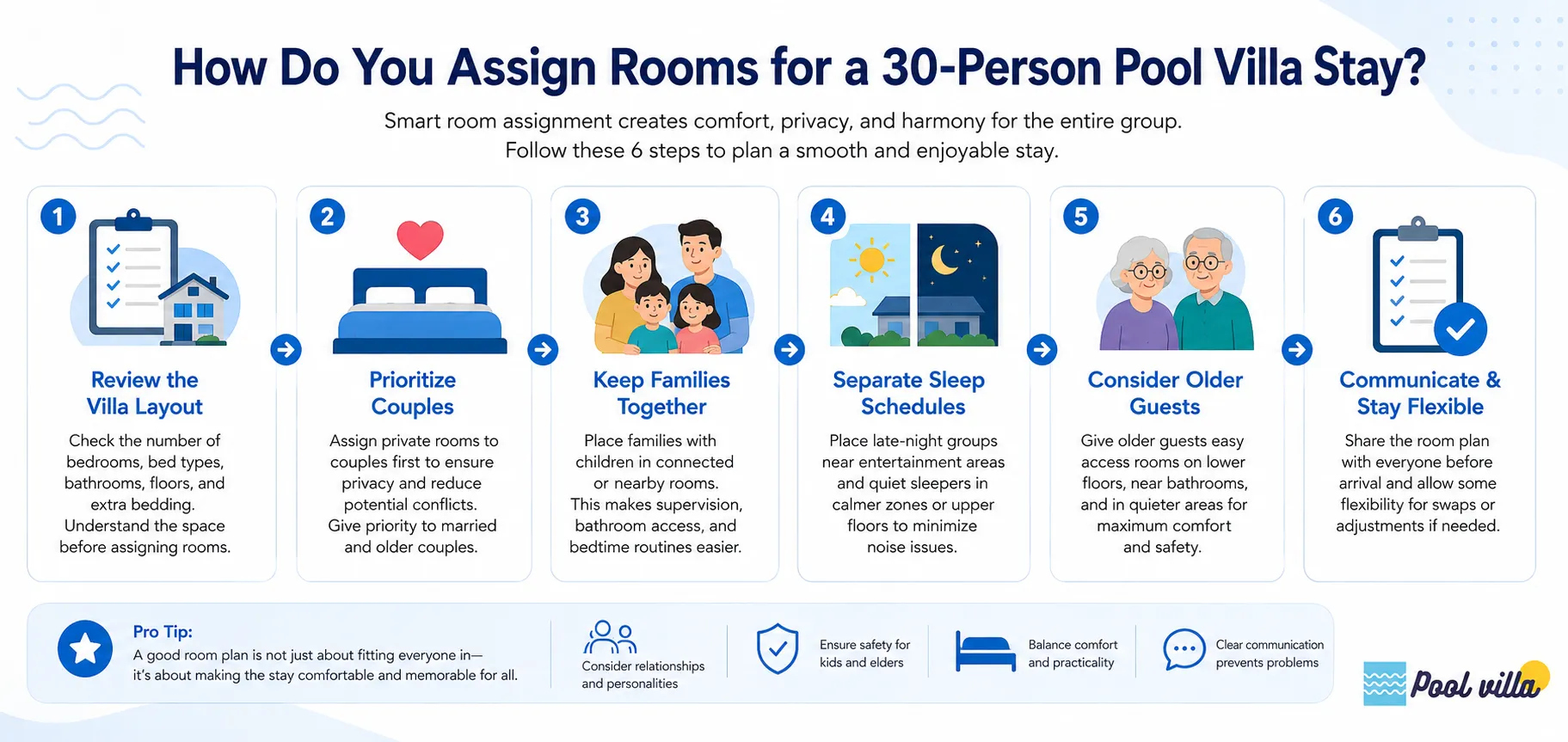
Start With the Villa Layout
Before assigning rooms, review the villa details carefully.
Check:
- Number of bedrooms
- Bed sizes
- Ensuite bathrooms
- Shared bathrooms
- Floor levels
- Extra bedding availability
- Quiet and noisy zones
Some villas advertise capacity for 30 people but only provide a limited number of proper beds. Others rely heavily on sofa beds or temporary mattresses.
Understanding the actual sleeping setup helps prevent unrealistic expectations.
Prioritize Couples First
Couples usually require the highest level of privacy. Assign private rooms to couples before organizing larger shared spaces.
This approach helps reduce future room conflicts because couples are generally less flexible about sleeping arrangements.
If the villa has limited private bedrooms:
- Give priority to married couples
- Consider older couples first
- Use larger shared suites for younger groups
Keep Families With Children Together
Families with young children should stay in nearby or connected rooms whenever possible.
This makes:
- Night supervision easier
- Bathroom access safer
- Sleep schedules more manageable
Parents usually prefer:
- Ground-floor rooms
- Quiet zones
- Rooms near bathrooms
- Larger spaces for extra bedding
Avoid placing young children in loud social areas near pools, karaoke rooms, or late-night gathering spaces.
Separate Late-Night Groups From Quiet Guests
One of the biggest mistakes in large villa stays is mixing different sleep habits together.
Younger guests or friend groups often stay awake later, while older guests and families may prefer quiet environments.
A better setup is:
- Quiet guests in isolated or upper-floor rooms
- Social groups near entertainment areas
- Children away from poolside party spaces
This reduces noise complaints and helps everyone enjoy the trip differently.
Consider Older Guests Carefully
Older guests should receive practical room placement, not leftover rooms.
Ideal features include:
- Ground-floor access
- Minimal stairs
- Nearby bathrooms
- Quiet surroundings
- Better mattress quality
If the villa has only one master bedroom with easy access, giving it to elderly family members may improve overall group comfort more than assigning it based on status.
Common Room Assignment Strategies
Strategy 1: Family-Based Grouping
This is one of the easiest methods for mixed-age groups.
Example:
- Couples in private rooms
- Parents and children together
- Friends grouped by relationship
- Elders separated from noisy areas
This works well for:
- Family reunions
- Multi-generation vacations
- Holiday gatherings
Strategy 2: Priority-Based Allocation
Some groups assign rooms based on specific priorities.
Examples:
- Elders receive the best access
- Families with babies get larger rooms
- Guests paying more receive premium rooms
This method works best when expectations are discussed openly before the trip.
Strategy 3: Equal Shared Arrangement
For younger friend groups, equal sharing is often simpler.
This may include:
- Shared bunk rooms
- Shared bathrooms
- Rotating room selection
- Splitting villa costs evenly
This approach reduces arguments about “best rooms” and keeps planning straightforward.
Common Mistakes When Assigning Rooms
Ignoring Bathroom Access
A villa may fit 30 guests, but bathroom access can become a serious issue.
Avoid:
- Placing too many people in one bathroom zone
- Overcrowding upstairs bathrooms
- Assigning children far from toilets
A practical ratio helps improve comfort significantly.
Overloading One Bedroom
Trying to maximize sleeping capacity often reduces actual comfort.
For example:
- Four adults in one small bedroom may feel cramped
- Extra mattresses can block walking space
- Air conditioning may become insufficient
Comfortable capacity is often lower than maximum advertised occupancy.
Assigning Rooms Too Late
Waiting until arrival usually creates:
- Awkward negotiations
- Unfair room grabs
- Delays during check-in
- Group tension
It is much better to finalize room arrangements before travel day.
Ignoring Personality Conflicts
Friends who enjoy partying late may not be ideal roommates for early sleepers.
Similarly:
- Families may want quieter areas
- Couples may value privacy
- Light sleepers may struggle near common spaces
Social compatibility matters almost as much as room size.
Practical Tips for Better Results
Create a Simple Room List Before Arrival
A shared message or spreadsheet can help everyone understand the plan early.
Include:
- Room names
- Bed types
- Assigned guests
- Bathroom access
- Extra bedding notes
Clear communication prevents confusion later.
Use Flexible Sleeping Areas Carefully
Some villas include:
- Sofa beds
- Loft areas
- Living-room mattresses
These spaces work better for:
- Teenagers
- Short stays
- Flexible friend groups
They are usually less suitable for:
- Older adults
- Families with babies
- Long multi-night stays
Leave Some Flexibility
Not every room plan works perfectly in reality.
Allow room for:
- Swapping roommates
- Adjusting noise issues
- Moving children closer to parents
- Handling temperature preferences
Small adjustments during the first night are common.
Think Beyond Bedroom Count
A 30-person villa should also have enough:
- Bathrooms
- Dining space
- Pool seating
- Parking
- Shared lounge areas
A villa with many beds but poor shared-space design may still feel overcrowded.
When Should You Be Extra Careful?
Pool Safety Around Children
Families with children should avoid rooms with direct unsupervised pool access.
Nighttime safety becomes especially important in large villas with open outdoor layouts.
Stairs and Multi-Level Villas
Large villas often include multiple floors.
Be cautious when assigning upstairs rooms to:
- Older guests
- Small children
- Guests with mobility limitations
Noise From Entertainment Areas
Rooms near:
- Karaoke rooms
- Outdoor BBQ spaces
- Pool decks
- Living rooms
can remain noisy late into the night.
These rooms are usually better suited for younger or more social guests.
FAQ
How many bedrooms are usually needed for 30 people in a pool villa?
Most groups need at least 7 to 10 bedrooms for reasonable comfort, depending on how many couples, children, and shared rooms are involved.
Should couples always get private rooms?
In most cases, yes. Private rooms help improve comfort and reduce awkwardness during longer stays.
Is it better to assign rooms before arrival?
Yes. Pre-arranged room assignments reduce confusion, save time during check-in, and help avoid disagreements.
What is the biggest mistake in room planning?
Overcrowding bedrooms and ignoring bathroom access are two of the most common problems in large group stays.
How can you make room assignments feel fair?
Clear communication helps most. Some groups prioritize elders and families, while others use equal sharing or rotating room selection.
Conclusion
Learning how to assign rooms for 30 people pool villa stays is mostly about balancing comfort, privacy, and practicality. A well-organized sleeping plan can make a large group vacation feel smooth and enjoyable, while poor planning often creates avoidable stress.
The best approach is to understand the villa layout early, prioritize guest needs realistically, and organize rooms based on age groups, relationships, and sleeping habits. For large pool villa trips, thoughtful room planning matters just as much as choosing the villa itself.