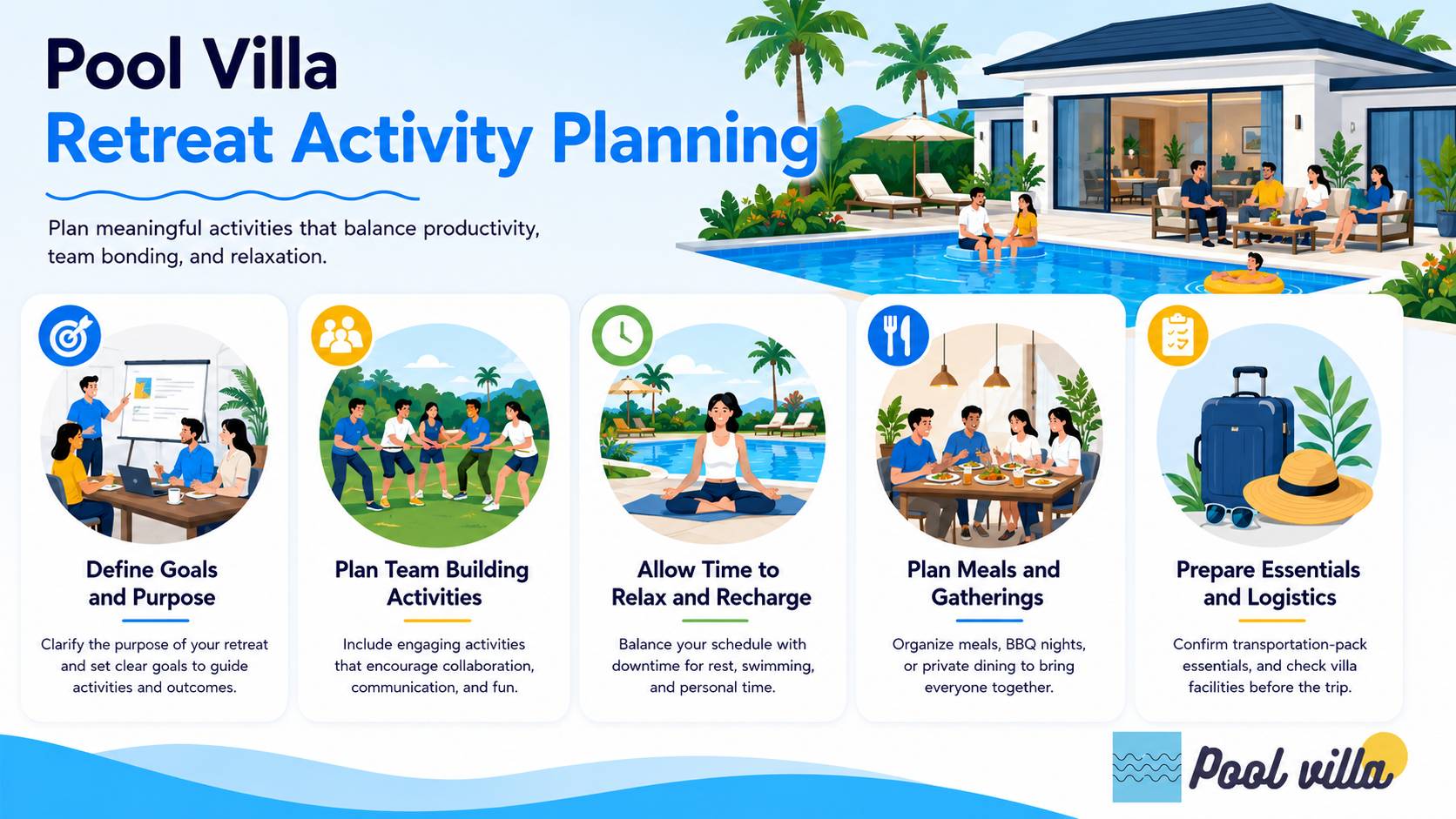
Pool villa retreat activities should support the purpose of the retreat, not distract from it. A private pool villa can be a useful setting for team discussions, bonding, planning sessions, reflection, informal meals, and relaxed downtime. However, the activities need to be chosen carefully so the retreat feels balanced, professional, and comfortable for everyone.
Retreat activity planning is different from planning a party or holiday schedule. The goal is not to fill every hour with entertainment. The goal is to create activities that help the team communicate better, build trust, recharge, and return with clearer direction. Some activities may be work-focused, while others may be social, creative, reflective, or relaxing.
This guide explains how to plan pool villa retreat activities for teams without turning the retreat into a sales package or a forced entertainment program. It covers suitable activity types, scheduling, quiet time, pool use, meals, workshops, team bonding, and common mistakes to avoid.
What Does Pool Villa Retreat Activity Planning Mean?
Pool villa retreat activity planning means choosing and organizing activities that fit the retreat purpose, villa setting, team size, schedule, and comfort level. It includes deciding what the team will do during work sessions, shared meals, breaks, poolside time, informal conversations, and evening activities.
Good retreat activity planning may include:
- strategy discussions
- planning workshops
- team reflection sessions
- problem-solving exercises
- light team games
- shared meals
- poolside breaks
- wellness or quiet time
- informal conversations
- creative brainstorming
- leadership discussions
- short outdoor activities
- evening wind-down sessions
The best pool villa retreat activities should feel useful and natural. They should support the team’s goals while still respecting the relaxed setting of the villa.
A retreat does not need to feel like a full office day in a different location. The villa environment can help the team step away from normal routines, but the activities should still have structure and purpose.
Why Retreat Activities Matter
Activities matter because they shape the tone of the retreat. A villa alone does not create a meaningful team experience. The value comes from how the team uses the space.
Without a plan, a retreat can become unfocused. People may spend too much time waiting, deciding what to do, or treating the stay like a casual holiday. On the other hand, if the schedule is too packed, the retreat may feel tiring and lose the benefit of being away from the office.
Good pool villa retreat activities help teams:
- clarify goals
- improve communication
- build stronger working relationships
- discuss ideas in a less formal setting
- create space for honest reflection
- balance work and rest
- encourage participation
- reduce stress
- make better use of the villa environment
The most effective retreat activity planning creates a rhythm: focused work, meaningful conversation, shared meals, breaks, and downtime.
How to Choose Suitable Pool Villa Retreat Activities
The best way to choose pool villa retreat activities is to start with the retreat objective. The activity should serve the purpose, not just fill time.
Ask:
- Is the retreat for strategy?
- Is it for team bonding?
- Is it for leadership alignment?
- Is it for project planning?
- Is it for celebration and appreciation?
- Is it for problem solving?
- Is it for rest and reconnection?
- Is it a mix of work and relaxation?
Once the purpose is clear, choose activities that support it.
For example, a strategy retreat may need structured planning sessions, breakout discussions, and reflection. A bonding retreat may need shared meals, light team games, and informal poolside conversations. A leadership retreat may need private discussion time, quiet thinking space, and decision-making sessions.
Retreat activity planning should also consider the team’s comfort level. Not every team enjoys loud games, physical challenges, or highly personal sharing activities. A good retreat respects different personalities and participation styles.
Work-Focused Retreat Activities
Work-focused activities are useful when the retreat has a clear business purpose. These activities should be structured enough to produce useful outcomes but not so heavy that the retreat feels like a long meeting.
Strategy Discussion
A strategy discussion works well when leaders or teams need time away from daily distractions. The villa setting can make the conversation feel more open and less rushed.
Useful topics may include:
- team priorities
- upcoming goals
- project direction
- customer experience
- operational improvements
- market challenges
- internal workflow
- team responsibilities
Keep the session focused. A long strategy discussion without clear structure can become tiring. It is better to use shorter blocks with breaks.
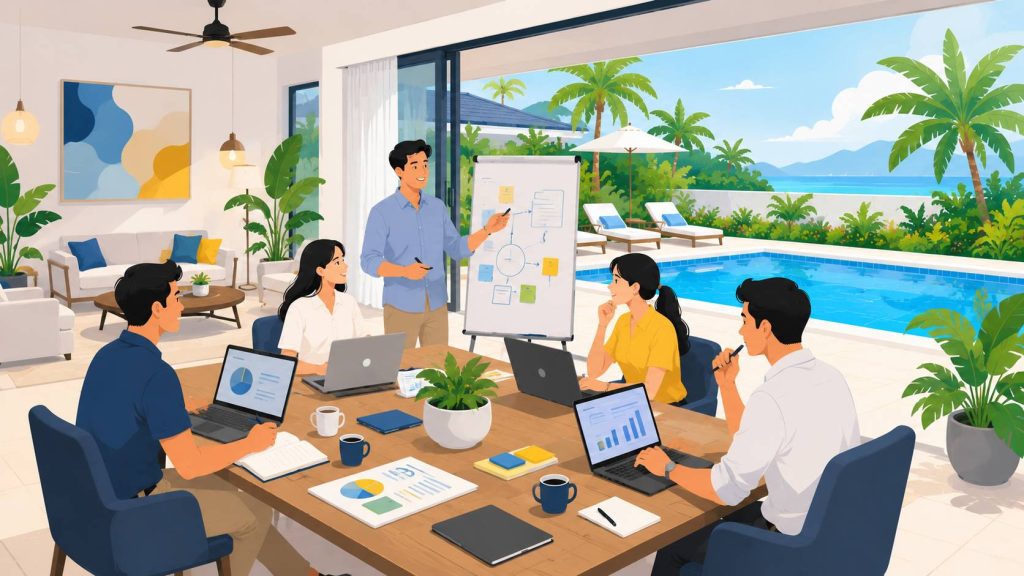
Planning Workshop
A planning workshop helps turn ideas into actions. This can be useful for quarterly planning, campaign planning, product planning, or operational planning.
A simple workshop can include:
- review current situation
- identify key challenges
- discuss options
- choose priorities
- assign responsibilities
- define next steps
The villa should have a suitable table, seating, Wi-Fi, and enough quiet space for this type of activity.
Problem-Solving Session
A pool villa retreat can be a good setting for solving complex team problems because people are away from usual interruptions.
The session should focus on one or two important problems, not every issue at once. Teams can discuss what is not working, why it matters, and what practical changes can be made.
Problem-solving works best when the discussion is constructive, not blaming.
Team Bonding Activities
Team bonding activities should help people connect naturally. They do not need to be loud or complicated. In a pool villa setting, simple activities often work better than forced games.
Shared Meal Conversations
Shared meals are one of the easiest and most effective retreat activities. Breakfast, lunch, dinner, or BBQ can create relaxed conversation without requiring a formal exercise.
To make shared meals work well:
- plan meal times clearly
- consider dietary needs
- avoid rushing
- use seating that allows conversation
- keep the meal informal but organized
- avoid turning every meal into a meeting
A shared meal can help team members talk in a different way than they would in the office.
Light Team Games
Light games can help the team relax, especially after work sessions. The best games are simple, inclusive, and optional.
Examples include:
- board games
- card games
- quiz-style games
- low-pressure team challenges
- conversation games
- problem-solving games
Avoid games that embarrass people, require too much physical effort, or make participation uncomfortable.
Poolside Social Time
Poolside time can be part of the retreat, but it should be handled thoughtfully. Not everyone may want to swim, so the pool area should support both swimmers and people who prefer to sit, talk, or relax.
Poolside activity can include:
- informal conversation
- casual snacks
- short breaks between sessions
- relaxed evening discussion
- quiet reflection near the pool
Pool time should not replace the retreat objective. It should support relaxation and connection.

Reflection and Discussion Activities
Reflection activities help teams process what they have learned, what needs to improve, and what actions should follow after the retreat.
Team Reflection Session
A reflection session can happen near the end of the retreat. It helps the team discuss what went well, what was learned, and what should change.
Useful questions include:
- What did we learn during this retreat?
- What should we continue doing?
- What should we improve?
- What needs clearer ownership?
- What is one practical action after the retreat?
- What support does the team need?
This activity should feel safe and professional. The goal is useful reflection, not personal criticism.
Individual Quiet Reflection
Not every retreat activity needs to be group-based. Individual reflection can be valuable, especially after intense discussions.
Give team members time to think, write notes, review ideas, or prepare thoughts before sharing. A pool villa setting can support this with quiet corners, outdoor seating, or private rooms.
Small Group Breakouts
Small group discussions can make participation easier. Some people speak more openly in smaller groups than in full-team sessions.
Breakouts work well for:
- idea generation
- solving specific problems
- reviewing team processes
- planning next steps
- discussing customer or project challenges
After the breakout, each group can share key points with the full team.
Creative and Brainstorming Activities
A pool villa can support creative thinking because it takes people out of a normal office environment. However, brainstorming should still have structure.
Idea Generation Session
This activity works well when the team needs new ideas for projects, services, campaigns, guest experience, operations, or internal improvements.
A simple structure:
- define the topic
- give silent thinking time
- collect ideas
- group similar ideas
- discuss practical options
- choose priorities
- assign next steps
Silent thinking before group discussion can help avoid dominant voices controlling the session.
Scenario Planning
Scenario planning helps teams think through possible future situations. It can be useful for leadership teams, operations teams, marketing teams, or service teams.
The team can discuss:
- What if demand increases?
- What if customer expectations change?
- What if costs rise?
- What if a process fails?
- What if the team grows quickly?
This type of activity helps teams prepare without turning the retreat into a crisis meeting.
Relaxation and Wellness Activities
A retreat should include time for rest. If the schedule is too intense, the team may leave tired instead of refreshed.
Quiet Morning Time
If the retreat includes an overnight stay, quiet morning time can help people start the day calmly. This may include coffee, breakfast, stretching, reading, or informal conversation.
It does not need to be formal. The key is to avoid rushing the team directly into a heavy session.
Pool Breaks
Pool breaks can help reset energy between work sessions. Keep them optional and time-limited so the schedule remains balanced.
A pool break may work best after lunch or between workshop blocks.
Walk or Outdoor Break
If the villa location allows, a short walk or outdoor break can help people refresh. This is especially useful after long sitting sessions.
Make sure the activity is suitable for the group’s fitness level, weather, and schedule.
Evening Retreat Activities
Evening activities should help the team relax without creating noise issues or making the next day difficult.
Casual Dinner
A casual dinner is often enough for the evening. It gives the team time to talk without formal pressure.
For a pool villa retreat, dinner can be:
- catered meal
- BBQ
- simple shared meal
- food delivery
- restaurant outing
The best option depends on budget, location, schedule, and team preference.
Low-Key Games or Movie Time
For teams that enjoy informal activities, low-key games or a movie can work well. Keep it optional so people who need rest can step away.
Reflection Circle
A short reflection circle can be useful at the end of the evening, especially if the day included workshops or important discussions. Keep it brief and focused.
Questions can include:
- What was the most useful part of today?
- What should we remember tomorrow?
- What is one thing we appreciated?
Avoid making it too personal or too long.
Activities to Be Careful With
Not every activity is suitable for a team retreat. Some activities may create discomfort, noise issues, or distraction from the retreat purpose.
Be careful with:
- forced personal sharing
- overly competitive games
- alcohol-centered activities
- late-night karaoke
- intense physical challenges
- activities that exclude some team members
- activities that require expensive equipment
- activities that conflict with house rules
- activities that make people feel observed or judged
A good retreat activity should include people, not pressure them.
If participation is optional, say so clearly. Teams work better when people feel respected.

Planning Activities Around the Villa Layout
The villa layout affects what activities are realistic. Before choosing activities, check how the spaces work.
Meeting Area
For workshops or planning sessions, check whether the villa has a suitable table, chairs, lighting, air conditioning, and Wi-Fi.
Dining Area
For shared meals, check whether the dining table can seat the team comfortably.
Outdoor Space
For breaks, BBQ, and informal conversations, check seating, shade, lighting, and privacy.
Pool Area
For poolside breaks or social time, check safety, seating, towels, lighting, and pool use rules.
Quiet Areas
For rest or reflection, check whether there are separate spaces away from the main group activity.
Pool villa retreat activities should match the villa’s real layout, not only the idea of what the group wants to do.
Timing and Schedule Planning
Timing is one of the most important parts of retreat activity planning. A good schedule balances focus and rest.
Avoid Overloading the Agenda
A retreat should not feel like a full workday plus evening activities. Too many sessions can reduce energy and participation.
Instead, use focused blocks:
- 60 to 90 minutes for workshops
- breaks between sessions
- shared meals
- optional downtime
- light evening activity
Match Energy Levels
Plan more focused activities earlier in the day when energy is higher. Use afternoon or evening for lighter activities, informal discussions, or relaxation.
Leave Buffer Time
Large groups move slowly. Meals, check-in, room allocation, transport, and breaks can take longer than expected.
Add buffer time so the schedule does not feel rushed.
Quiet Hours and House Rules
Pool villa retreat activities must fit the property rules. Teams should confirm house rules before planning evening activities.
Check:
- quiet hours
- pool use hours
- outdoor music rules
- BBQ rules
- visitor policy
- parking rules
- smoking rules
- cleaning expectations
- staff access
- checkout time
A retreat should feel professional and respectful. Breaking rules can affect the deposit, create complaints, and damage the experience.
If the villa has strict quiet hours, plan louder discussions, games, or poolside social time earlier in the evening.
Food and Meal-Based Activities
Meals can be part of the retreat activity plan. They create natural opportunities for conversation and connection.
Breakfast
Breakfast can be casual and relaxed. It is a good time for informal conversation before structured sessions.
Lunch
Lunch should not be too heavy if the afternoon includes workshops. A simple meal can help the team stay focused.
Dinner
Dinner can be the main bonding moment. It may be catered, cooked, delivered, or arranged outside the villa.
Snacks and Drinks
Keep snacks, water, coffee, and light refreshments available during sessions. This helps maintain energy without interrupting the schedule.
Food planning should support the retreat, not become the main source of stress.
Roles and Responsibilities
For a smooth retreat, assign simple roles before arrival.
Possible roles include:
- retreat organizer
- session facilitator
- food coordinator
- transport coordinator
- villa contact person
- equipment checker
- timekeeper
- cleanup coordinator
The goal is not to make the retreat formal. It is to avoid one person carrying every responsibility.
For smaller teams, one or two people may handle most tasks. For larger teams, shared roles can make the retreat easier.
What to Prepare Before Arrival
Before arrival, prepare:
- retreat objective
- simple agenda
- participant list
- activity plan
- meal plan
- transport details
- villa rules
- room allocation
- workshop materials
- laptop chargers
- presentation equipment
- Wi-Fi requirements
- backup internet option
- snacks and drinks
- contact details for villa host
If the retreat includes work sessions, test or confirm technology needs before the session starts.
Common Mistakes to Avoid
Mistake 1: Planning Too Many Activities
Too many activities can make the retreat feel tiring.
Better approach: Choose a few meaningful activities and leave space for rest.
Mistake 2: Choosing Activities Without a Purpose
Activities should support the retreat objective.
Better approach: Start with the retreat goal, then choose activities that fit.
Mistake 3: Making Activities Too Forced
Some team members may not enjoy personal sharing, loud games, or physical challenges.
Better approach: Keep activities inclusive, respectful, and optional when appropriate.
Mistake 4: Ignoring Villa Rules
Karaoke, music, BBQ, pool use, and visitors may be restricted.
Better approach: Confirm house rules before finalizing the activity plan.
Mistake 5: Forgetting Quiet Time
Teams need time to rest and process ideas.
Better approach: Include breaks, informal time, and quiet moments.
Mistake 6: Treating the Retreat Like a Normal Meeting
A retreat should use the villa setting to create better conversation and connection.
Better approach: Balance structured sessions with relaxed discussion and downtime.
Practical Tips for Better Pool Villa Retreat Activities
Use pool villa retreat activities to support the retreat goal, not to fill every hour.
Keep the agenda simple. A few useful sessions are better than a crowded schedule.
Plan active discussions earlier in the day. Save lighter activities for later.
Use the pool and outdoor areas for breaks, informal talks, and relaxation.
Make participation comfortable. Avoid activities that embarrass or pressure team members.
Plan meals as part of the retreat experience. Shared meals can support bonding naturally.
Respect quiet hours. Keep evening activities suitable for the villa rules.
Prepare materials in advance. Do not wait until the retreat begins to organize documents, screens, Wi-Fi, or supplies.
Leave time for reflection. Teams often need space to process ideas before making decisions.
When Should Teams Be Extra Careful?
Teams should be extra careful when the retreat includes senior leaders, confidential discussions, mixed teams, new employees, external facilitators, or important planning sessions.
Extra care is also needed when:
- Wi-Fi is required for activities
- presentations are planned
- the retreat includes overnight stays
- alcohol may be present
- the villa has strict quiet hours
- the schedule includes outdoor activities
- the group includes different comfort levels
- the retreat has a serious business purpose
- team members do not know each other well
These situations can still work well, but activities should be chosen with more care and sensitivity.
Cost, Time, or Difficulty
Pool villa retreat activities do not need to be expensive or complicated. Many effective activities are simple: structured discussions, shared meals, reflection sessions, poolside breaks, and light games.
Costs may include:
- catering
- snacks and drinks
- facilitator fee
- workshop materials
- transport
- activity supplies
- BBQ setup
- equipment rental
- early check-in or late checkout
The main investment is planning time. The organizer should define the objective, choose suitable activities, confirm villa rules, plan meals, and prepare materials before arrival.
The best activities are not necessarily the most expensive. They are the ones that help the team connect, think clearly, and use the villa setting well.
Conclusion
Pool villa retreat activities should create a useful balance between work, connection, and rest. A private villa can support strategy sessions, planning workshops, team bonding, shared meals, reflection, and relaxed downtime when activities are planned with purpose.
Before choosing activities, teams should define the retreat objective, understand the villa layout, confirm rules, and consider the comfort level of all participants. Activities should feel inclusive, practical, and suitable for the team culture.
Good retreat activity planning does not turn the stay into a packed event schedule. It creates the right structure for teams to talk, think, relax, and return with clearer direction.
FAQs
What are good pool villa retreat activities for teams?
Good pool villa retreat activities include strategy discussions, planning workshops, team reflection sessions, light games, shared meals, poolside breaks, small group discussions, brainstorming, and quiet relaxation time.
How do you plan retreat activities without making the schedule too busy?
Start with the retreat objective, choose only a few meaningful activities, and leave enough time for meals, breaks, informal conversations, and rest. A retreat should feel structured but not overloaded.
Are pool activities suitable for team retreats?
Pool activities can be suitable as optional break time or informal bonding, but they should not dominate the retreat. Not everyone may want to swim, so pool time should be flexible and respectful.
Should team retreat activities be mandatory?
Work-related sessions may be expected, but social or personal activities should be handled carefully. Optional participation is often better for games, pool time, and informal evening activities.
What activities should teams avoid during a retreat?
Teams should avoid activities that embarrass people, force personal sharing, create excessive competition, focus too much on alcohol, break villa rules, or exclude some participants.
How can a pool villa retreat be both productive and relaxing?
A pool villa retreat can be productive and relaxing by using focused work sessions, planned breaks, shared meals, optional bonding activities, quiet time, and a realistic schedule that fits the villa setting.