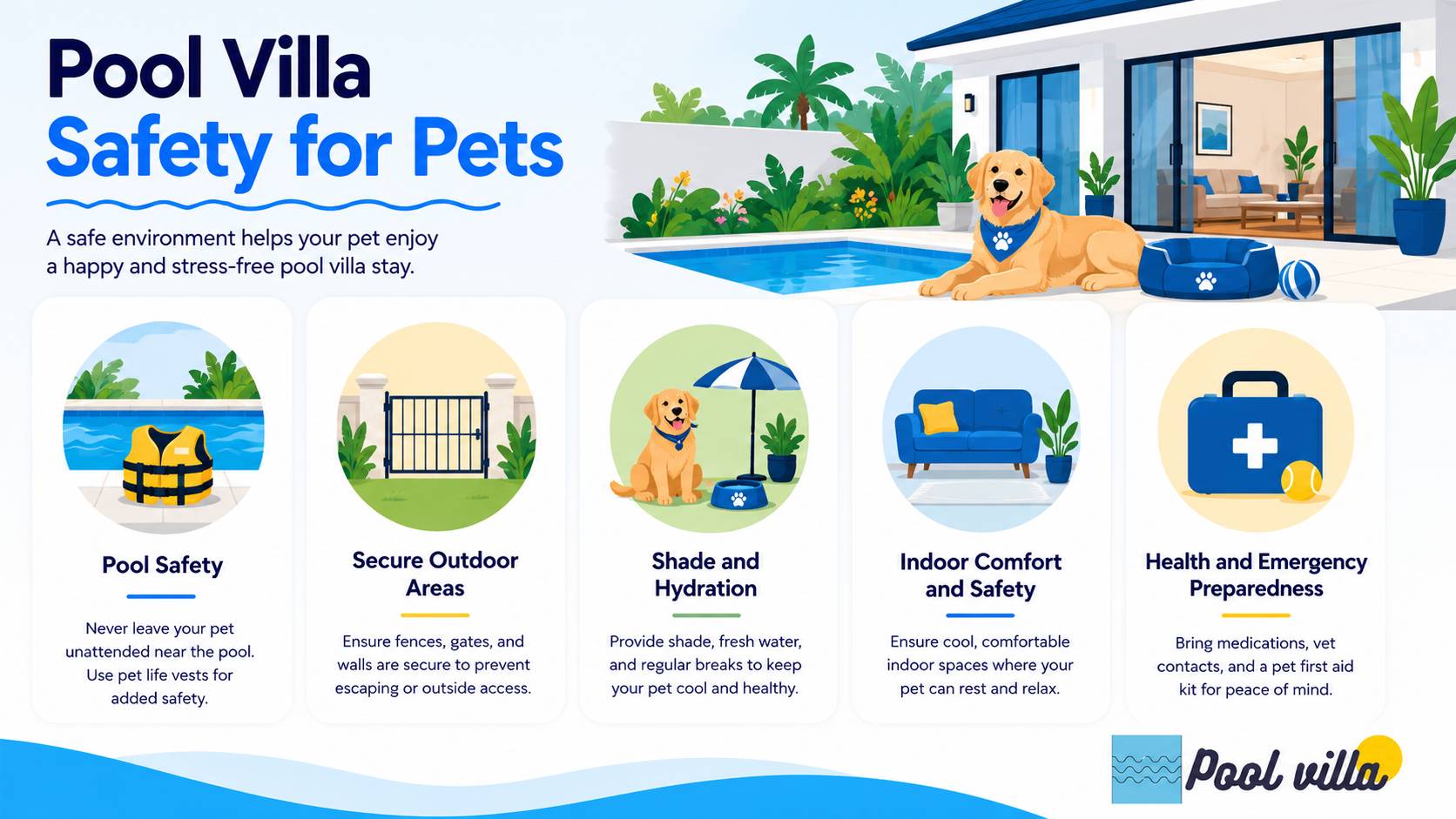
Pool villa pet safety should be considered before booking and again after arrival. A private pool villa can be a comfortable place to stay with pets, especially when it has outdoor space, privacy, and more flexibility than a hotel room. However, pets may face safety risks around pools, stairs, balconies, gardens, gates, driveways, and cleaning chemicals.
A safe pool villa for pets is not only a villa that allows pets. It is a villa where the layout, rules, outdoor space, and supervision make it easier to keep pets comfortable and protected. Even a pet-friendly villa may still have slippery poolside tiles, open gates, unsafe plants, balcony gaps, or cleaning supplies within reach.
This guide explains key pool villa pet safety considerations so pet owners can check the property carefully, reduce risks, and enjoy a more responsible stay with their pets.
What Does Pool Villa Pet Safety Mean?
Pool villa pet safety means checking how a villa’s design, facilities, and rules affect pets during the stay. It includes both indoor and outdoor safety, especially around areas pets may explore quickly in a new environment.
Pet safety in a pool villa may include:
- pool access
- slippery floors
- stairs
- balconies
- garden boundaries
- gates and fences
- road or driveway access
- cleaning chemicals
- plants and outdoor hazards
- furniture rules
- heat and shade
- pet supervision
A villa can be beautiful and pet-friendly but still require careful attention. Pets may not understand pool edges, glass doors, unfamiliar stairs, open gardens, or restricted areas. Pet owners should inspect the villa before letting pets move freely.
Why Pet Safety Matters in Pool Villas
Pets often behave differently in a new place. They may explore quickly, become excited, follow unfamiliar smells, react to sounds, or try to escape through gates or gaps. A villa with a pool, garden, terrace, and multiple doors gives pets more space, but also more areas to monitor.
Pool villa pet safety matters because common villa features can create risks, such as:
- pets slipping near the pool
- pets falling into water
- pets struggling to climb out of the pool
- pets escaping through gates
- pets climbing stairs or balconies
- pets chewing unsafe plants
- pets accessing cleaning chemicals
- pets overheating outdoors
- pets running toward cars or roads
The goal is not to make the stay stressful. The goal is to check the villa early, set boundaries, and supervise pets in the areas where risks are most likely.
Quick Pool Villa Pet Safety Checklist
Pool villa pet safety is an important part of planning a comfortable stay with pets. A villa may be pet-friendly, but that does not automatically mean every area is safe for dogs, cats, or other animals. Before allowing pets to explore freely, owners should check the pool, stairs, balconies, garden, gates, and indoor areas carefully.
A safe pool villa for pets should have secure outdoor boundaries, controlled pool access, shaded resting areas, and no obvious hazards within reach. The pool area is usually the first place to inspect. Wet tiles can become slippery, and some pets may fall into the water or struggle to climb out. Even pets that can swim should be supervised around the pool. Owners should also confirm whether the villa allows pets near or inside the pool, because some properties have strict rules about pool use and cleaning.
Pet safety also includes checking stairs and balconies. Small dogs, senior pets, and nervous animals may have difficulty with steep steps, open railings, or slippery outdoor stairs. Balconies should be reviewed for gaps, low railings, or furniture that pets could climb on. If the villa has multiple floors, owners should limit access until they are sure the layout is safe.
Outdoor areas should also be inspected. Gardens can be useful for pets, but they may contain gaps in fences, open gates, sharp plants, loose stones, pest traps, fertilizers, or insects. A safe pool villa for pets should have secure gates and enough shade so pets can rest comfortably away from strong sun. Pet owners should keep fresh water available and avoid leaving pets outside for long periods.
Indoor safety is just as important. Cleaning chemicals, trash bins, electrical cords, glass items, and low cabinets should be checked after arrival. Pets may explore unfamiliar spaces quickly, so owners should move unsafe items out of reach where possible and set up a calm resting area with a familiar bed or blanket.
The best approach to pool villa pet safety is to do a short walk-through as soon as you arrive. Check pool access, gates, stairs, balconies, garden hazards, and cleaning products before letting pets roam. With careful supervision and respect for the villa’s pet policy, guests can create a safer, more relaxing stay for both pets and people.
Pool Safety for Pets
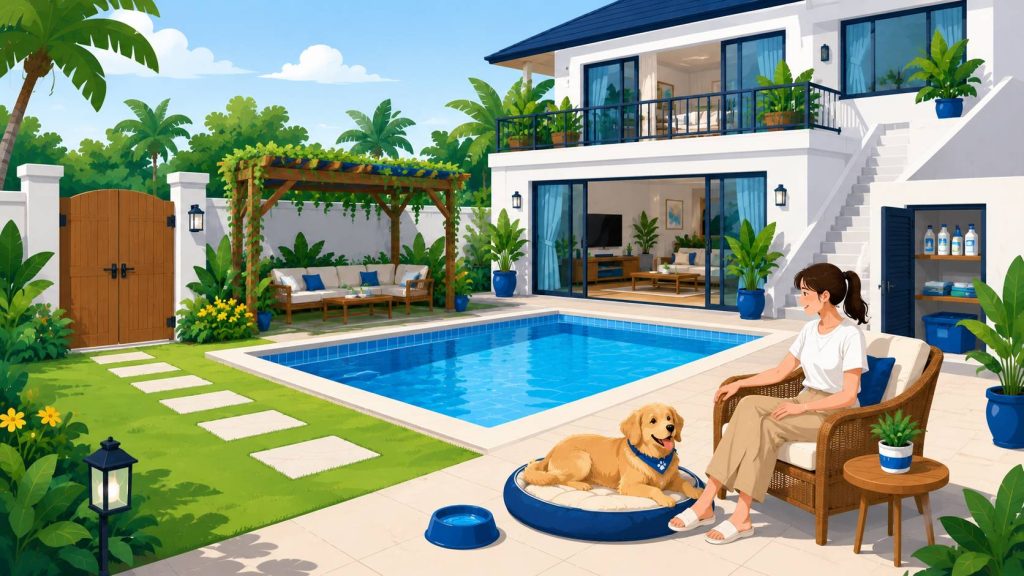
The pool is the most important area to check. Some pets are strong swimmers, but others may panic, slip, or struggle to exit the water. Even pets that can swim should not be left unsupervised near a pool.
Before allowing pets near the pool, check:
- whether pets are allowed near the pool
- whether pets are allowed in the pool
- whether the pool edge is slippery
- whether there is a shallow entry point
- whether pets can climb out easily
- whether pool steps are visible
- whether the pool area has safe walking space
- whether pool chemicals were recently added
- whether the pool cover, if present, is safe
- whether towels are available for drying pets
A safe pool villa for pets should make it easy to control pool access. If the pool is directly connected to the living room or bedroom, keep doors closed when pets are not supervised.
Slippery Floors and Wet Areas
Pool villas often have tile floors, outdoor terraces, wet walkways, and bathroom areas. These surfaces may become slippery after swimming, rain, or cleaning.
Check:
- poolside tiles
- outdoor terrace flooring
- bathroom floors
- walkways between pool and rooms
- kitchen floors near sinks
- entrance areas after rain
- stairs near outdoor areas
Pets may run or turn quickly, which increases the risk of slipping. Older pets, small dogs, and pets with joint problems may be more vulnerable.
To reduce slipping risks, keep pets from running near the pool, dry wet areas when possible, and use a pet towel after outdoor play or swimming.
Gates, Fences, and Escape Risks
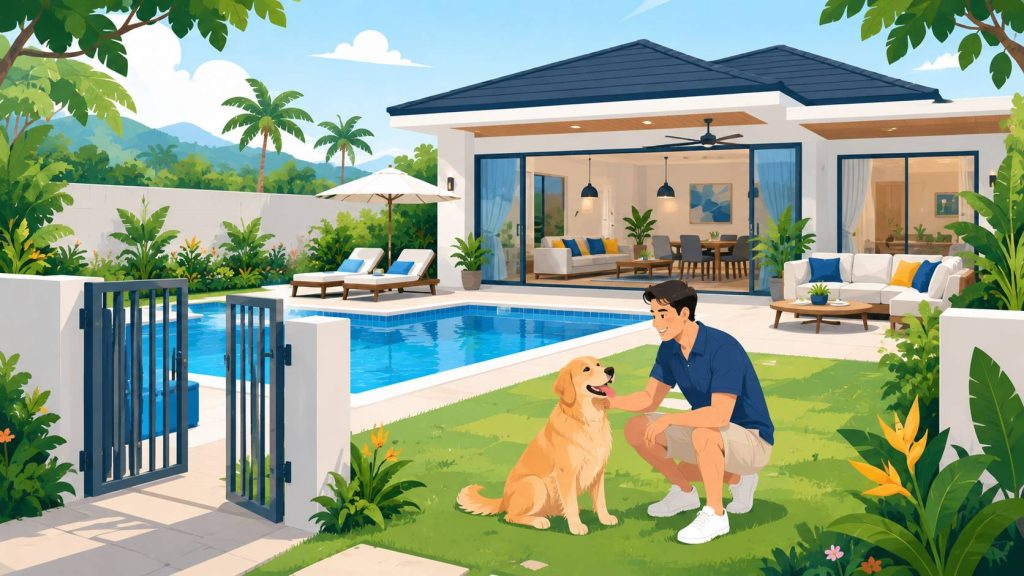
Outdoor space is useful for pets, but only if it is secure. A garden may look enclosed while still having gaps under gates, low walls, or openings behind plants.
After arrival, inspect:
- main gate
- side gates
- garden fences
- gaps under fences
- gaps behind hedges or plants
- driveway access
- poolside exits
- doors leading outside
- balcony doors
- service entrances
Pets may escape quickly when guests arrive, cars enter, or doors are left open. If the villa is near a road, parking area, or unfamiliar neighborhood, gate security becomes especially important.
Keep pets leashed until you have checked all outdoor boundaries.
Stairs and Balconies
Many pool villas have stairs, split levels, balconies, rooftop areas, or raised terraces. These features may be risky for pets, especially small dogs, older pets, puppies, or pets unfamiliar with stairs.
Check stairs for:
- steep steps
- open gaps
- slippery surfaces
- poor lighting
- outdoor steps after rain
- sharp edges
- lack of handrail or barrier
Check balconies for:
- railing gaps
- low railings
- furniture pets could climb
- slippery flooring
- access from bedrooms
- open terrace edges
If a pet is curious, active, or nervous, limit access to balconies and stairs until the area is checked. Do not assume a pet will avoid edges or height changes on its own.
Garden and Outdoor Hazards
Gardens can make a villa more pet-friendly, but they should still be checked carefully. Pets may chew plants, dig, chase insects, or explore hidden corners.
Look for:
- toxic or irritating plants
- sharp branches
- garden tools
- loose stones
- ponds or water features
- open drains
- pest traps
- insect nests
- fertilizer or pesticides
- uneven ground
- low lighting at night
If you are unsure whether a plant is safe, keep pets away from it. Also check whether garden chemicals or pest control products have been used recently.
A safe pool villa for pets should have outdoor space that is easy to supervise, shaded, and secure.
Cleaning Chemicals and Indoor Hazards
Cleaning chemicals can be dangerous for pets if they are stored within reach. Villas may keep cleaning sprays, detergents, pool chemicals, pest control products, or bathroom supplies in low cabinets.
On arrival, check:
- under-sink cabinets
- laundry areas
- bathroom storage
- kitchen cleaning supplies
- pool maintenance items
- pest control products
- trash bins
- air fresheners or fragrance oils
- glassware or breakable items
- exposed cords
Move unsafe items out of reach where possible, while respecting the property. If chemicals cannot be moved, keep pets away from that area.
Pets may also chew cables, furniture edges, or unfamiliar items, so supervise them indoors until they settle.
Heat, Shade, and Water
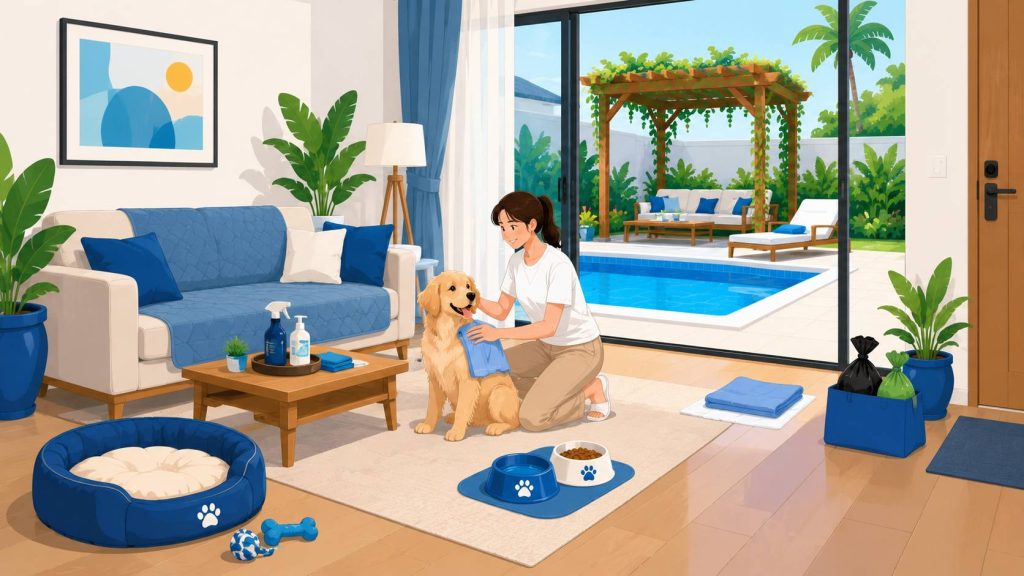
Pool villas in warm destinations can become hot during the day. Pets need shade, airflow, and drinking water, especially after outdoor play.
Check:
- shaded outdoor areas
- cool indoor resting space
- access to clean drinking water
- air conditioning or fans
- hot terrace surfaces
- sunny pool decks
- safe resting area away from direct heat
Do not leave pets outside for long periods in strong sun. Poolside tiles, stone paths, and artificial surfaces may become hot for paws.
Bring a water bowl and keep fresh water available in both indoor and outdoor areas.
Doors, Glass Panels, and Indoor Movement
Many pool villas use large sliding glass doors. Pets may not notice glass panels, especially when excited or unfamiliar with the layout.
Check:
- sliding glass doors
- screen doors
- heavy doors that may close suddenly
- bedroom doors leading outside
- bathroom doors
- doors near stairs
- doors near pool access
Keep doors controlled, especially during arrival, food delivery, housekeeping, and checkout. These are moments when pets may escape or enter unsafe areas.
If glass doors are very clear, guide pets slowly until they understand the layout.
Pet Supervision During the Stay
Good pool villa pet safety depends on supervision. Even if the villa seems safe, pets should not be left to explore every area freely without checks.
Supervise pets especially when:
- near the pool
- near open gates
- on balconies
- around stairs
- during meal preparation
- when cars enter or leave
- during housekeeping or maintenance
- when children are playing with pets
- after dark
- during rain or wet conditions
If the villa allows pets to be left alone, make sure the pet is in a safe area, away from the pool, balcony, chemicals, and open exits. Pets with separation anxiety should not be left alone in an unfamiliar villa.
Arrival Safety Walk-Through
Before your pet explores the villa, do a quick safety walk-through.
Check:
- pool access
- slippery surfaces
- gates and fence gaps
- stairs and balconies
- garden hazards
- cleaning chemicals
- trash bins
- glass doors
- road or driveway access
- outdoor lighting
- shaded resting areas
- water bowl location
This walk-through may take only a few minutes, but it can prevent many common pet safety problems.
Common Mistakes to Avoid
Mistake 1: Assuming Pet-Friendly Means Pet-Safe
A pet-friendly villa may allow pets, but it may still have pool, garden, stair, or gate risks.
Better approach: Check the villa layout and safety areas on arrival.
Mistake 2: Letting Pets Roam Before Checking Gates
Pets may find gaps or open exits quickly.
Better approach: Keep pets leashed until all gates, fences, and outdoor boundaries are checked.
Mistake 3: Leaving Pets Unsupervised Near the Pool
Even pets that can swim may slip, panic, or struggle to exit the pool.
Better approach: Supervise pets around water and control pool access.
Mistake 4: Ignoring Cleaning Chemicals
Cleaning supplies may be stored in low cabinets or service areas.
Better approach: Check storage areas and keep pets away from chemicals.
Mistake 5: Forgetting Heat and Paw Safety
Outdoor surfaces can become hot and uncomfortable.
Better approach: Provide shade, fresh water, and cool indoor rest.
Mistake 6: Allowing Balcony Access Too Soon
Balconies may have gaps or climbable furniture.
Better approach: Check balconies before allowing pets outside.
Practical Tips for Better Pool Villa Pet Safety
Use a pool villa pet safety checklist as soon as you arrive. The first inspection is the most important step.
Keep pets leashed at check-in. New surroundings can make pets excited or nervous.
Control pool access. Close doors when pets are not supervised near the pool.
Bring pet supplies. Pack a leash, pet bed, towel, waste bags, food, water bowl, medication, and cleaning wipes.
Set a safe rest zone. Give your pet a familiar bed or blanket in a calm indoor area.
Check outdoor space at night. Lighting can change how safe stairs, garden paths, and pool edges feel.
Respect villa rules. If pets are not allowed in the pool or on furniture, follow the policy.
Clean up quickly. Waste, wet paws, and pet hair should be managed during the stay.
When Should Pet Owners Be Extra Careful?
Pet owners should be extra careful with puppies, senior pets, small dogs, nervous pets, active pets, and pets that are not familiar with pools or stairs.
Extra care is also needed when the villa has:
- open pool access
- slippery tiles
- steep stairs
- balconies
- low garden walls
- gaps in fences
- nearby roads
- shared driveways
- outdoor cleaning supplies
- garden chemicals
- many glass doors
- limited shade
These features do not always make a villa unsuitable, but they require closer supervision.
Cost, Time, or Difficulty
Pool villa pet safety usually does not require high cost, but it does require attention. Pet owners may need to bring extra supplies, spend time checking the villa, and supervise pets more closely in unfamiliar areas.
Possible extra costs include pet deposits, cleaning fees, pet towels, travel crates, pet gates, medication, or vet visits if something goes wrong.
The easiest approach is to choose a villa with secure outdoor space, controlled pool access, shaded areas, and clear pet rules. A slightly more suitable villa may be better value than a cheaper villa that is difficult to manage safely with pets.
Conclusion
Pool villa pet safety is about understanding how pets move through the property and where risks may appear. Pools, slippery tiles, stairs, balconies, gardens, gates, driveways, and cleaning chemicals should all be checked before pets explore freely.
A safe pool villa for pets should provide clear rules, secure outdoor areas, manageable pool access, shaded resting space, and a layout that allows easy supervision. Pet owners should bring proper supplies, inspect the villa on arrival, and respect the property’s pet policy.
With careful preparation, a pool villa stay can be more comfortable, responsible, and enjoyable for both pets and guests.
FAQs
What should pet owners check first for pool villa pet safety?
Pet owners should first check pool access, gates, fence gaps, stairs, balconies, slippery floors, cleaning chemicals, outdoor hazards, and road access. These areas are the most important safety points when arriving with pets.
Is a pool villa safe for pets?
A pool villa can be safe for pets when the layout is suitable and pets are supervised carefully. Owners should check pool edges, gates, gardens, stairs, balconies, and chemicals before allowing pets to move freely.
Can pets swim in a pool villa pool?
This depends on the villa’s pet policy. Some villas do not allow pets in the pool. Even if swimming is allowed, pets should be supervised and able to enter and exit safely.
How can pets be kept safe around pool areas?
Pets can be kept safe around pool areas by controlling access, closing doors, supervising closely, checking slippery tiles, identifying pool steps, and drying pets after swimming or outdoor play.
What garden hazards should pet owners check?
Pet owners should check for toxic plants, pest traps, garden tools, fertilizers, pesticides, ponds, open drains, loose stones, insects, and gaps in fences or gates.
Why are cleaning chemicals a concern for pets?
Cleaning chemicals can be dangerous if pets lick, chew, or walk through them. Pet owners should check low cabinets, laundry areas, bathrooms, kitchens, and pool maintenance areas for unsafe products.