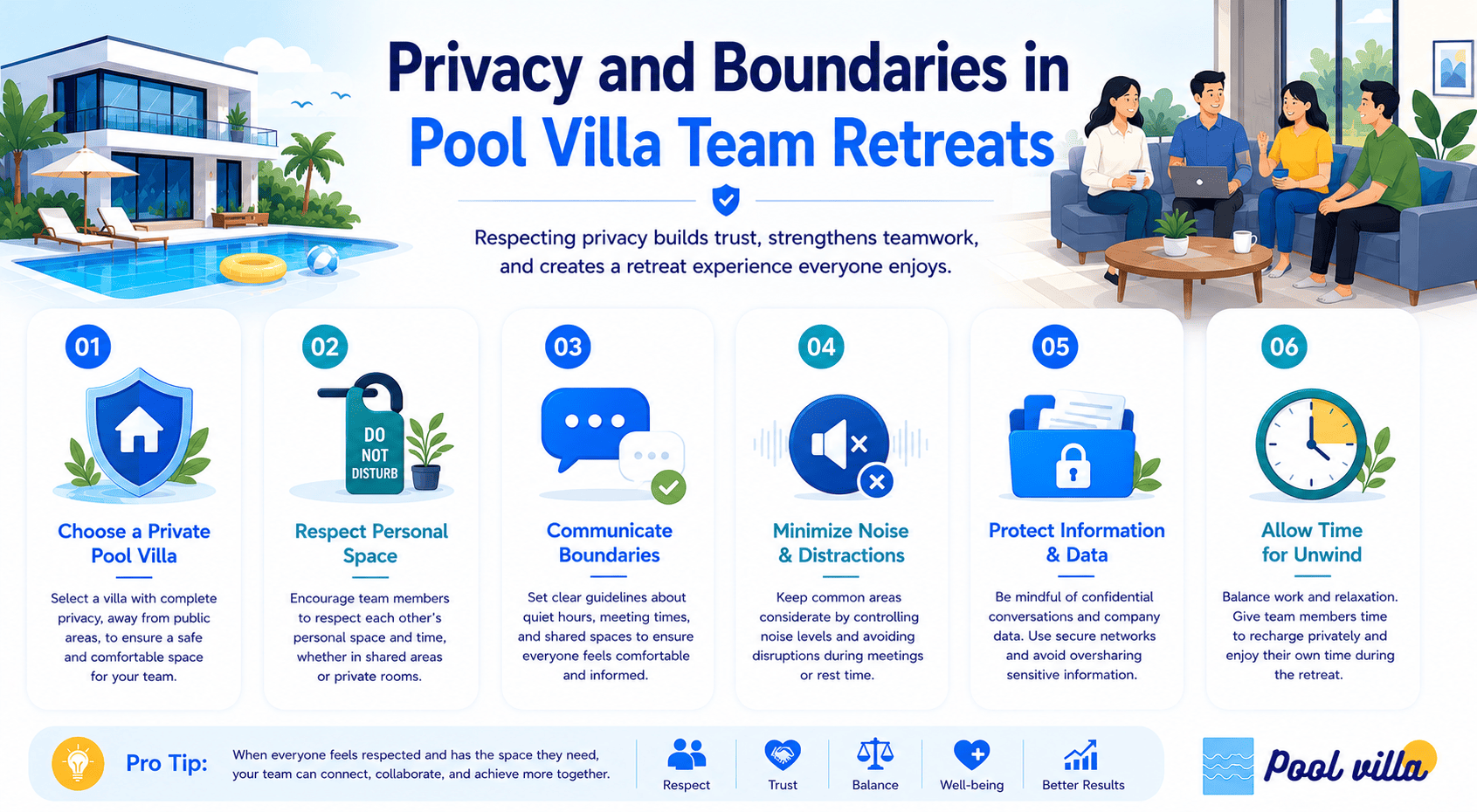
Pool Villa Team Retreat Privacy: Essential Tips for Comfortable Group Boundaries
Pool villa team retreat privacy has become one of the most important considerations during modern company retreats, group workshops, and professional villa stays. Many businesses now prefer private villas because they offer more relaxed environments, flexible group interaction, and shared accommodation compared to traditional hotels or conference venues. However, without clear privacy planning and group boundaries, even a well-organized retreat can quickly become uncomfortable for employees.
A proper pool villa team retreat privacy strategy helps teams balance collaboration, relaxation, personal space, and professional behavior throughout the retreat. Shared bedrooms, open living spaces, poolside activities, late-night gatherings, and mixed work-social environments can create tension if expectations are unclear from the beginning.
Unlike standard business trips, villa retreats often combine professional discussions with personal downtime in the same environment. Some employees may enjoy social interaction and group activities, while others may need quiet space, privacy, or clear work-life separation during the retreat. This makes respectful retreat planning extremely important.
The best pool villa team retreat privacy setup creates an atmosphere where employees feel comfortable, respected, and professionally supported without making the retreat feel overly strict or formal.
This guide explains how to manage privacy, mixed rooms, shared spaces, work-life boundaries, and group expectations during villa retreats while creating a more balanced and comfortable experience for everyone involved.
Understanding Pool Villa Team Retreat Privacy
Pool villa team retreat privacy refers to the way companies organize personal space, shared accommodation, social interaction, and professional boundaries during a private villa retreat.
Unlike hotels where employees usually have separate rooms and more independent schedules, villa retreats often involve shared environments such as:
- Shared bedrooms
- Common living areas
- Poolside spaces
- Outdoor dining areas
- Shared bathrooms
- Open workspaces
This creates more opportunities for collaboration and informal interaction, but it also increases the importance of privacy and personal comfort.
A proper pool villa team retreat privacy plan should consider:
- Room assignments
- Quiet hours
- Shared space etiquette
- Personal downtime
- Work-life separation
- Gender arrangements
- Social participation expectations
The goal is not isolating employees from each other. Instead, good retreat privacy planning helps teams interact comfortably while still respecting personal boundaries and individual comfort levels.
Why Privacy and Boundaries Matter During Team Retreats
Many retreat problems happen because organizers focus heavily on activities, luxury facilities, or team-building exercises while overlooking personal comfort and emotional boundaries.
Even highly social teams still need privacy during overnight retreats. Employees may become uncomfortable if they feel pressured into constant interaction, shared sleeping arrangements, or social participation without enough personal space.
A balanced pool villa team retreat privacy approach helps reduce:
- Social exhaustion
- Awkward sleeping situations
- Miscommunication
- Workplace tension
- Professional boundary issues
- Late-night disturbances
Privacy planning also improves overall professionalism during the retreat. Clear expectations around shared spaces, behavior, and quiet time help prevent unnecessary conflict between employees.
Another important factor is inclusiveness. Some employees naturally enjoy highly social retreat environments, while others may feel overwhelmed by constant group interaction. A respectful retreat setup should support both personality types equally.
Most importantly, strong privacy boundaries help employees feel safer, more respected, and more relaxed throughout the retreat experience.
How to Plan Pool Villa Team Retreat Privacy Properly
Successful pool villa team retreat privacy planning should focus on balance, communication, flexibility, and respect for individual comfort levels.
Organize Bedroom Assignments Carefully
Bedroom planning is one of the most sensitive parts of a villa retreat.
Shared sleeping arrangements may quickly become uncomfortable if organizers fail to consider:
- Gender preferences
- Seniority differences
- Personal comfort levels
- Couples attending
- Sleep schedules
- Privacy expectations
Whenever possible, companies should avoid forcing employees into uncomfortable room-sharing situations simply to maximize villa capacity.
Clear communication before the retreat helps reduce awkwardness later.
Respect Different Social Energy Levels
Not every employee experiences retreats the same way.
Some team members may enjoy:
- Poolside conversations
- Late-night social interaction
- Group dining
- Shared activities
Others may prefer:
- Quiet downtime
- Private reading time
- Early rest
- Independent relaxation
A healthy pool villa team retreat privacy environment allows both personality types to feel comfortable without judgment.
Employees should never feel pressured to participate in every social activity throughout the retreat.
Separate Work and Relaxation Spaces
One common retreat problem is blending work and personal time too heavily.
If meetings, conversations, social gatherings, and relaxation all happen in the same crowded space, employees may struggle to mentally disconnect during downtime.
A better approach is creating separate zones for:
- Meetings
- Quiet work
- Social interaction
- Relaxation
- Dining
This helps teams maintain healthier work-life boundaries throughout the retreat.
Establish Quiet Hours Early
Quiet hour management is one of the most overlooked parts of pool villa team retreat privacy planning.
Without clear expectations, problems such as:
- Loud music
- Poolside noise
- Late-night conversations
- Shared room disturbances
can quickly affect sleep quality and employee comfort.
Organizers should communicate quiet hours clearly before the retreat begins. Respectful nighttime behavior usually improves the retreat atmosphere significantly.
Shared Spaces Require Clear Expectations
Shared villa environments naturally create more interaction between employees compared to hotels.
Living rooms, kitchens, outdoor seating areas, and pool zones may become crowded during retreats if expectations remain unclear.
A practical pool villa team retreat privacy strategy should encourage:
- Respectful shared space usage
- Basic cleanliness
- Reasonable noise control
- Flexible seating arrangements
- Comfortable personal space
Employees should also feel free to step away from group interaction occasionally without creating awkward social pressure.
Small personal breaks often improve overall retreat energy and communication quality.
Why Work-Life Boundaries Matter During Retreats
One major challenge during villa retreats is maintaining healthy separation between professional and personal time.
Because employees stay together throughout the trip, work discussions can easily continue late into the evening or during meals and relaxation periods.
A balanced pool villa team retreat privacy approach should protect personal downtime whenever possible.
Organizers should avoid creating environments where employees feel constantly “on duty” throughout the retreat.
Healthy work-life boundaries help improve:
- Mental recovery
- Comfort
- Team morale
- Participation quality
- Overall retreat experience
Relaxed interaction usually becomes more natural when employees feel their personal space is respected.
Mixed Group Dynamics Require Extra Attention
Mixed-gender groups, cross-department retreats, senior leadership participation, and remote employee gatherings may all require additional privacy consideration.
Certain employees may feel uncomfortable with:
- Shared bedrooms
- Poolside dress expectations
- Alcohol-related activities
- Late-night social pressure
- Informal leadership interaction
Companies should therefore create retreat environments that remain professional and respectful while still allowing relaxed social interaction.
Flexible participation is usually far healthier than forcing one social style onto the entire team.
Common Pool Villa Team Retreat Privacy Mistakes
Even luxury retreats can create uncomfortable experiences if privacy planning is ignored.
One common mistake is overcrowding bedrooms simply to reduce costs. Limited personal space often increases tension quickly during overnight stays.
Another frequent issue is forcing constant social participation. Employees who need downtime may become mentally exhausted if they feel pressured into nonstop group interaction.
Some organizers also fail to separate work sessions from personal time, causing employees to feel unable to fully relax during the retreat.
Poor quiet hour management is another major problem, especially during late-night pool activities or social gatherings.
Finally, many retreats overlook individual comfort differences. Not every employee has the same social personality, cultural background, or comfort level regarding shared accommodation.
Smart Tips for Better Pool Villa Team Retreat Privacy
The best pool villa team retreat privacy strategies usually focus on flexibility, communication, and realistic expectations.
One effective approach is giving employees optional participation whenever possible. Relaxed retreat environments often create more natural interaction than highly controlled schedules.
Organizers should also communicate important expectations early, including:
- Bedroom arrangements
- Quiet hours
- Shared space etiquette
- Pool usage guidelines
- Social activity schedules
- Work session timing
Clear communication reduces uncertainty and helps employees feel more comfortable throughout the retreat.
It is also helpful to leave enough unscheduled time for personal relaxation. Constant activities often reduce energy and increase social fatigue during longer retreats.
Most importantly, companies should prioritize respect and comfort over maximizing social interaction.