
A pool villa deposit is one of the most misunderstood parts of the booking process. Many guests focus only on the nightly price and overlook the additional payments required before check-in. This often leads to confusion about refunds, cancellation rules, security deductions, and damage claims after the stay.
In practice, pool villa deposits serve multiple purposes. Some deposits confirm the reservation, while others protect the property owner against damage, missing items, excessive cleaning, or rule violations. The amount, payment method, and refund conditions can vary significantly between villas, booking platforms, and management companies.
Understanding how these deposits work helps guests avoid unexpected charges and helps property owners reduce disputes. Whether you are booking a luxury villa for a family holiday, a group trip, or a private event, it is important to know exactly what you are paying for and under what conditions the deposit may be withheld.
This guide explains the difference between booking deposits and security deposits, how refund policies typically work, what deductions are commonly made, and what guests should check before confirming a reservation.
What Does Pool Villa Deposit Mean?
The term “pool villa deposit” usually refers to one of two different payments:
- A booking deposit
- A security deposit
Although people often use the terms interchangeably, they serve very different purposes.
Booking Deposit
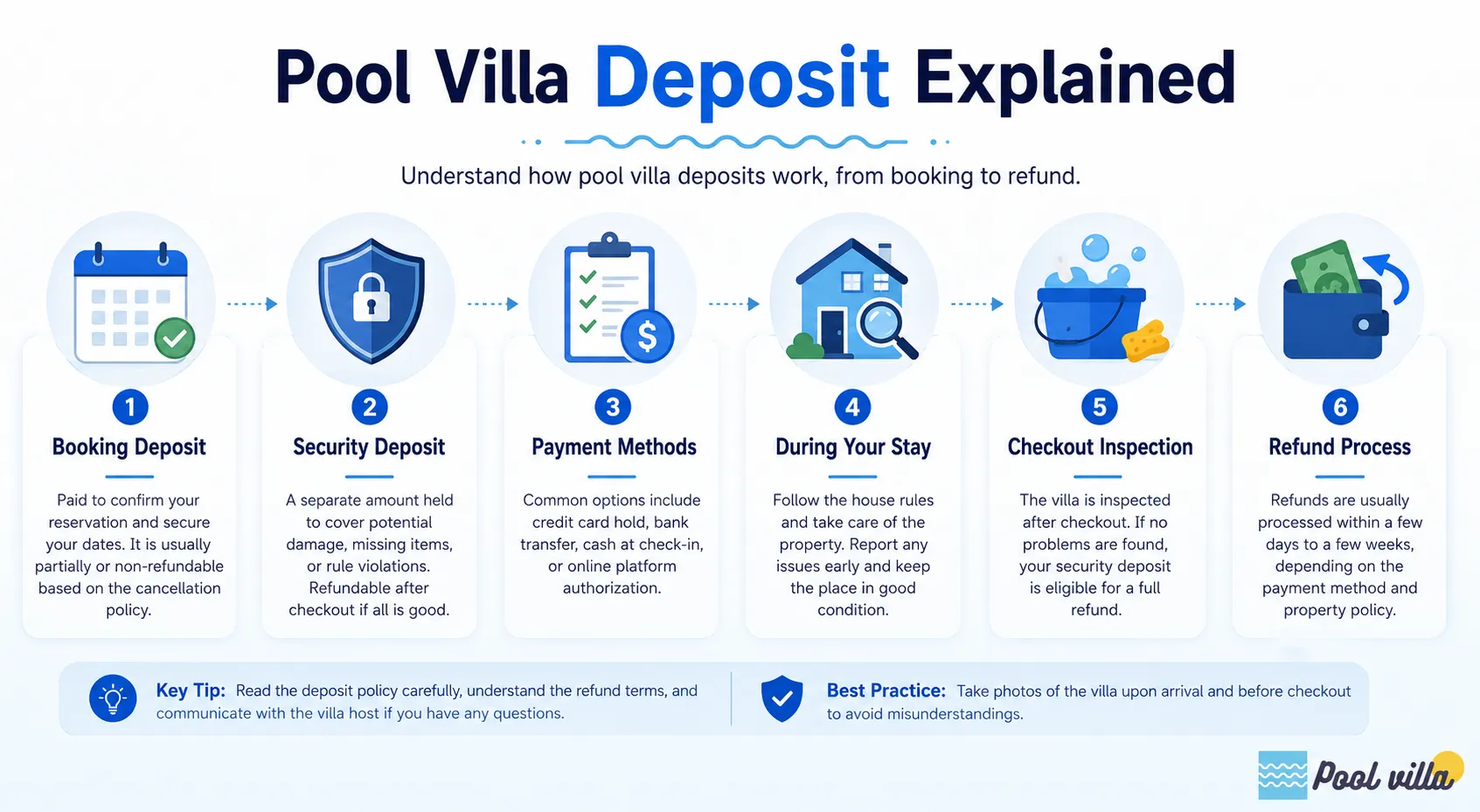
A booking deposit is an advance payment made to secure the reservation. It confirms that the guest intends to stay at the property on specific dates.
In many cases, pool villa owners block the calendar immediately after receiving this payment. Because the villa may no longer be available to other guests, booking deposits are often partially refundable or non-refundable depending on the cancellation policy.
Typical booking deposit characteristics include:
- Paid before arrival
- Used to confirm the reservation
- Often part of the total accommodation cost
- Subject to cancellation conditions
For example, a villa may require:
- 30% upfront during booking
- Remaining balance before check-in
- Non-refundable cancellation within 14 days
Security Deposit
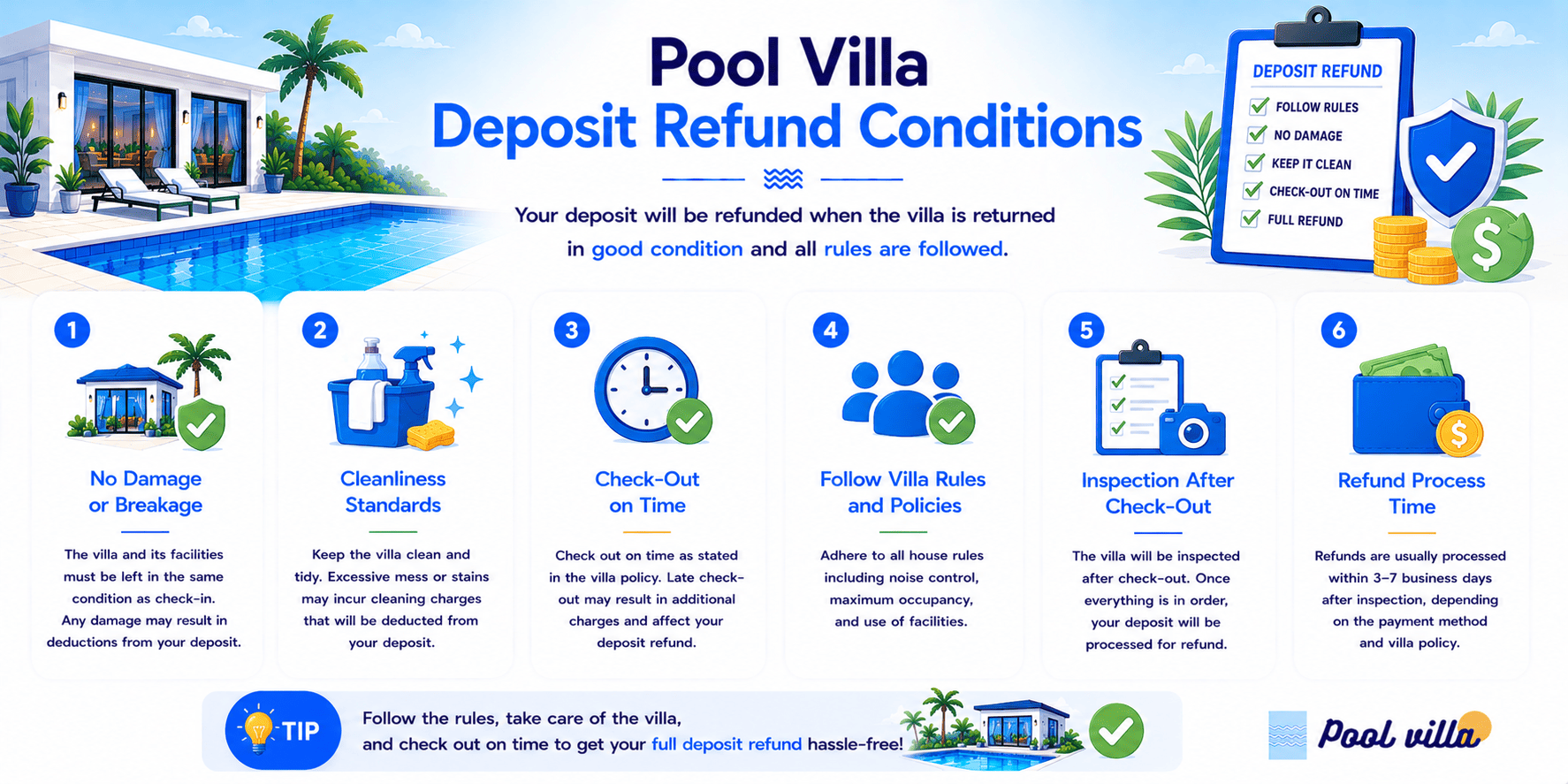
A security deposit is separate from the accommodation fee. This payment protects the property owner from financial loss caused by damage, missing items, rule violations, or excessive cleaning requirements.
The deposit is usually refunded after checkout if no issues are found.
Common reasons for security deposit deductions include:
- Broken furniture
- Stained linens
- Damaged pool equipment
- Smoking inside the villa
- Excessive garbage
- Unauthorized parties
- Missing keys or access cards
Security deposits may be collected in several ways:
- Cash during check-in
- Credit card hold
- Bank transfer
- Online platform authorization
Some villas combine both types into one payment, while others separate them clearly.
Why Does This Matter?
Pool villa deposits directly affect both financial risk and booking flexibility.
For guests, misunderstanding the deposit policy can result in:
- Unexpected non-refundable losses
- Delayed refunds
- Disputes over damages
- Additional charges after checkout
For villa owners, deposits help reduce risks associated with high-value properties. Pool villas often contain expensive furnishings, electronics, outdoor equipment, and private facilities that require ongoing maintenance.
Unlike standard hotel rooms, many villas accommodate large groups. This increases the possibility of accidental damage, excessive wear, or unauthorized gatherings.
Deposits Also Influence Guest Behavior
Security deposits are not only financial protection tools. They also encourage responsible behavior during the stay.
Properties without clear deposit rules may experience:
- Higher repair costs
- More party-related damage
- Increased maintenance problems
- Poorer guest accountability
Well-structured deposit policies create clearer expectations for both sides.
Refund Policies Affect Booking Confidence
Cancellation flexibility plays a major role in travel decisions. Guests are more comfortable booking expensive villas when refund conditions are transparent and realistic.
Confusing or hidden deposit terms often create distrust, especially for international travelers booking private accommodations online.
How Should You Approach Pool Villa Deposits?
Before paying any deposit, guests should carefully review the booking conditions rather than focusing only on the advertised nightly rate.
Read the Deposit Policy Carefully
A proper deposit policy should clearly explain:
- Deposit amount
- Payment deadline
- Refund conditions
- Cancellation terms
- Damage assessment process
- Refund timeline
- Accepted payment methods
If the information is vague or incomplete, ask for clarification before transferring money.
Understand Cancellation Windows
Most pool villa bookings follow tiered cancellation rules.
For example:
- Full refund within 30 days
- Partial refund within 14 days
- No refund within 7 days
However, policies vary significantly depending on:
- Peak season demand
- Villa size
- Group booking risk
- Event reservations
- Local tourism conditions
Luxury villas with limited availability often have stricter cancellation rules because replacing cancelled bookings at short notice can be difficult.
Check Whether the Deposit Is Refundable
Not all deposits are refundable.
Guests should confirm whether the payment is:
- Fully refundable
- Partially refundable
- Non-refundable
- Transferable to future dates
Some villas offer date changes instead of refunds under certain conditions.
Document the Property Condition
One of the best ways to avoid disputes is to inspect the villa upon arrival.
Guests should:
- Take photos of existing damage
- Record broken items immediately
- Report missing equipment early
- Save communication records
This is especially important for large villas with expensive interiors or entertainment systems.
Review House Rules
Many deposit deductions happen because guests violate villa policies rather than causing direct damage.
Common rule violations include:
- Extra unregistered guests
- Loud late-night parties
- Smoking indoors
- Bringing pets without approval
- Improper pool use
Even minor violations may trigger cleaning or penalty charges.
What Types of Damage Usually Lead to Deductions?
Not all damage is treated equally. Most pool villa operators distinguish between normal wear and guest-caused damage.
Normal Wear and Tear
Guests are generally not responsible for:
- Minor furniture aging
- Small surface scratches
- Natural pool maintenance issues
- Standard linen wear
Reasonable use is expected in any rental property.
Guest-Caused Damage
Deductions usually apply when damage results from negligence, misuse, or rule violations.
Examples include:
- Broken glass doors
- Burn marks on furniture
- Damaged pool tiles
- Water damage from improper use
- Ruined mattresses or sofas
- Stained towels from cosmetics or dyes
- Broken entertainment equipment
Large group stays tend to create higher risks, especially during celebrations or parties.
Deep Cleaning Charges
Excessive cleaning is another common deduction category.
Charges may apply for:
- Heavy food waste
- Cigarette odor
- Vomit or spills
- Extremely dirty kitchens
- Trash left throughout the property
Professional cleaning for luxury villas can be expensive, especially when same-day turnovers are required.
What Tools, Materials, or Payment Options Are Common?
Pool villa deposits are usually handled through digital payment systems, bank transfers, or booking platforms.
Credit Card Authorization Holds
Many professional villa operators prefer credit card holds rather than cash deposits.
Advantages include:
- Faster processing
- Easier refund handling
- Lower theft risk
- Better transaction records
However, guests should confirm:
- Hold release timing
- Currency conversion fees
- International banking charges
Bank Transfers
Bank transfers are common for private villa bookings, especially for larger reservations.
Before transferring funds:
- Verify the business identity
- Confirm account details carefully
- Request written confirmation
- Avoid personal accounts when possible
Booking Platforms
Some online booking platforms manage deposits automatically through their own systems.
This can improve:
- Payment security
- Dispute resolution
- Refund tracking
However, platform policies may differ from direct booking policies.
Common Mistakes
Assuming Every Deposit Is Refundable
One of the biggest mistakes is believing that all deposits will automatically be returned.
Booking deposits often become non-refundable after certain deadlines.
Ignoring Small Policy Details
Many disputes happen because guests overlook:
- Late checkout penalties
- Cleaning clauses
- Occupancy limits
- Noise restrictions
These details are usually included in the booking agreement.
Failing to Report Existing Damage
If guests do not report pre-existing issues immediately, they may later be blamed for them.
Quick documentation protects both sides.
Paying Without Written Confirmation
Never transfer a large deposit without receiving:
- Booking confirmation
- Property details
- Cancellation terms
- Contact information
Verbal agreements alone create unnecessary risk.
Hosting Unauthorized Events
Many pool villas prohibit events without prior approval.
Unauthorized gatherings may lead to:
- Immediate deposit forfeiture
- Extra cleaning charges
- Early termination of the stay
Luxury villas often enforce strict occupancy and noise policies due to local regulations or neighbor complaints.
Practical Tips for Better Results
Ask for a Full Cost Breakdown
Before booking, request a detailed summary including:
- Accommodation cost
- Booking deposit
- Security deposit
- Cleaning fees
- Utility charges
- Extra guest fees
This prevents surprise charges later.
Keep All Communication in Writing
Written communication creates a clear record if disputes arise.
Save:
- Emails
- Booking invoices
- Chat messages
- Payment receipts
Use Trusted Payment Methods
Avoid sending large deposits through untraceable payment methods.
Secure payment systems provide better protection if problems occur.
Inspect the Villa Before Checkout
A quick walkthrough before leaving helps identify issues early.
Guests can:
- Dispose of trash properly
- Check for forgotten items
- Report accidental damage honestly
Transparent communication often reduces conflict.
Understand Local Rental Practices
Deposit expectations vary by destination and property type.
Luxury tourist areas may require:
- Higher security deposits
- Earlier full payment
- Stricter cancellation policies
Peak holiday periods usually involve tighter refund rules because demand is higher.
Maintenance or Prevention
For property owners, strong maintenance practices help reduce deposit disputes.
Keep Clear Inventory Records
Detailed inventories help document the property condition before and after stays.
This may include:
- Furniture lists
- Appliance records
- Pool equipment
- Decorative items
Professional photo documentation can also support fair damage assessments.
Perform Regular Inspections
Routine maintenance reduces confusion between:
- Existing wear
- Maintenance problems
- Guest-caused damage
Without regular inspections, owners may incorrectly attribute older issues to recent guests.
Create Clear House Rules
Well-written house rules help prevent common problems before they happen.
Important areas include:
- Pool usage
- Quiet hours
- Smoking restrictions
- Visitor limits
- Pet policies
Clear expectations reduce misunderstandings.
Maintain the Pool Properly
Poor pool maintenance can create disputes if guests believe issues existed before arrival.
Owners should regularly check:
- Water quality
- Filtration systems
- Pool lighting
- Tile condition
- Safety equipment
Good maintenance also protects the long-term value of the property.
When Should You Be Extra Careful?
Certain situations involve higher deposit risks and require extra attention.
Large Group Bookings
Big groups increase the chance of:
- Accidental damage
- Noise complaints
- Cleaning issues
- Rule violations
Some villas require larger deposits for group stays.
Party or Event Bookings
Events create significantly higher wear and tear.
Properties may apply:
- Special event deposits
- Additional cleaning fees
- Strict supervision policies
Guests should never assume parties are allowed without written approval.
Luxury Villas With Premium Furnishings
High-end villas often contain:
- Imported furniture
- Smart home systems
- Expensive appliances
- Designer interiors
Damage repair costs may be much higher than expected.
International Bookings
International guests should pay close attention to:
- Currency exchange losses
- International transfer fees
- Refund processing times
- Local consumer protection differences
Cross-border disputes can be more difficult to resolve.
FAQ
Is a pool villa deposit the same as full payment?
No. A deposit is usually only part of the total cost. Some deposits secure the reservation, while others serve as refundable security protection.
How long does it take to receive a security deposit refund?
Many villas process refunds within a few days after checkout, but some may take longer depending on inspection procedures or banking systems.
Can a villa owner keep the entire deposit?
Yes, but usually only under specific conditions such as major property damage, severe rule violations, or non-refundable cancellation policies.
What happens if accidental damage occurs?
Guests should report accidental damage immediately. Honest communication often helps resolve issues more fairly than hiding the problem.
Are cash deposits normal for pool villas?
Yes. Some villas still require cash deposits during check-in, especially smaller privately managed properties.
Can cleaning fees be deducted from the deposit?
Yes. Excessive cleaning beyond normal use may result in deductions.
Conclusion
Pool villa deposits are designed to protect both guests and property owners, but misunderstandings are common when policies are unclear or ignored. Knowing the difference between booking deposits and security deposits helps travelers avoid financial surprises and manage expectations before arrival.
The most important step is reviewing the terms carefully before confirming a reservation. Guests should understand refund rules, cancellation deadlines, damage policies, and house regulations in advance rather than dealing with disputes afterward.
Clear communication, proper documentation, responsible property use, and realistic expectations all help create a smoother booking experience. Whether you are renting a small family villa or a luxury group property, understanding how deposits work is an essential part of making informed and financially safe travel decisions.