
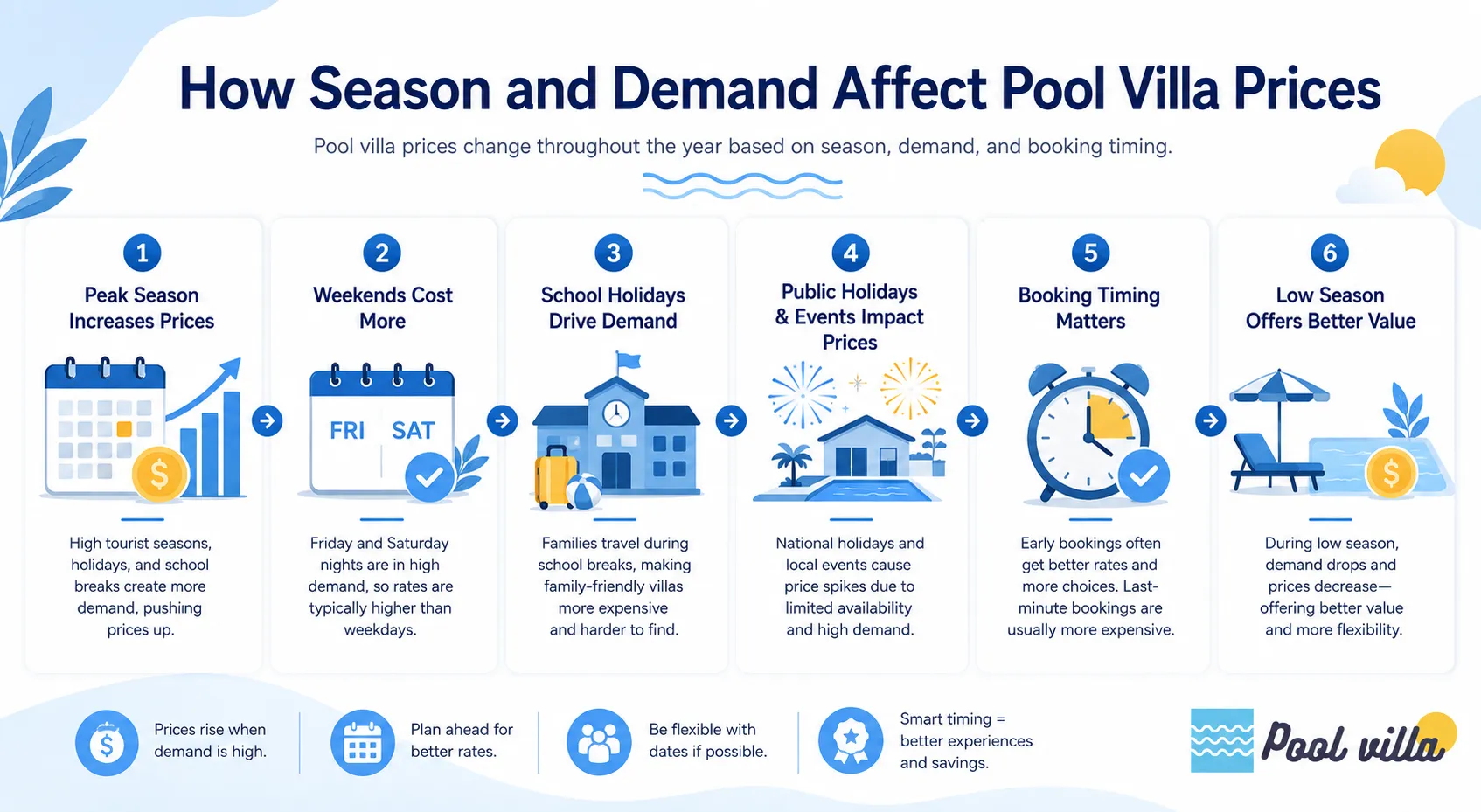
Pool villa prices rarely stay the same throughout the year. A villa that seems reasonably priced during a quiet weekday in the low season can become significantly more expensive during holidays, long weekends, or school breaks. Many travelers are surprised by how quickly prices change based on demand alone.
Understanding how seasonality and booking demand affect pricing helps travelers make better decisions before reserving a property. It also explains why two nearly identical villas in the same location can have very different rates depending on timing.
The relationship between demand and pricing is especially important for group travelers, families, and holiday planners because pool villas often operate with flexible pricing models. Owners and management companies adjust rates based on occupancy trends, tourism patterns, local events, and booking pressure.
This guide explains how peak seasons, weekends, holidays, and travel demand influence pool villa prices, along with practical ways to manage costs without compromising too much on quality or location.
What Does Pool Villa Season Demand Price Mean?
The term “pool villa season demand price” refers to the way rental prices change according to travel demand during different periods of the year.
Unlike standard hotels that may keep relatively stable rates, pool villas often use dynamic pricing. This means prices rise or fall depending on factors such as:
- Tourist seasons
- Public holidays
- School vacations
- Weather conditions
- Weekend demand
- Local festivals or events
- Booking availability
- Last-minute demand
In practical terms, a villa owner charges more when many travelers are competing for limited availability. When demand drops, prices are usually lowered to encourage bookings.
This pricing model is common in tourist destinations where occupancy fluctuates heavily throughout the year.
Why Does This Matter?
Understanding seasonal pricing helps travelers avoid unrealistic expectations and plan more efficiently.
Many people compare pool villa prices without considering timing. A traveler checking rates during a holiday week may assume all villas are expensive, while someone booking in the off-season may believe luxury villas are always affordable.
Seasonal pricing matters because it affects:
- Total accommodation budget
- Villa availability
- Booking flexibility
- Minimum stay requirements
- Cancellation policies
- Deposit conditions
- Overall travel experience
For larger groups, price increases can become substantial during peak periods. A villa that normally costs $250 per night may rise to $500 or more during major holidays or high-demand weekends.
Demand also affects quality choices. During busy periods, the best villas are usually booked early, leaving fewer premium options available for late travelers.
How Seasonal Demand Changes Pool Villa Prices
Peak Season
Peak season is the period with the highest tourism activity. During this time, pool villa demand increases sharply.
Common peak seasons include:
- Summer holidays
- New Year periods
- Christmas vacations
- Major national holidays
- Popular festival periods
- Dry season in tropical destinations
Several factors contribute to higher prices during peak season:
Higher Tourist Volume
More travelers compete for the same number of villas. This naturally increases prices.
Limited Inventory
Luxury villas and large family villas are limited in many destinations. Once occupancy rises, prices climb quickly.
Better Weather Conditions
Destinations with predictable sunny weather during certain months often see strong seasonal demand.
Longer Average Stay
Peak-season travelers tend to stay longer, which reduces availability even further.
In some destinations, peak-season rates can be double or triple low-season pricing.
High Season vs Peak Season
These terms are often confused, but they are not always identical.
- High season usually refers to generally busy travel periods.
- Peak season refers to the most expensive and crowded dates within the high season.
For example:
- December may be considered high season.
- Christmas and New Year week may be peak season.
Understanding this difference helps travelers identify more affordable windows within otherwise expensive months.
Shoulder Season
Shoulder season sits between high and low seasons.
This period often offers the best balance between:
- Price
- Weather
- Availability
- Crowds
Travelers who prioritize value often prefer shoulder season because rates are more moderate while conditions remain relatively favorable.
For pool villa bookings, shoulder season can provide access to higher-quality properties without peak-season pricing pressure.
Low Season
Low season occurs when tourism demand decreases.
Reasons may include:
- Rainy weather
- Extreme heat
- School terms
- Reduced international tourism
- Lower flight demand
Pool villa prices during low season are generally much cheaper.
However, lower prices do not always mean poor value. Some destinations remain attractive year-round despite seasonal demand drops.
Travelers willing to accept occasional weather uncertainty can often secure significantly better deals during this period.
How Weekends Affect Pool Villa Prices
Weekend demand plays a major role in pool villa pricing, especially in destinations popular for short stays or group travel.
Friday and Saturday Premiums
Many villas charge higher rates for Friday and Saturday nights because demand rises sharply before weekends.
This is particularly common in:
- Beach destinations
- Areas near major cities
- Party destinations
- Family getaway locations
Weekend rates may increase by:
- 10% to 50%
- Or even more during holidays
Minimum Stay Requirements
During weekends, villas may also impose:
- Two-night minimum stays
- Three-night holiday minimums
- Full-week booking requirements during peak periods
This affects the total travel budget even if the nightly rate appears reasonable.
Group Travel Demand
Pool villas are especially popular among groups because they offer shared space, private pools, and social areas.
As a result, weekends often experience stronger booking pressure than weekdays.
School Holidays and Family Travel Demand
School breaks are one of the biggest pricing drivers for family-oriented pool villas.
When children are out of school, families are more likely to travel together. This creates sudden spikes in demand.
Common high-demand periods include:
- Summer school holidays
- Spring breaks
- Autumn breaks
- Long public holiday weekends
- End-of-year vacations
Family-sized villas with multiple bedrooms become particularly expensive during these periods.
Why Family Villas Increase Faster
Large villas are usually limited in number. During school breaks:
- Multi-bedroom villas book quickly
- Family-friendly locations fill early
- Properties with kitchens and private pools become highly competitive
Travelers booking for families should plan earlier than couples or solo travelers.
Public Holidays and Festival Pricing
Public holidays can dramatically affect pool villa prices even outside traditional peak seasons.
A destination may be relatively affordable for most of the month but experience sharp price increases during:
- National holidays
- Religious festivals
- Music festivals
- Sporting events
- Cultural celebrations
Local vs International Holidays
Both local and international holidays influence demand.
For example:
- Domestic tourists may increase demand during local public holidays.
- International tourists may travel during global holiday periods.
In some destinations, overlapping holiday periods create extreme pricing pressure.
Event-Based Demand
Large local events can affect pricing unexpectedly.
Examples include:
- Concert weekends
- Major conferences
- Marathon events
- Wedding seasons
- Regional festivals
Travelers sometimes overlook these events and are surprised by sudden price spikes.
How Booking Timing Influences Price
Seasonality is not the only factor. Booking timing also matters significantly.
Early Booking Advantages
Booking early often provides:
- Better villa selection
- Lower rates
- Flexible cancellation options
- More room categories
Popular villas may sell out months in advance during high-demand periods.
Last-Minute Booking Risks
Some travelers expect last-minute discounts, but this approach is risky with pool villas.
Unlike large hotels, villas have limited inventory. Once demand increases, prices usually rise instead of falling.
Last-minute travelers may face:
- Limited availability
- Higher rates
- Fewer premium choices
- Stricter booking conditions
When Last-Minute Deals Sometimes Work
Last-minute discounts are more common during:
- Low season
- Weekdays
- Rainy periods
- Oversupplied markets
However, relying on this strategy during holidays or weekends is rarely effective.
Why Luxury Pool Villas Experience Stronger Price Swings
Luxury villas often show larger seasonal price differences than budget properties.
This happens because affluent travelers are generally less price-sensitive during holidays and premium travel periods.
Luxury demand increases strongly during:
- Festive seasons
- Destination weddings
- Family reunions
- Corporate retreats
- International vacation periods
Premium villas with features such as:
- Ocean views
- Large pools
- Private chefs
- Entertainment areas
- Beachfront access
can experience extreme demand spikes during peak travel windows.
Common Mistakes When Comparing Pool Villa Prices
Comparing Different Seasons
One of the most common mistakes is comparing rates from different seasons without realizing it.
A villa price seen in June may be completely different from the same villa in December.
Ignoring Hidden Seasonal Costs
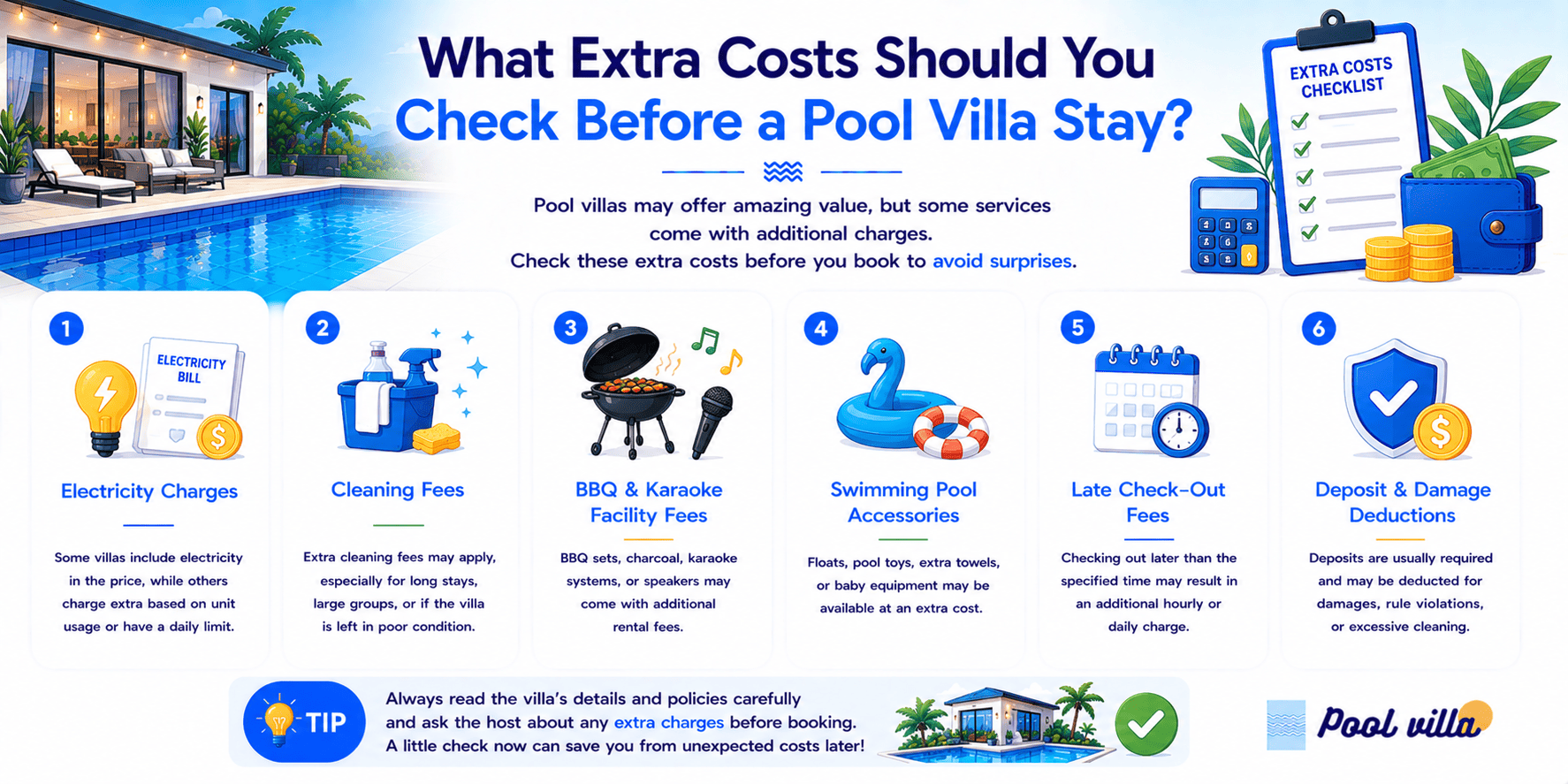
High-demand periods may also increase:
- Cleaning fees
- Security deposits
- Extra guest charges
- Transportation costs
- Car rental prices
Travelers should consider the total trip budget, not just the nightly villa rate.
Waiting Too Long to Book
Many travelers delay booking while comparing options, only to find that prices have increased.
This is especially common during:
- Holiday weekends
- School breaks
- Popular event periods
Assuming Weekdays Always Mean Cheap Rates
While weekdays are often cheaper, this is not guaranteed during peak season.
A Tuesday during New Year week may still cost more than a normal weekend in low season.
Practical Tips for Better Results
Travel During Shoulder Season
Shoulder season often provides the best balance between affordability and experience.
Travelers may enjoy:
- Lower prices
- Better availability
- Fewer crowds
- More negotiating flexibility
Stay Midweek
Midweek stays are often cheaper than weekend bookings.
Travelers with flexible schedules can reduce accommodation costs significantly by avoiding Friday and Saturday nights.
Book Early for Peak Periods
For holidays or school breaks, booking several months ahead is usually the safest strategy.
This is especially important for:
- Large villas
- Beachfront properties
- Family-oriented villas
- Luxury accommodations
Compare Total Costs
Instead of focusing only on nightly rates, compare:
- Cleaning fees
- Service charges
- Minimum stay requirements
- Utility fees
- Transportation access
The cheapest nightly rate is not always the best overall value.
Avoid Overbooking Space
Some groups reserve oversized villas unnecessarily.
Choosing a villa that realistically matches the group size can reduce costs substantially during high-demand periods.
Maintenance and Operational Costs Also Affect Seasonal Pricing
Seasonal demand is not the only reason prices rise.
Villa owners also face operational cost increases during busy periods.
These may include:
- Higher staffing costs
- Increased utility usage
- Pool maintenance expenses
- Cleaning frequency
- Property wear and tear
During peak periods, villas often require faster turnover between guests, which increases labor and maintenance demands.
This partially explains why holiday pricing rises even when occupancy is already high.
When Should You Be Extra Careful?
Holiday Booking Policies
Peak-season bookings often have stricter conditions.
Travelers should carefully review:
- Cancellation terms
- Refund policies
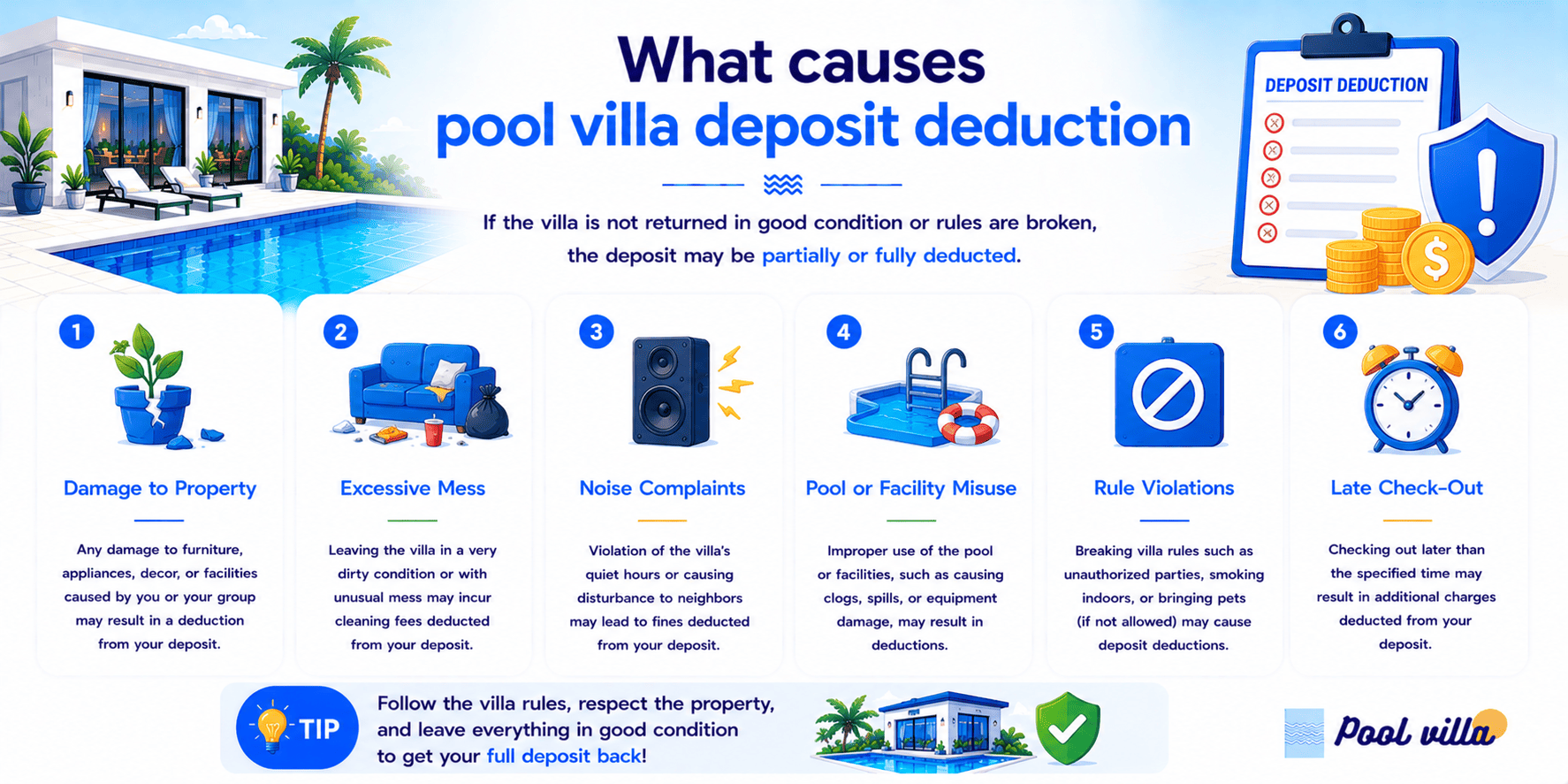
- Deposit requirements
- Damage fees
- Guest limits
Some villas enforce non-refundable holiday bookings.
Fake Discounts
Occasionally, properties advertise large discounts by inflating original peak prices.
Instead of focusing only on discount percentages, compare actual market value.
Weather Risks During Low Season
Low-season pricing may look attractive, but travelers should understand the trade-offs.
Potential issues include:
- Heavy rainfall
- Reduced outdoor usability
- Rough sea conditions
- Temporary attraction closures
Cheaper prices are not always better if weather conditions severely affect the travel experience.
Event Traffic and Noise
Major festivals and holiday periods can increase:
- Traffic congestion
- Noise levels
- Parking problems
- Crowding
Travelers seeking privacy and relaxation should consider whether peak travel dates match their expectations.
FAQ
Why are pool villas more expensive during holidays?
Demand increases significantly during holidays because more travelers compete for limited accommodation availability. Villas often raise prices based on occupancy pressure and booking demand.
Are weekdays always cheaper for pool villas?
Usually, yes. However, during peak season or major holidays, weekday rates may still remain high due to strong travel demand.
What is the best season for affordable pool villa prices?
Shoulder season is often the best choice because it balances moderate pricing, decent weather, and lower tourist crowds.
How far in advance should I book a pool villa?
For peak periods, booking several months ahead is recommended. For low season, travelers may have more flexibility.
Why do large pool villas sell out faster?
Large villas are limited in supply and are highly popular with families and group travelers, especially during weekends and school breaks.
Conclusion
Pool villa pricing is heavily influenced by seasonality and travel demand. Peak holidays, weekends, school breaks, and local events can all increase rates significantly, while low and shoulder seasons often provide better value and availability.
Understanding these patterns helps travelers budget more realistically, avoid unnecessary costs, and choose better booking periods based on their priorities.
Instead of looking only for the cheapest rate, travelers should focus on overall value, timing, flexibility, and suitability for their group size and travel goals. A well-timed booking can often provide a much better experience without requiring a larger budget.