
Swimming pools are one of the main reasons travelers choose private villas over traditional hotels. A private pool creates a more relaxing environment, offers greater privacy, and allows families or groups to enjoy shared time without crowded public spaces.
However, private pools also require more personal responsibility.
Unlike hotels or resorts, most villas do not provide full-time lifeguards, pool attendants, or constant staff supervision. Guests are usually responsible for monitoring children, managing group behavior, and maintaining safe swimming conditions throughout the stay.
Because of this, understanding proper pool safety for villa guests is essential.
Many pool-related accidents happen because travelers become overly relaxed in private environments. Wet flooring, poor lighting, alcohol consumption, overcrowding, and lack of supervision can quickly create unnecessary risks during an otherwise enjoyable trip.
This guide explains the most important swimming safety practices for villa guests, including child supervision, nighttime swimming, group safety, weather awareness, poolside behavior, and common mistakes travelers should avoid. For broader guidance about staying safely in private villas, visit the Pool Villa Safety Guide.
What Is Pool Safety for Villa Guests?
Pool safety for villa guests refers to the practical habits, supervision methods, and risk-awareness strategies that help travelers use private swimming pools safely during a villa stay.
Unlike public pools, private villa pools often operate without direct supervision or structured safety systems. Guests usually have more freedom, but they also have greater responsibility.
Pool safety involves much more than swimming ability alone.
A safe villa swimming environment also depends on:
- Child supervision
- Pool visibility
- Surface safety
- Group behavior
- Lighting quality
- Emergency awareness
- Weather conditions
- Responsible alcohol use
Travelers who are unfamiliar with villa accommodation should also read What Is a Pool Villa? and How Does a Pool Villa Work?.
Why Pool Safety Matters in Private Villas
Private pools create a very different environment from hotel or resort pools.
Hotels often include pool staff, public safety rules, security monitoring, controlled operating hours, and supervised environments. Private villas usually provide more freedom instead.
This flexibility improves privacy and comfort, but it also means guests must actively manage safety themselves.
This becomes especially important during family vacations, group gatherings, birthday celebrations, BBQ parties, night swimming, and long stays.
Many swimming-related accidents happen because guests underestimate risks in private environments. A relaxed atmosphere can sometimes reduce attention and supervision without people realizing it.
Good pool safety habits reduce these risks significantly.
Supervise Children at All Times
Child supervision is the most important part of pool safety for villa guests.
Private pools may feel safer than public pools because they are more controlled and less crowded. In reality, children can still face serious risks if supervision becomes inconsistent.
Parents should never assume another adult is watching automatically.
Important Child Pool Safety Practices
Families should:
- Keep children within visible range near the pool
- Establish clear swimming rules early
- Prevent running near wet surfaces
- Avoid unsupervised nighttime pool access
- Remove pool toys after use
Younger children should never be left near the pool alone, even for short periods.
Parents traveling with children should also read How to Plan a Pool Villa Stay With Children and the Pool Villa Child Safety Guide.
Understand Pool Depth Before Swimming
Not all villa pools are designed the same way.
Some pools prioritize visual design rather than practical swimming safety. Depth changes, hidden ledges, infinity edges, and dark-colored flooring can sometimes make pools harder to judge visually.
Guests should inspect the pool carefully after arrival.
Important Things to Check
Before swimming, guests should understand:
- Pool depth variation
- Entry points
- Shallow areas
- Slippery edges
- Underwater visibility
- Pool lighting conditions
This becomes especially important for children, elderly travelers, and inexperienced swimmers.
Guests should also review the Pool Depth Safety Guide.
Avoid Unsafe Poolside Behavior
Many villa pool accidents happen around the pool rather than inside the water itself.
Wet flooring, distractions, and casual social behavior often increase risk more than swimming activity alone.
Common Unsafe Behaviors
Guests should avoid:
- Running near the pool
- Diving into unknown depths
- Carrying glass near water
- Rough play in crowded pools
- Leaving wet towels on walkways
Poolside areas often become slippery quickly, especially during larger group stays.
Groups organizing shared trips should also read the Pool Villa Group Stay Planning Guide.
Be Careful With Night Swimming
Night swimming is one of the most popular villa activities, but it also creates additional risks.
Reduced visibility changes how guests judge depth, movement, slippery surfaces, and surrounding obstacles.
Even well-designed pools become more dangerous when lighting is poor.
Important Night Swimming Safety Tips
Guests should:
- Check outdoor lighting before sunset
- Avoid swimming alone at night
- Keep walkways dry and organized
- Supervise children carefully
- Stay cautious around pool edges
Fatigue and alcohol use can increase nighttime risks significantly.
Travelers planning evening swimming should also read Night Swimming Safety.
Weather Conditions Affect Pool Safety
Weather conditions can change pool safety much more than many travelers expect.
Rain, strong wind, poor visibility, and lightning conditions can make swimming or walking near the pool more dangerous.
Guests should avoid swimming during thunderstorms or when outdoor surfaces become slippery and difficult to move across safely.
Travelers staying during unstable weather seasons should also prepare a backup plan by reading Pool Villa Rainy Day Plan.
Manage Alcohol Carefully Around the Pool
Alcohol and swimming do not mix well, especially in private villa environments where guests may feel more relaxed and less supervised.
During group stays, alcohol can reduce judgment, slow reaction time, and increase risky behavior around the pool.
Guests should be especially cautious during nighttime swimming, BBQ gatherings, or poolside celebrations.
Groups should also review Pool Villa Noise Etiquette and the broader guide on Pool Villa Rules and Policies before planning social activities.
Prepare for Emergencies Before Using the Pool
Most villa stays are safe, but guests should still prepare for unexpected situations before swimming begins.
Emergency preparation is especially important when the villa is located in a private area, hillside community, or destination with limited immediate support.
Essential Emergency Preparation
Guests should:
- Save emergency contact numbers
- Know the villa address clearly
- Identify exits and access routes
- Locate first aid supplies
- Check nearby hospitals or clinics
Travelers should also review the Pool Villa Arrival Checklist before check-in.
Common Pool Safety Mistakes Villa Guests Make
Assuming a Private Pool Is Automatically Safe
Privacy improves comfort, but it does not eliminate risk. Guests still need active supervision, clear rules, and practical awareness throughout the stay.
Ignoring Pool Depth
Some guests enter the pool without checking depth changes, shallow zones, or hidden ledges. This can create risks for both adults and children.
Swimming Alone at Night
Night swimming may feel peaceful, but reduced visibility and fatigue make it riskier than daytime swimming.
Allowing Too Much Rough Play
Private pools often make guests feel more relaxed, but rough play, pushing, or overcrowding can quickly create unsafe situations.
Practical Pool Safety Tips for Villa Guests
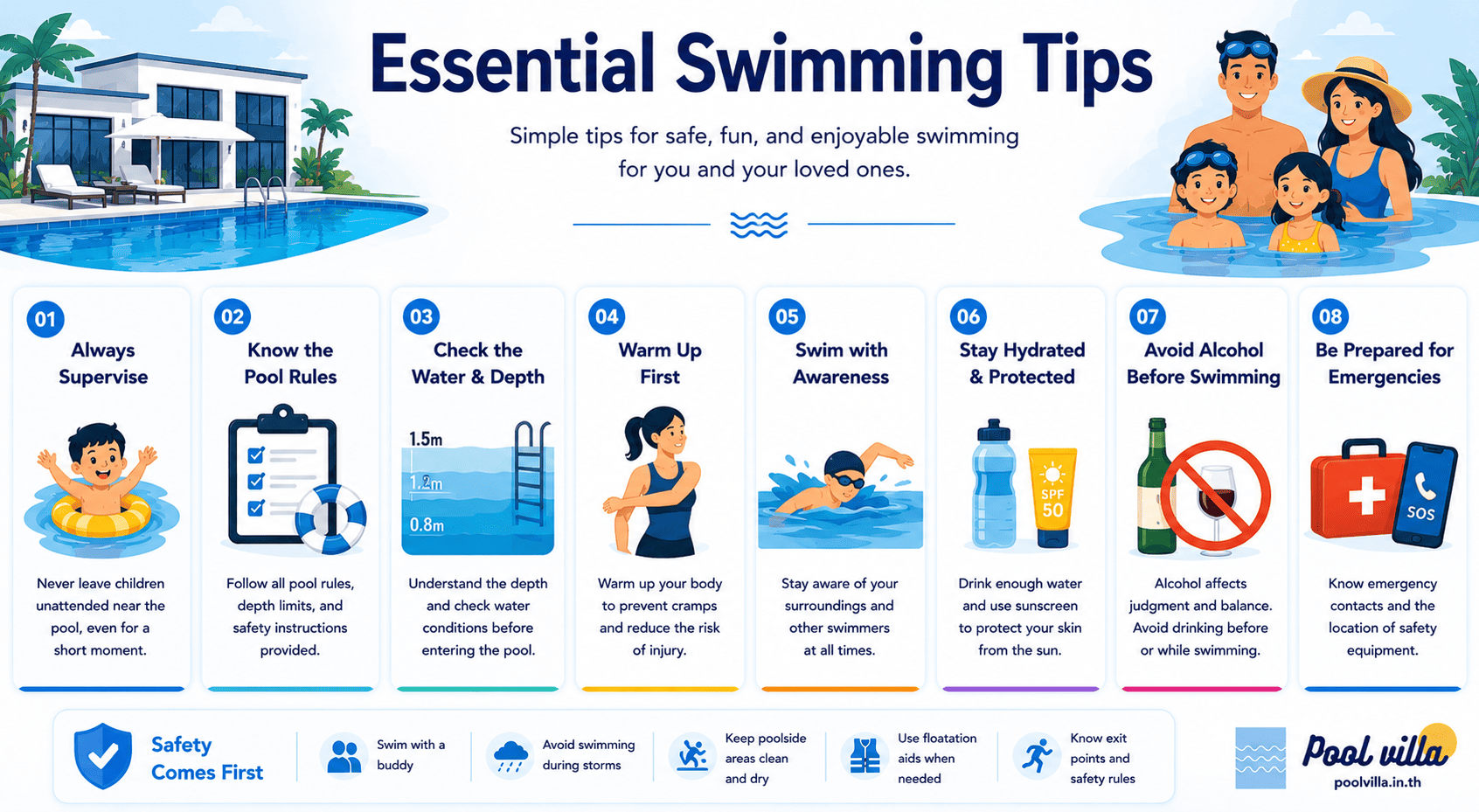
A safer villa swimming experience comes from simple habits practiced consistently.
Before using the pool:
- Inspect pool depth and entry points
- Set clear rules for children
- Keep walkways dry and clear
- Avoid glass near the pool
- Use proper lighting at night
- Prepare emergency information
Guests should also communicate expectations clearly with the group before pool activities begin.
Conclusion
Pool safety for villa guests is essential because private pools offer freedom, privacy, and flexibility without the same level of supervision found in many hotels or resorts.
Most risks can be reduced through active supervision, clear rules, awareness of pool depth, careful nighttime swimming, responsible group behavior, and basic emergency preparation.
A private pool should make the villa stay more enjoyable, not more stressful. With practical safety habits, guests can relax confidently and enjoy the full benefits of a pool villa experience.
To continue learning, explore the guides on pool villa safety, pool villa planning, pool villa rules, and pool villa facilities.